
[论文解读] Slovo: Russian Sign Language Dataset
本文介绍了Slovo,一个大规模俄语手语(RSL)视频数据集,包含来自194名手语使用者的20,000段FullHD视频,划分为1,000个孤立手势类别。作者提出了一种基于众包的流水线,用于数据收集、验证和时间标注,并在该数据集上使用MViTv2-small模型展示了最先进性能,采用32帧和帧间隔为2时,手语识别准确率极高。
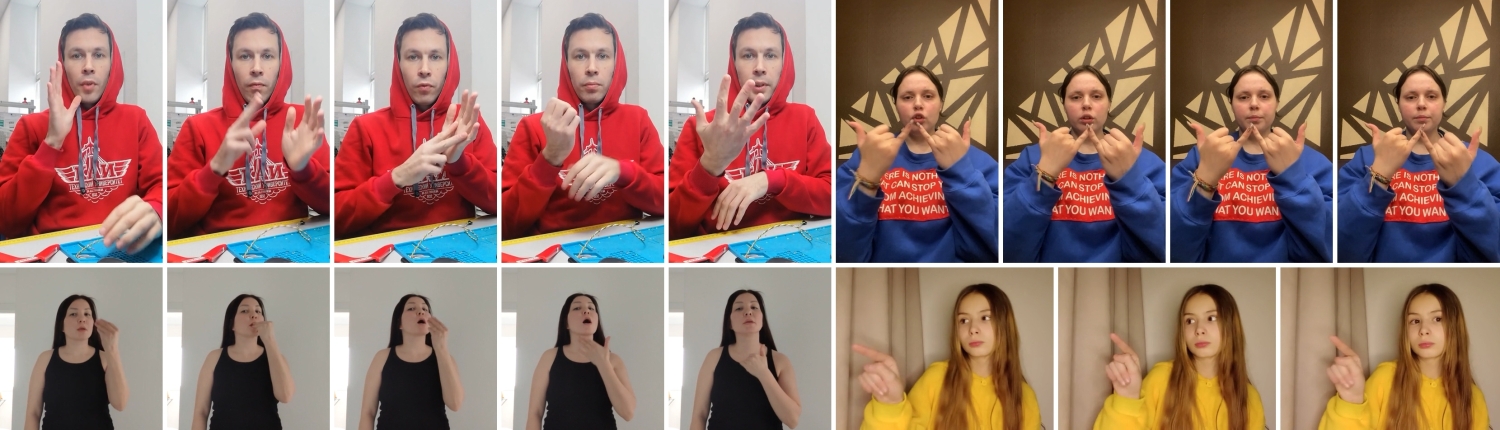
One of the main challenges of the sign language recognition task is the difficulty of collecting a suitable dataset due to the gap between hard-of-hearing and hearing societies. In addition, the sign language in each country differs significantly, which obliges the creation of new data for each of them. This paper presents the Russian Sign Language (RSL) video dataset Slovo, produced using crowdsourcing platforms. The dataset contains 20,000 FullHD recordings, divided into 1,000 classes of isolated RSL gestures received by 194 signers. We also provide the entire dataset creation pipeline, from data collection to video annotation, with the following demo application. Several neural networks are trained and evaluated on the Slovo to demonstrate its teaching ability. Proposed data and pre-trained models are publicly available.
研究动机与目标
- 通过创建大规模、公开可用的视频数据集,解决多样化、高质量RSL数据集稀缺的问题。
- 通过利用众包平台进行可扩展的数据收集,弥合听力正常人群与听力障碍人群之间的鸿沟。
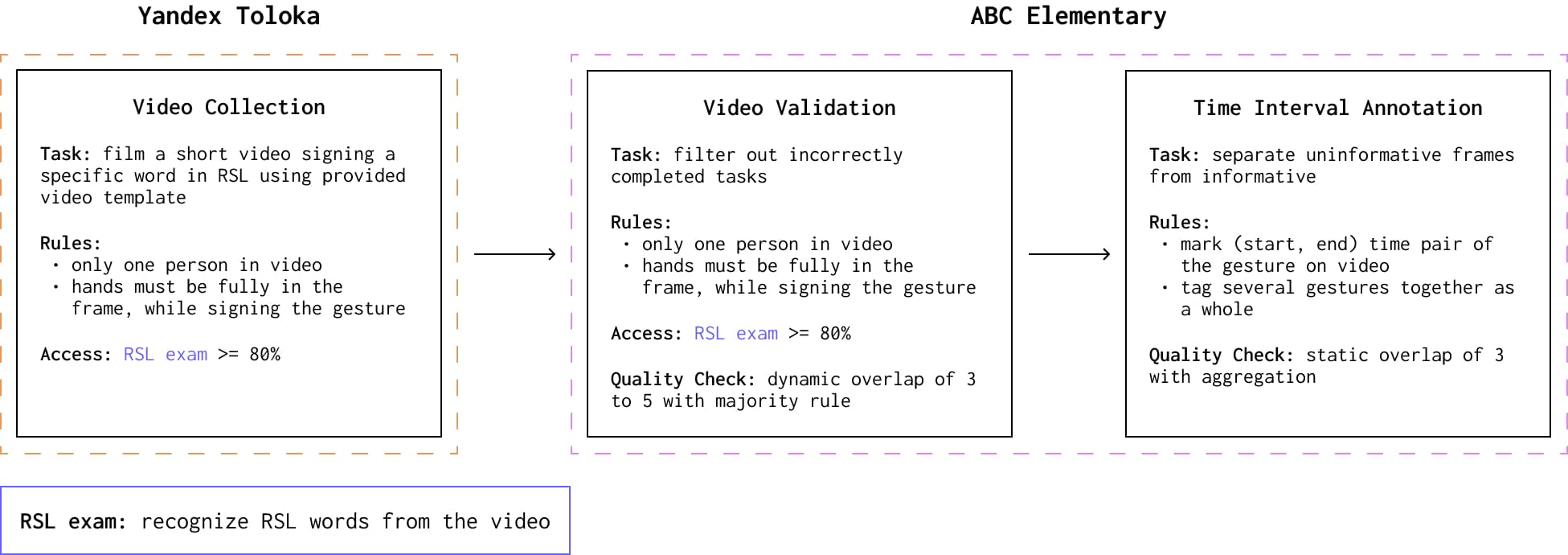
- 开发一种可复现的流水线,用于收集、验证和标注手语视频,以确保数据质量和多样性。
- 在原生俄语手语基准上,实现对手语识别模型的稳健训练与评估。
提出的方法
- 利用众包平台,从194名不同环境下的手语使用者处收集了20,000段FullHD RSL视频记录。
- 实施了三阶段流水线:视频收集、通过测验任务进行质量验证,以及对手势的精确起止时间标注。
- 应用了数据增强技术,包括水平翻转、锐度调整和色彩抖动,以提升模型泛化能力。
- 采用平衡的数据划分策略,其中75%用于训练,25%用于测试,通过最小化标注者之间的重叠来减少过拟合。
- 在数据集上训练并评估了三种视频识别模型——MViTv2-small、Swin-large和ResNet3D-50,采用不同的帧采样策略。
- 采用16、32和48帧的帧采样策略,帧间隔为1至4,排除64帧序列,因其导致性能下降。
实验结果
研究问题
- RQ1可扩展的众包流水线是否能够在大规模上生成高质量、多样化且准确标注的RSL视频数据?
- RQ2在新创建的RSL数据集上,视频识别模型的性能如何随不同的帧采样策略而变化?
- RQ3模型架构(例如视觉Transformer与3D CNN)在Slovo数据集上的手语识别准确率方面有多大影响?
- RQ4轻量级、专为视频优化的Transformer模型MViTv2-small是否能在孤立RSL手势识别任务中超越更大或更传统的架构?
主要发现
- 当使用32帧和帧间隔为2时,MViTv2-small模型在Slovo数据集上实现了最高的平均准确率,显著优于ResNet3D-50和Swin-large。
- 采用众包数据收集流水线,成功获取了来自194名手语使用者的20,000段多样化RSL视频,显著扩展了可用的RSL训练数据。
- 数据划分策略通过最小化训练集与测试集之间的标注者重叠,有效减少了模型过拟合,提升了泛化能力。
- 与基于视觉Transformer的模型相比,ResNet3D-50表现欠佳,表明Transformer在捕捉手语视频中的时空动态方面更具优势。
- 帧间隔大于4的采样策略导致性能下降,表明保持时间连续性对准确手势识别至关重要。
- 该数据集和预训练模型已公开发布,为未来俄语手语识别及多模态手语建模研究提供了支持。
阅读本论文
在 Nubint 阅读器中打开原文,边读边就任意段落提问。
在 Nubint 中阅读本论文本解读由 AI 根据论文原文生成,引用前请核对原文。