
[论文解读] Smart Contract and DeFi Security Tools: Do They Meet the Needs of Practitioners?
本研究评估了五种最先进的智能合约与DeFi安全工具在127起高影响力攻击中的实际效果,发现仅有8%的此类攻击——造成1.49亿美元损失——可被自动化工具阻止,主要原因是这些工具未能检测到逻辑错误和协议层漏洞。研究结果凸显了学术工具开发与实践者需求之间的关键差距,呼吁开发面向开发者和审计员的专用、以用户为导向的安全工具。
The growth of the decentralized finance (DeFi) ecosystem built on blockchain technology and smart contracts has led to an increased demand for secure and reliable smart contract development. However, attacks targeting smart contracts are increasing, causing an estimated \$6.45 billion in financial losses. Researchers have proposed various automated security tools to detect vulnerabilities, but their real-world impact remains uncertain. In this paper, we aim to shed light on the effectiveness of automated security tools in identifying vulnerabilities that can lead to high-profile attacks, and their overall usage within the industry. Our comprehensive study encompasses an evaluation of five SoTA automated security tools, an analysis of 127 high-impact real-world attacks resulting in \$2.3 billion in losses, and a survey of 49 developers and auditors working in leading DeFi protocols. Our findings reveal a stark reality: the tools could have prevented a mere 8% of the attacks in our dataset, amounting to \$149 million out of the \$2.3 billion in losses. Notably, all preventable attacks were related to reentrancy vulnerabilities. Furthermore, practitioners distinguish logic-related bugs and protocol layer vulnerabilities as significant threats that are not adequately addressed by existing security tools. Our results emphasize the need to develop specialized tools catering to the distinct demands and expectations of developers and auditors. Further, our study highlights the necessity for continuous advancements in security tools to effectively tackle the ever-evolving challenges confronting the DeFi ecosystem.
研究动机与目标
- 评估自动化安全工具在检测导致高影响力DeFi攻击的漏洞方面的实际效果。
- 识别当前工具可检测的漏洞类型以及仍无法检测的漏洞类型,特别是那些造成重大财务损失的漏洞。
- 了解开发者和审计员在实际审计和开发工作流中选择和使用安全工具时的实际使用模式、偏好和面临的挑战。
- 研究实践者在真实DeFi开发和审计工作流中,于误报、漏报、可用性与工具可靠性之间所做出的权衡。
提出的方法
- 本研究使用包含127起导致23亿美元损失的高影响力真实世界DeFi攻击的数据库,评估了五种最先进的自动化安全工具。
- 研究人员按类型对攻击数据集中的漏洞进行分类,并评估每种工具可检测的漏洞,重点关注重入攻击、逻辑错误和协议层缺陷。
- 对49名DeFi开发者和审计员进行了调查,以了解其在实际审计和开发工作流中使用工具的模式、偏好及感知到的局限性。
- 本研究分析了实践者在误报与漏报之间的权衡,并评估了可用性、文档质量和报告质量在工具选择中的重要性。
- 研究人员将工具输出与已知攻击模式进行对比,并通过手动分析和审计员的专家反馈验证了研究发现。
- 本研究结合实证评估与实践者调查,为DeFi生态系统中工具的有效性与采纳情况提供了全面视角。
实验结果
研究问题
- RQ1RQ1:自动化安全工具能够检测哪些类型的漏洞?这些漏洞在真实世界攻击中出现的频率如何?可被检测的漏洞严重性如何?
- RQ2RQ2:自动化安全工具在多大程度上能够阻止真实世界中的高调攻击?其在各类漏洞类别中的有效性如何?若辅以用户输入,半自动化工具可预防哪些攻击?
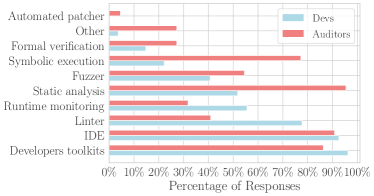
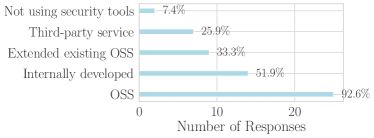
- RQ3RQ3:开发者和审计员中安全工具使用的实际格局如何?开源工具、学术工具和半自动化工具在实践中有多普遍?
- RQ4RQ4:开发者和审计员在安全工具中优先考虑哪些特性?他们如何权衡误报与漏报?可用性、文档和报告质量的重要性如何?
- RQ5RQ5:当前工具在多大程度上有效应对不同类型的错误?哪些错误类型未被充分覆盖?审计员对工具实用性的看法如何?
主要发现
- 在本研究数据集中127起高影响力DeFi攻击中,仅有8%——造成1.49亿美元损失——可被现有自动化安全工具阻止。
- 数据集中所有可被阻止的攻击均源于重入漏洞,表明当前工具仅对少数已知的智能合约缺陷有效。
- 实践者指出,与逻辑相关的错误和协议层漏洞是主要威胁,而现有自动化工具未能充分应对这些威胁。
- 尽管在审计中广泛使用安全工具,但在先前一项审计研究中识别出的246个漏洞中,仅有4个被自动化工具检测到,凸显了其在现实世界中的影响有限。
- 审计员和开发者更重视可用性、报告质量和低误报率,而非单纯的检测能力,表明工具设计与实践者需求之间存在错配。
- 学术工具开发与工业实践之间存在显著差距,实践者迫切需要针对逻辑和协议层缺陷设计的工具,尤其是需要人工介入验证的场景。
阅读本论文
在 Nubint 阅读器中打开原文,边读边就任意段落提问。
在 Nubint 中阅读本论文本解读由 AI 根据论文原文生成,引用前请核对原文。