
[论文解读] Solving Diffusion ODEs with Optimal Boundary Conditions for Better Image Super-Resolution
本文提出一种即插即用的采样方法,通过以最优推导的边界条件(BCs)求解扩散常微分方程(ODE),在不微调的情况下显著提升预训练扩散式超分辨率模型的性能。通过高效探索参考高分辨率-低分辨率图像对集合,识别出近似最优的边界条件,该方法生成的图像质量更高、结果更稳定,优于标准采样器,甚至超越了更慢的高步数基线方法(如DDPM-1000)。
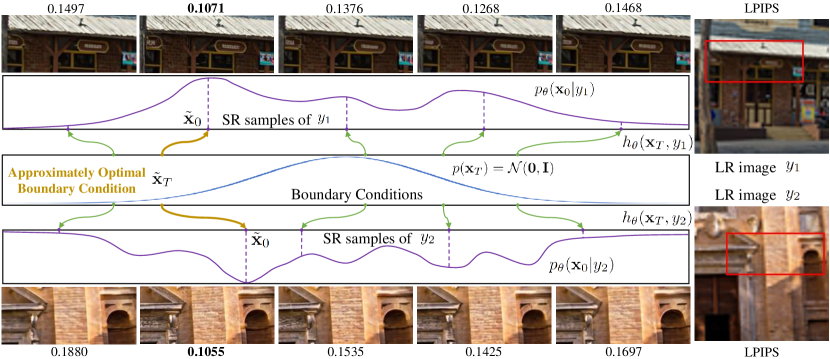
Diffusion models, as a kind of powerful generative model, have given impressive results on image super-resolution (SR) tasks. However, due to the randomness introduced in the reverse process of diffusion models, the performances of diffusion-based SR models are fluctuating at every time of sampling, especially for samplers with few resampled steps. This inherent randomness of diffusion models results in ineffectiveness and instability, making it challenging for users to guarantee the quality of SR results. However, our work takes this randomness as an opportunity: fully analyzing and leveraging it leads to the construction of an effective plug-and-play sampling method that owns the potential to benefit a series of diffusion-based SR methods. More in detail, we propose to steadily sample high-quality SR images from pre-trained diffusion-based SR models by solving diffusion ordinary differential equations (diffusion ODEs) with optimal boundary conditions (BCs) and analyze the characteristics between the choices of BCs and their corresponding SR results. Our analysis shows the route to obtain an approximately optimal BC via an efficient exploration in the whole space. The quality of SR results sampled by the proposed method with fewer steps outperforms the quality of results sampled by current methods with randomness from the same pre-trained diffusion-based SR model, which means that our sampling method "boosts" current diffusion-based SR models without any additional training.
研究动机与目标
- 解决从预训练扩散式图像超分辨率模型中采样时存在的不稳定性和随机性问题。
- 识别一种原理性强、确定性的边界条件(BC)选择方法,以持续生成高质量的超分辨率结果。
- 在不进行额外训练的情况下,利用现有预训练模型实现稳定且高性能的推理。
- 探索最优边界条件是否与输入的低分辨率图像无关,从而实现在多种输入间的复用。
- 证明最优边界条件选择可超越标准采样方法,即使在步数更少的情况下亦能实现更优性能。
提出的方法
- 该方法将扩散过程建模为常微分方程(ODE),并寻找一个最优初始噪声向量(边界条件)x̃_T,以最大化生成的高分辨率图像x̃_0的概率密度。
- 利用参考高分辨率-低分辨率图像对集合(R)引导最优边界条件的搜索,将边界条件视为与输入低分辨率图像无关的可学习先验。
- 从候选随机边界条件集合(K)中采样,并利用模型的条件生成能力评估其表现,以识别在平均意义上生成质量最高的SR输出的边界条件。
- 通过最大化扩散ODE求解器(如DDIM-100)下生成高质量图像的似然性,估计最优边界条件。
- 该方法为即插即用:一旦最优边界条件计算完成,即可无需重新训练,复用于任意未见过的低分辨率输入,生成高质量的超分辨率图像。
- 该方法利用了最优边界条件与输入低分辨率图像无关的特性,从而实现对不同输入的泛化能力。
实验结果
研究问题
- RQ1我们能否识别出一种确定性的、最优的扩散ODE边界条件,使其能持续生成高质量的图像超分辨率结果?
- RQ2最优边界条件是否依赖于输入的低分辨率图像,还是可以跨不同输入复用?
- RQ3通过优化边界条件,能否在不微调的情况下提升预训练扩散式SR模型的采样性能?
- RQ4参考集和候选集的大小如何影响估计的最优边界条件的质量与稳定性?
- RQ5基于最优边界条件选择的方法能否在步数更少的情况下,超越标准采样策略(如DDPM-100)?
主要发现
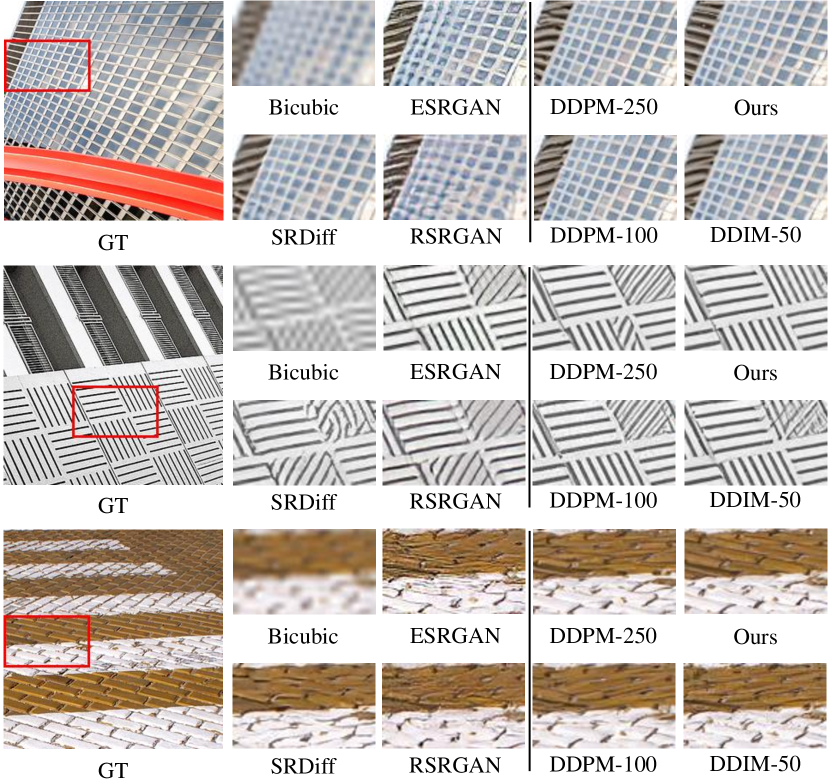
- 在双三次插值超分辨率基准上,该方法采用DDIM-100的性能优于所有其他采样方法,包括DDPM-1000,实现了更快推理速度下的更高图像质量。
- 在真实图像超分辨率基准上,该方法超越了StableSR官方采样方法(DDPM-200),同时保持了更快的采样速度。
- 消融实验表明,增大参考集大小(R)和候选集大小(K)可带来更稳定、更高质量的边界条件估计,性能提升且方差降低。
- 估计出的最优边界条件(x̃_T)与输入的低分辨率图像无关,可复用于不同输入而无需重新计算。
- 该方法在LPIPS和视觉质量方面达到当前最优性能,证明了最优边界条件选择可有效‘增强’现有模型而无需重新训练。
- 该方法提供了一种稳定、确定性的采样策略,消除了标准扩散采样中固有的随机性,确保了结果的一致性和高质量。
阅读本论文
在 Nubint 阅读器中打开原文,边读边就任意段落提问。
在 Nubint 中阅读本论文本解读由 AI 根据论文原文生成,引用前请核对原文。