
[论文解读] Solving stiff ordinary differential equations using physics informed neural networks (PINNs): simple recipes to improve training of vanilla-PINNs
本文提出简单而有效的方案,以改进经典物理信息神经网络(PINNs)在刚性常微分方程(ODEs)上的训练效果。通过修改损失函数以更优地融入初始条件或守恒量(如能量),并采用随时间逐步扩展的时间区间移动配点网格,该方法显著提升了收敛性与精度——在刚性初值问题(IVPs)和边值问题(BVPs)上验证,包括高雷诺数对流-扩散方程,仅需极少的配点。
Physics informed neural networks (PINNs) are nowadays used as efficient machine learning methods for solving differential equations. However, vanilla-PINNs fail to learn complex problems as ones involving stiff ordinary differential equations (ODEs). This is the case of some initial value problems (IVPs) when the amount of training data is too small and/or the integration interval (for the variable like the time) is too large. We propose very simple recipes to improve the training process in cases where only prior knowledge at initial time of training data is known for IVPs. For example, more physics can be easily embedded in the loss function in problems for which the total energy is conserved. A better definition of the training data loss taking into account all the initial conditions can be done. In a progressive learning approach, it is also possible to use a growing time interval with a moving grid (of collocation points) where the differential equation residual is minimized. These improvements are also shown to be efficient in PINNs modeling for solving boundary value problems (BVPs) as for the high Reynolds steady-state solution of advection-diffusion equation.
研究动机与目标
- 解决经典PINNs在求解刚性ODE时因初始/边界数据有限而导致泛化能力差的问题。
- 在仅依赖初始条件知识时,提升标准PINNs在刚性问题中训练的稳定性与收敛性。
- 提出轻量级、易于实现的PINN框架修改方法,提升性能而不需复杂网络结构变更。
- 在初值问题(IVPs)与边值问题(BVPs)上均验证方法有效性,包括高雷诺数对流-扩散方程。
- 表明简单修改可减少所需配点数量,并相比标准PINN方法提升解的精度。
提出的方法
- 引入一种混合数据损失函数,更有效地将多个初始条件融入损失函数,提升网络对正确初始行为的学习能力。
- 在适用情况下,增加基于物理的局部损失项(如总能量),以约束解空间并提升训练稳定性。
- 实施一种渐进式训练策略,采用随时间移动的配点网格,逐步扩展时间区间,使网络能够学习刚性系统中缓慢演化的动力学。
- 采用随时间增长的配点时间区间,从初始时刻开始逐步延展,避免在刚性问题中早期训练失败。
- 在BVPs中通过动态调整空间配点网格实现相同策略,尤其适用于边界层问题。
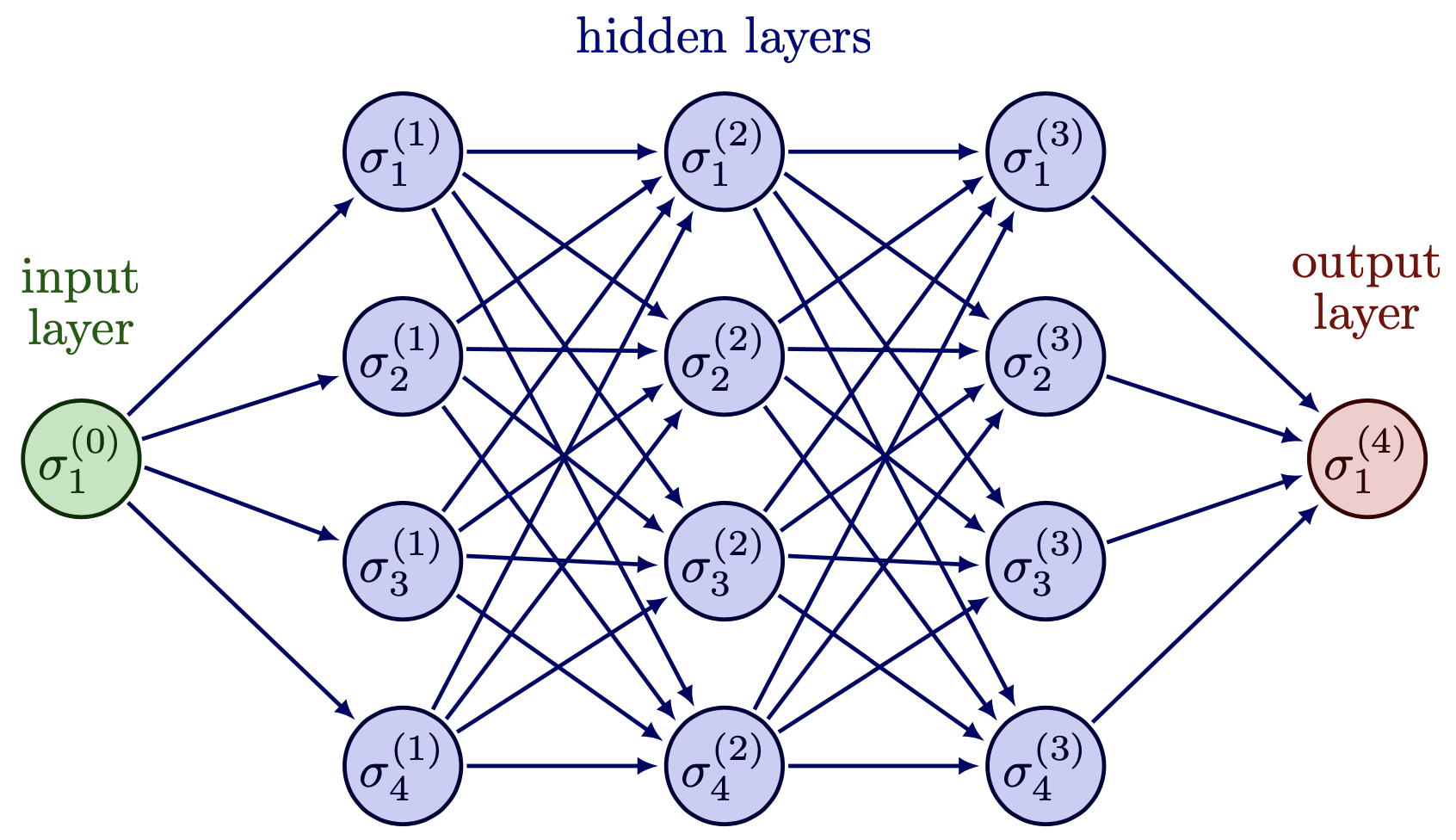
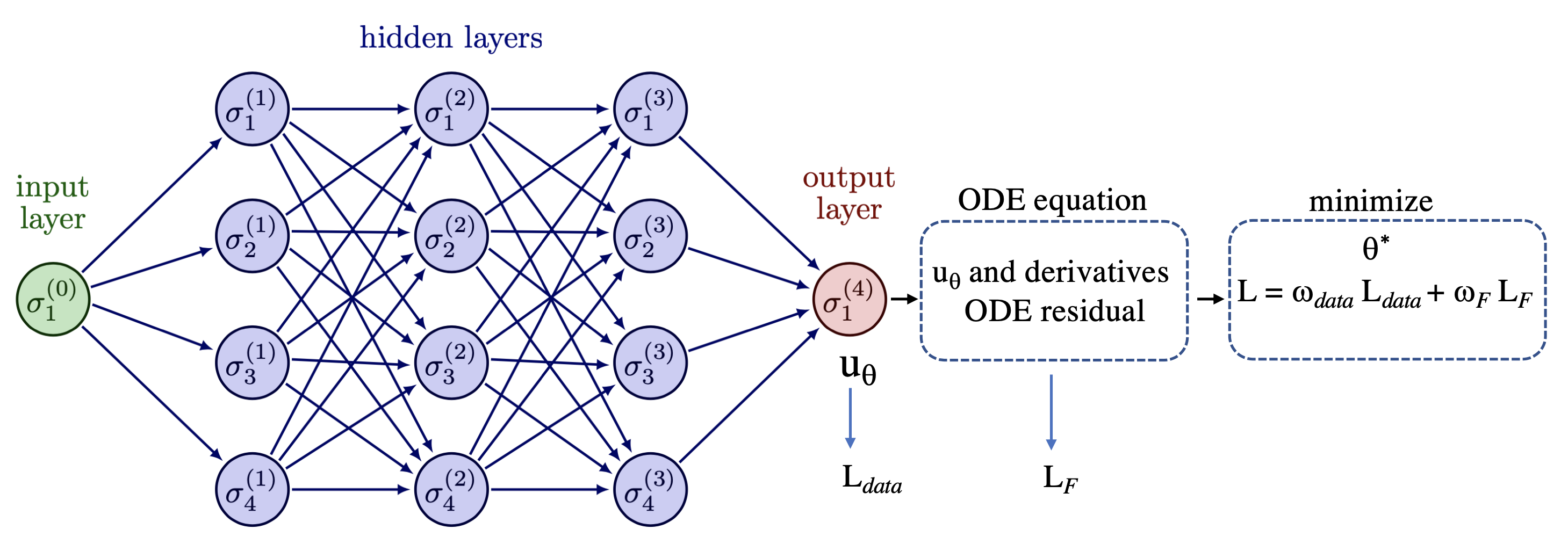
- 将上述技术与标准PINN训练相结合,使用均方误差(MSE)处理数据,通过残差最小化处理PDE,并支持损失权重的可调配置。
实验结果
研究问题
- RQ1能否通过改进损失函数以更优地编码初始条件,提升刚性ODE中PINN的训练效果?
- RQ2在能量守恒系统中(如某些振荡或保守系统),添加基于物理的守恒量(如能量)损失项是否能提升刚性系统的收敛性与精度?
- RQ3渐进式、自适应的配点网格策略是否能增强刚性ODE中训练的稳定性与解的质量?
- RQ4在高雷诺数BVPs中,移动网格方法相比固定网格PINNs在所需配点数量方面表现如何?
- RQ5这些简单修改在刚性微分方程问题中,能在多大程度上替代更复杂的自适应PINN架构?
主要发现
- 混合数据损失函数通过更优利用多个初始条件,显著提升了刚性IVPs中的训练收敛性。
- 在能量守恒系统中(如某些振荡或保守系统),添加能量守恒损失项可显著提升性能。
- 采用随时间增长的移动配点网格,即使仅使用两个初始数据点和27个配点,也能成功训练刚性ODE。
- 在高雷诺数1D对流-扩散BVP(R=50)中,改进方法仅用27个配点即获得高精度解,而标准PINNs需超过40个配点。
- 该方法减少了对大量训练数据或复杂自适应架构的依赖,使其成为经典PINNs的实用且高效的增强方案。
- 该方法在IVPs与BVPs中均表现稳健,一致提升了解的精度与训练稳定性。
阅读本论文
在 Nubint 阅读器中打开原文,边读边就任意段落提问。
在 Nubint 中阅读本论文本解读由 AI 根据论文原文生成,引用前请核对原文。