
[论文解读] Standby efficiency and thermocline degradation of a packed bed thermal energy storage: An experimental study
本实验研究 investigates 采用空气作为传热流体的实验室规模填充床蓄热系统(PBTES)在待机状态下的效率及温度分层退化情况。结果表明,与自上而下充电相比,自下而上充电在22小时待机后导致两倍的熵产生和18%更低的㶲效率,这是由于自然对流加剧所致。
The waste heat potential from industrial processes is huge and if it can be utilized it may contribute significantly to the mitigation of climate change. A packed bed thermal energy storage system is a low-cost storage technology that can be employed to enable the utilization of waste heat from industrial processes. This system can be used to store excess heat and release this energy when it is needed at a later time. To ensure the efficient operation of a packed bed thermal energy storage its characteristics in standby mode need to be studied in great detail. In the present study, the standby efficiency and thermocline degradation of a lab-scale packed bed thermal energy storage in standby mode is experimentally investigated for different flow directions of the heat transfer fluid during the preceding charging period. Results show that, for long standby periods, the standby efficiency is significantly affected by the flow direction. The maximum entropy generation rate for a 22-hour standby process with the flow direction of the heat transfer fluid from bottom to top in the preceding charging process is twice as high as for the same process with the reverse flow direction. Energy and exergy efficiencies are lower for the process with reverse flow direction by 5% and 18% respectively.
研究动机与目标
- 通过实验评估填充床蓄热系统(PBTES)在待机状态下的效率及温度分层退化情况。
- 评估充电过程中传热流体(HTF)流动方向对长期待机性能的影响。
- 量化长期待机期间由于自然对流和不可逆性导致的能量与㶲损失。
- 为工业废热回收应用中PBTES的经济性与系统设计优化提供数据支持。
提出的方法
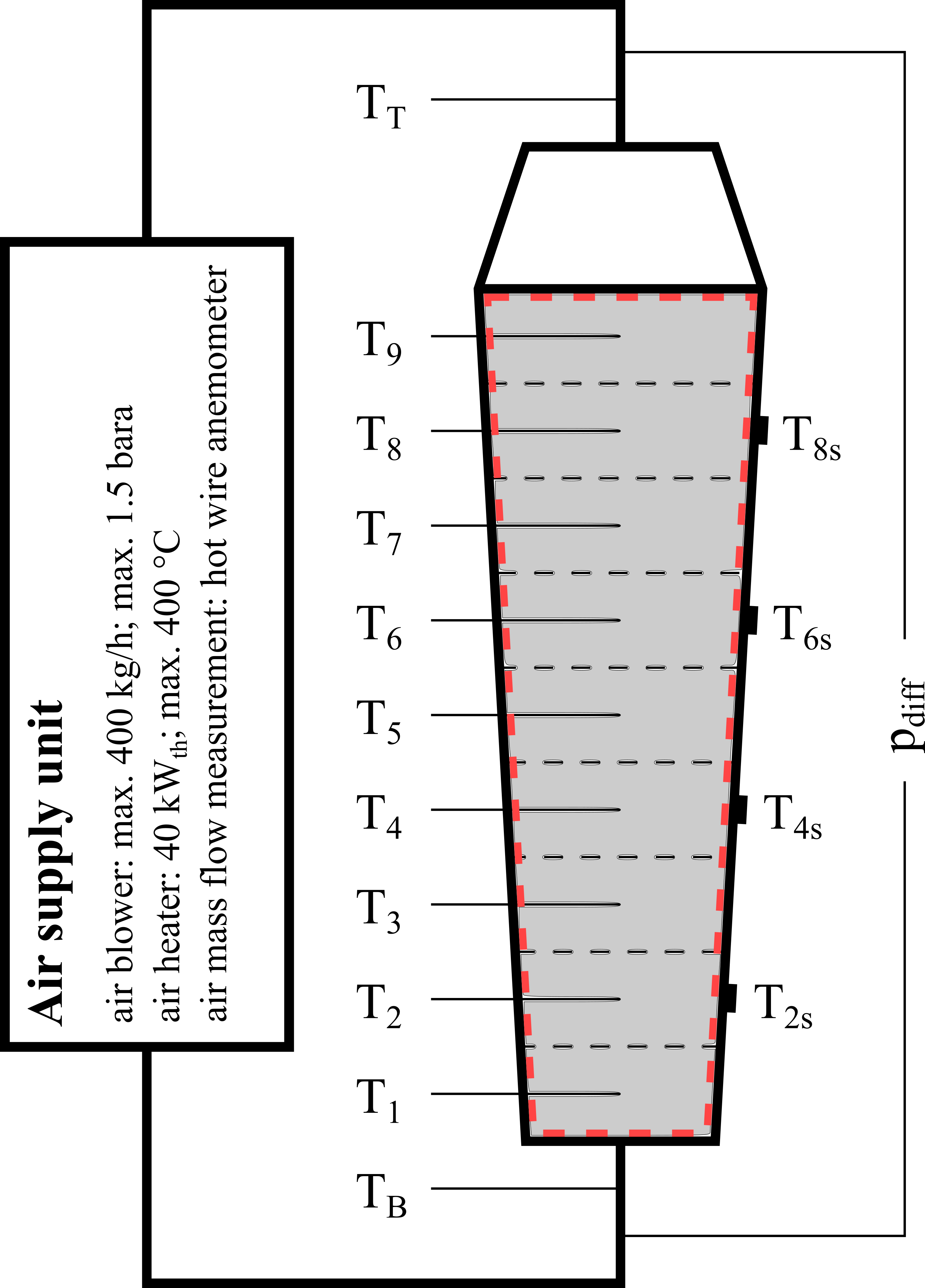
- 在实验室规模的PBTES系统中开展实验,使用LD-炉渣作为蓄热介质,空气作为传热流体。
- 进行两种流动方向的充电循环:自下而上(FWD)和自上而下(REV)。
- 在22小时的待机期间测量填充床内的温度分布,以评估温度分层的退化情况。
- 应用第二定律分析,基于储存与回收的能量/㶲计算能量与㶲效率。
- 将熵产生率作为评估不可逆性与热力学损失的关键指标。
- 处理实验数据,比较FWD与REV充电配置在待机性能上的差异。

实验结果
研究问题
- RQ1充电过程中传热流体的流动方向如何影响填充床蓄热系统在待机状态下的效率?
- RQ2在PBTES系统中,长期待机期间温度分层退化的程度如何?
- RQ3对于不同充电流动方向,能量与㶲效率如何随待机时间变化?
- RQ4自然对流在待机期间对熵产生和㶲损失的贡献程度如何?
- RQ5在充电流动方向对待机性能产生显著影响之前,存在一个临界时间阈值吗?
主要发现
- 在22小时待机期间,FWD工况(自下而上充电)的最大熵产生率是REV工况(自上而下充电)的两倍。
- 待机22小时后,FWD工况的能量效率比REV工况低5%,㶲效率低18%。
- 待机22小时后,FWD工况的㶲效率降至45%,而REV工况为55%,表明FWD配置存在显著的㶲损失。
- 待机时间低于7小时时,流动方向对效率的影响可忽略,因为自然对流尚未充分发展。
- FWD工况在约7小时内即形成充分发展的自然对流,导致温度分层加速退化。
- 结果表明,充电方向显著影响长期性能,自上而下充电在延长待机期间最小化㶲损失方面表现更优。
阅读本论文
在 Nubint 阅读器中打开原文,边读边就任意段落提问。
在 Nubint 中阅读本论文本解读由 AI 根据论文原文生成,引用前请核对原文。