
[论文解读] Stringy Running Vacuum Model and current Tensions in Cosmology
本文提出弦论启发的运行真空中模型(StRVM),一种基于量子引力的宇宙学框架,能够动态解释ΛCDM模型中的哈勃参数与大尺度结构增长张力。通过引入源自弦论的引力反常与量子修正,该模型引入与哈勃参数相关的真空中能量项,并具有对数运行特性,显著缓解了当前的宇宙学张力,同时与观测数据及量子场论基本原理保持一致。
We discuss the potential alleviation of both the Hubble and the growth of galactic structure data tensions observed in the current epoch of Cosmology in the context of the so-called Stringy Running Vacuum Model (RVM) of Cosmology. This is a gravitational field theory coupled to matter, which, at early eras, contains gravitational (Chern-Simons (CS) type) anomalies and torsion, arising from the fundamental degrees of freedom of the massless gravitational multiplet of an underlying microscopic string theory. The model leads to RVM type inflation without external inflatons, arising from the quartic powers of the Hubble parameter that characterise the vacuum energy density due to primordial-gravitational-wave-induced anomaly CS condensates, and dominate the inflationary era. In modern eras, of relevance to this work, the gravitational anomalies are cancelled by chiral matter, generated at the end of the RVM inflationary era, but cosmic radiation and other matter fields are still responsible for a RVM energy density with terms exhibiting a quadratic-power-of-Hubble-parameter dependence, but also products of the latter with logarithmic $H$-dependencies, arising from potential quantum-gravity and quantum-matter loop effects. In this work, such terms are examined phenomenologically from the point of view of the potential alleviation of the aforementioned current tensions in Cosmology. Using standard information criteria, we find that these tensions can be substantially alleviated in a way consistent not only with the data, but also with the underlying microscopic theory predictions, associated with the primordial dynamical breaking of supergravity that characterise a pre-RVM-inflationary phase of the model.
研究动机与目标
- 解决现代宇宙学中持续存在的哈勃参数与大尺度结构增长张力问题。
- 开发一种超越现象学ΛCDM框架的根本性量子引力启发宇宙学模型。
- 探究源自弦论启发的引力反常与手征物质的量子修正是否能动态生成运行真空中能量密度。
- 检验该模型是否能同时缓解当前宇宙学张力,同时与CMB、SNIa、BAO及H₀数据保持一致。
- 通过有效场论建立原初超引力自发破缺与晚期真空中动力学之间的联系。
提出的方法
- 该模型源自弯曲时空中的量子场论,结合了来自弦论中无质量引力多重态的陈-西蒙斯型引力反常与挠率。
- 引入包含哈勃参数四次方与二次方项的真空中能量密度(VED),并引入由量子引力与量子物质圈图效应产生的对数H依赖项。
- 该模型自然导致无外部暴胀子的RVM型暴胀,其驱动力为原初引力波诱导的反常凝聚。
- 在现代宇宙学时期,引力反常被手征物质所抵消,但残余的具有H²与H²lnH依赖性的VED项仍存在。
- 利用标准信息准则(ΔAIC、ΔBIC)对模型进行检验,数据包括Planck 2018、SNIa、BAO及本地H₀数据,涵盖高ℓ CMB、强引力透镜与np(无极化)数据集。
- 在FLRW背景中应用微扰理论求解度规与物质涨落的一阶方程,推导标量、矢量与张量模态的方程。
实验结果
研究问题
- RQ1基于弦论的运行真空中模型是否能在不引入人为假设成分的前提下缓解当前的哈勃张力?
- RQ2该模型在多大程度上能够缓解ΛCDM框架下的结构增长张力?
- RQ3量子引力与量子物质圈图效应如何在晚期宇宙学中修改真空中能量密度?
- RQ4StRVM是否与早期(CMB)和晚期(SNIa、BAO、H₀)宇宙观测均保持一致?
- RQ5该模型的现象学行为是否可从包含动力学超引力自发破缺的预暴胀时期自然导出?
主要发现
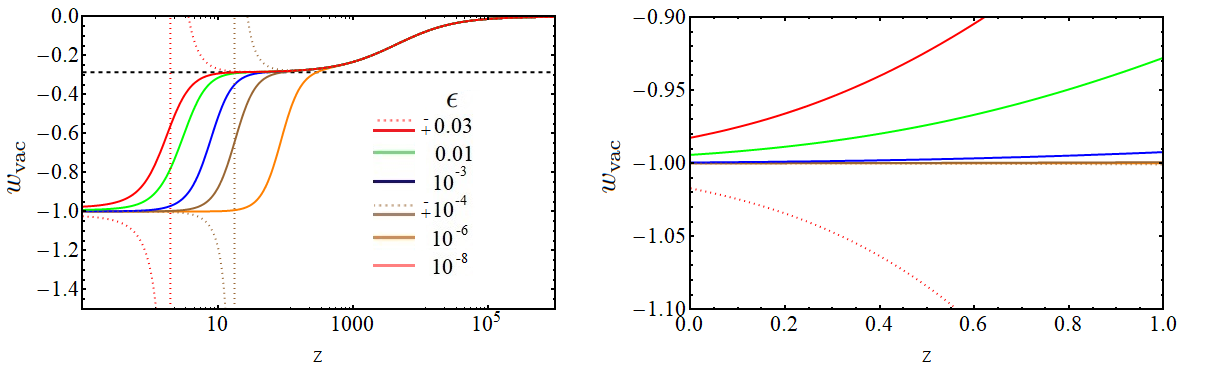
- 与ΛCDM相比,StRVM在联合数据集(Planck18 + SNIa + BAO + CCH)上的χ²min显著降低,Δχ²min ≈ 20(完整数据集),表明拟合质量更优。
- 该模型的贝叶斯信息准则(BIC)与赤池信息准则(AIC)得分优于ΛCDM,表明模型选择性能更优。
- 即使在包含高ℓ CMB极化(Planck18(np))与引力透镜(Planck18(lens))数据的情况下,StRVM仍优于ΛCDM,关键配置中Δχ²min ≈ 10–15。
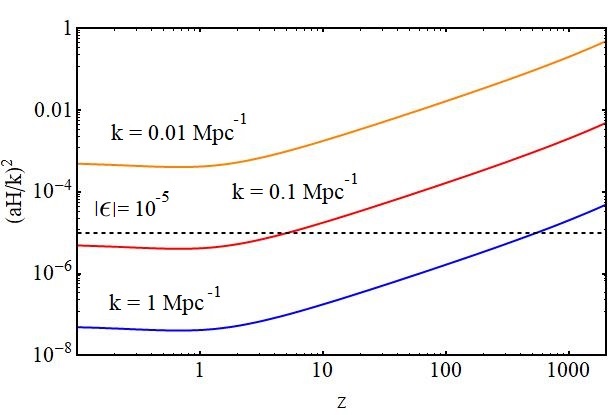
- 该模型的真空中能量密度包含与H²及H²lnH成比例的项,源于量子修正,这些项对缓解张力至关重要。
- StRVM与原初核合成(BBN)约束一致,其RVM参数数量级与当前现象学拟合结果相当。
- 该模型的动力学真空中行为自然源于手征物质对引力反常的抵消,从而将原初宇宙的量子引力与晚期宇宙学联系起来。
阅读本论文
在 Nubint 阅读器中打开原文,边读边就任意段落提问。
在 Nubint 中阅读本论文本解读由 AI 根据论文原文生成,引用前请核对原文。