
[论文解读] Structure, Stability and Superconductivity of N-doped Lutetium Hydrides at kbar Pressures
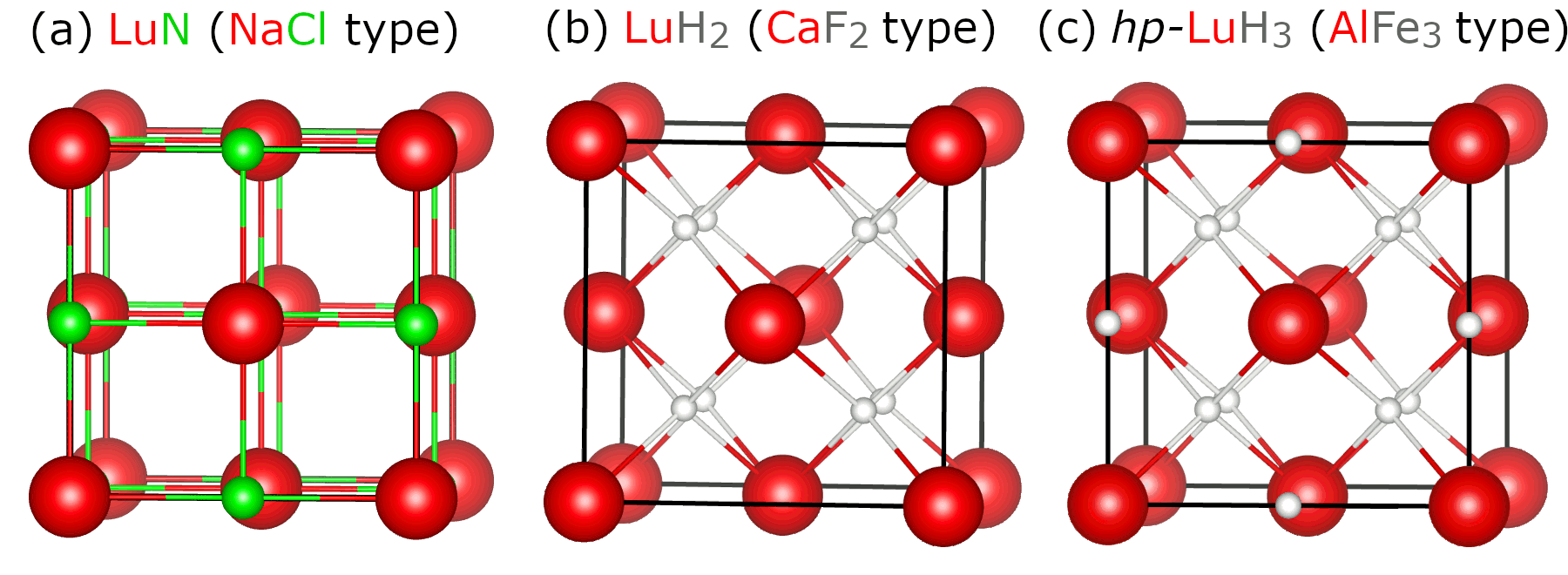
本研究采用密度泛函理论(DFT)研究了在千巴压力下的氮掺杂镥氢化物,重点关注具有面心立方(fcc)镥晶格的结构,这些结构是报道的近常压超导性(在10 kbar下Tc ≈ 294 K)的潜在候选者。尽管没有相达到室温超导,但萤石结构的LuH2与实验的物态方程最匹配,且预测Tc为0.09 K,而所研究相中最高的Tc为17 K(对应萤石结构的LuNH)。
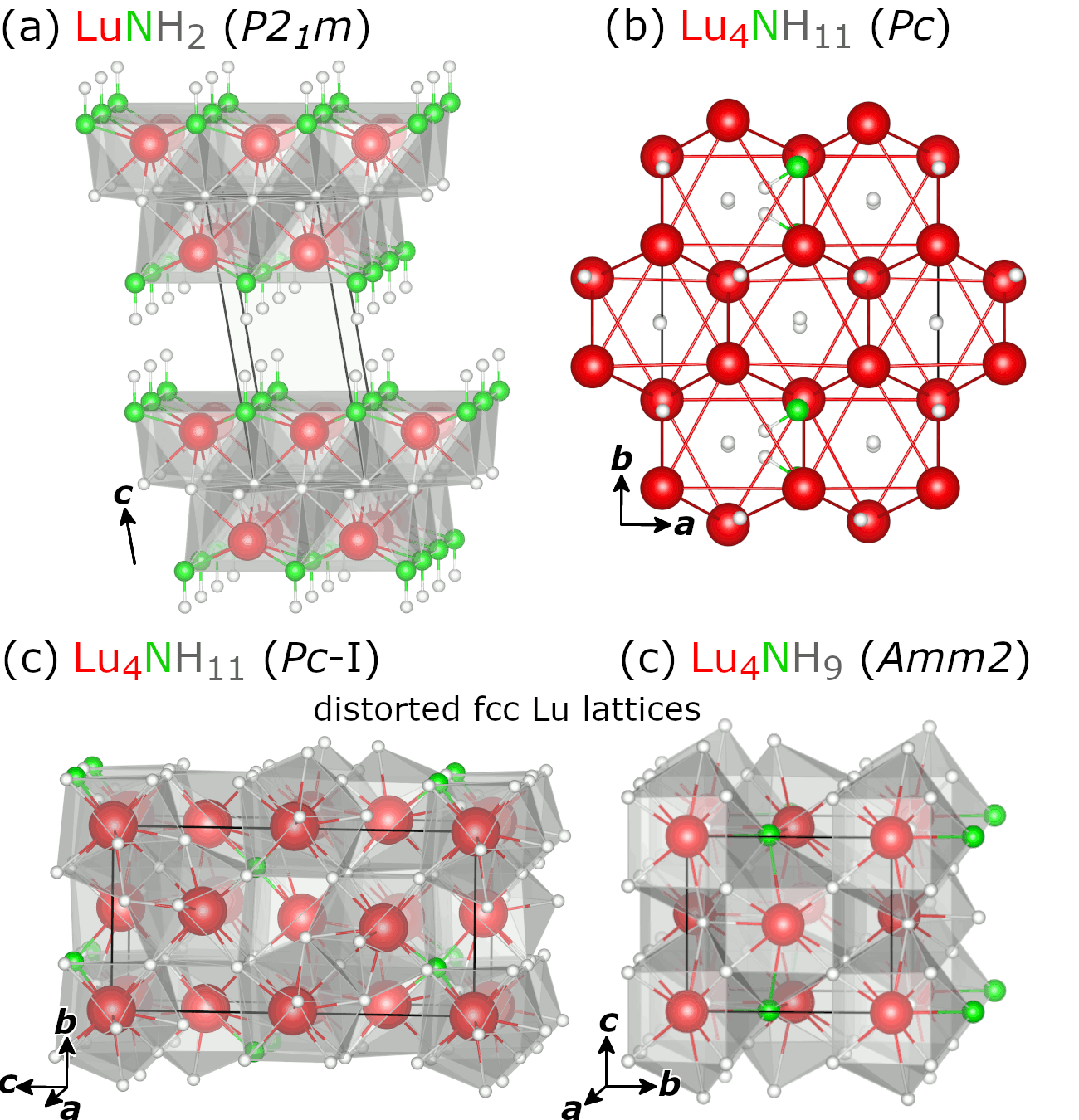
The structure of the material responsible for the room temperature and near ambient pressure superconductivity reported in an N-doped lutetium hydride [Nature, 615, 244 (2023)] has not been conclusively determined. Herein, density functional theory calculations are performed in an attempt to uncover what it might be. Guided by a range of strategies including crystal structure prediction and modifications of existing structure types, we present an array of Lu-N-H phases that are dynamically stable at experimentally relevant pressures. Although none of the structures found are thermodynamically stable, and none are expected to remain superconducting above 17 K at 10 kbar, a number of metallic compounds with fcc Lu lattices -- as suggested by the experimental X-ray diffraction measurements of the majority phase -- are identified. The system whose calculated equation of states matches best with that measured for the majority phase is fluorite-type LuH2, whose 10 kbar superconducting critical temperature was estimated to be 0.09 K using the Allen-Dynes modified McMillan equation.
研究动机与目标
- 识别在10 kbar压力下具有fcc镥晶格的亚稳态Lu-N-H相,以解释报道的氮掺杂镥氢化物中294 K的超导性。
- 评估候选相在千巴压力下的结构稳定性、电子性质及超导临界温度(Tc)。
- 确定哪一相与实验测得的物态方程(EoS)及主要相的X射线衍射数据最匹配。
- 评估电子-声子耦合及声子频率对这些化合物Tc预测的影响。
- 探讨标准DFT在中等压力下预测复杂氢化物体系高Tc超导性的局限性。
提出的方法
- 采用密度泛函理论(DFT)结合PBE交换-关联泛函,计算Lu-N-H相的电子与结构性质。
- 运用晶体结构预测与结构改性策略,探索多种化学计量比与原型结构。
- 应用Allen-Dynes改进的McMillan方程,基于计算的声子频率与电子-声子耦合常数估算超导临界温度(Tc)。
- 计算候选相的物态方程(EoS),并与实验测得的主要相的EoS拟合结果进行比较。
- 通过候选结构与实验fcc镥晶格的X射线衍射(XRD)相似性指数进行评估。
- 通过费米能级处的态密度(DOS)及轨道贡献分析评估电子结构。
实验结果
研究问题
- RQ1哪些具有fcc镥晶格的Lu-N-H相在千巴压力下具有动力学稳定性且与实验XRD数据一致?
- RQ2哪一相与氮掺杂镥氢化物中主要相的实验物态方程(EoS)最接近?
- RQ3在10 kbar压力下,所识别的fcc镥基相的预测超导临界温度(Tc)是多少?
- RQ4电子-声子耦合与声子频率如何影响这些化合物的Tc估算?
- RQ5为何尽管结构与电子性质与实验相相似,所研究的各相均未实现报道的294 K Tc?
主要发现
- 萤石结构的LuH2相与实验物态方程最匹配,在80 kbar以内偏差低于0.3%。
- 在0 K下至10 GPa范围内,所研究的Lu-N-H化合物均非热力学稳定相(即不在凸包上),仅二元化合物如LuH2、LuH3、LuN和NH3构成凸包。
- 所研究相中预测的最高Tc为17 K(对应萤石结构的LuNH),而LuH2使用Allen-Dynes改进的McMillan方程预测的Tc仅为0.09 K。
- XRD相似性指数显示,实验的fcc镥晶格与多个候选相(包括LuH2、LuH3、ZnS结构的LuH、$Fd\bar{3}m$结构的Lu4NH7,以及$R3m$结构的Lu4NH4)存在合理一致性。
- 多数相表现出金属性行为,费米能级处的DOS存在显著差异:LuH2在EF处的DOS极低,主要来自Lu的p轨道。
- 对数平均声子频率(ωln)范围约为150至680 K,电子-声子耦合常数(λ)范围为0.1至0.8,表明部分相中存在中等至强耦合。
阅读本论文
在 Nubint 阅读器中打开原文,边读边就任意段落提问。
在 Nubint 中阅读本论文本解读由 AI 根据论文原文生成,引用前请核对原文。