
[论文解读] Survey: Image Mixing and Deleting for Data Augmentation
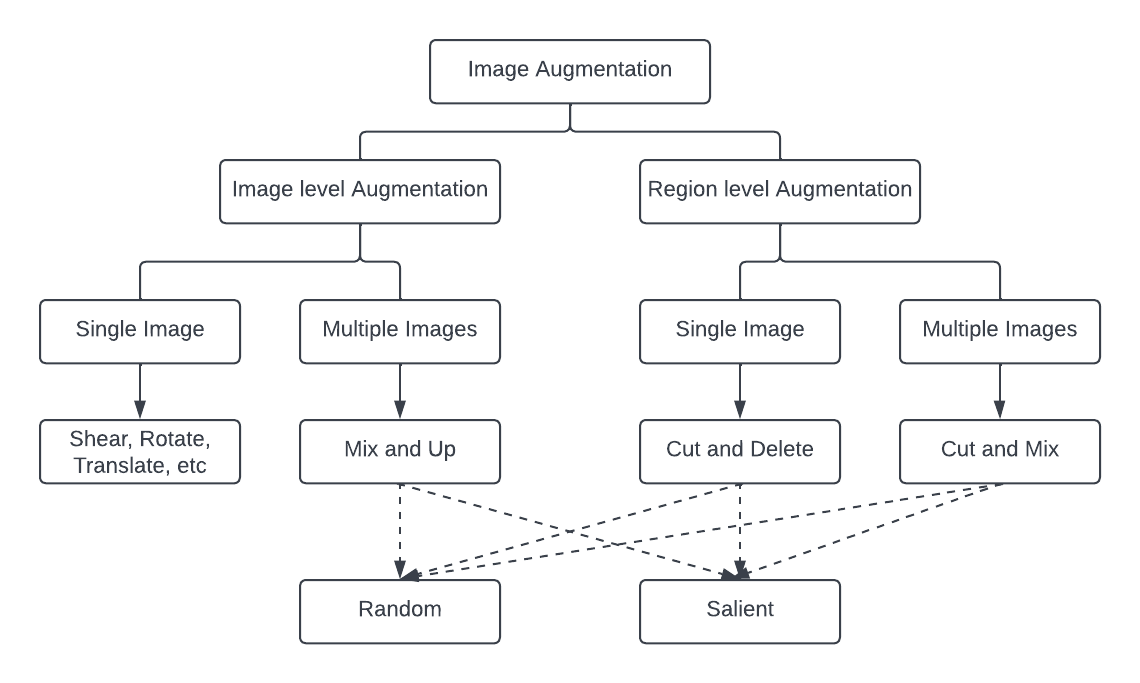
本综述对深度学习中用于数据增强的图像混合与删除技术进行了全面分析,将这些方法分类为剪切并删除(Cut & Delete)、剪切并混合(Cut & Mix)以及混合并提升(Mix & Up)。研究表明,这些方法能有效提升模型的泛化能力、对图像噪声和对抗性攻击的鲁棒性,并在图像分类与目标检测等任务中实现优异性能,且计算开销极低,在基准数据集上展现出强劲的实证结果。
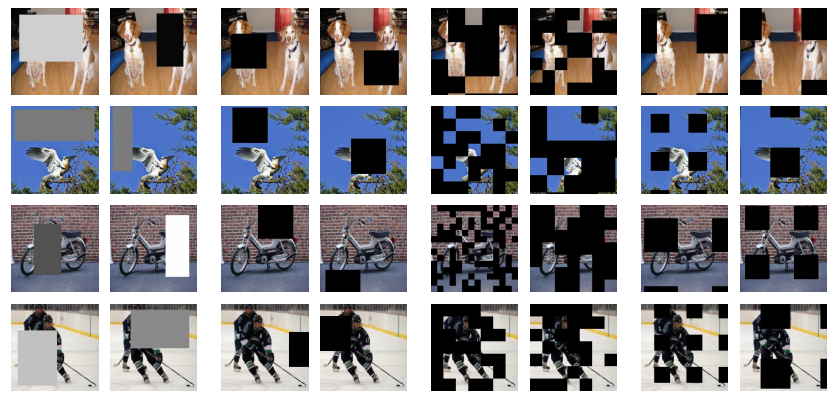
Neural networks are prone to overfitting and memorizing data patterns. To avoid over-fitting and enhance their generalization and performance, various methods have been suggested in the literature, including dropout, regularization, label smoothing, etc. One such method is augmentation which introduces different types of corruption in the data to prevent the model from overfitting and to memorize patterns present in the data. A sub-area of data augmentation is image mixing and deleting. This specific type of augmentation either deletes image regions or mixes two images to hide or make particular characteristics of images confusing for the network, forcing it to emphasize the overall structure of the object in an image. Models trained with this approach have proven to perform and generalize well compared to those trained without image mixing or deleting. An added benefit that comes with this method of training is robustness against image corruption. Due to its low computational cost and recent success, researchers have proposed many image mixing and deleting techniques. We furnish an in-depth survey of image mixing and deleting techniques and provide categorization via their most distinguishing features. We initiate our discussion with some fundamental relevant concepts. Next, we present essentials, such as each category's strengths and limitations, describing their working mechanism, basic formulations, and applications. We also discuss the general challenges and recommend possible future research directions for image mixing and deleting data augmentation techniques. Datasets and codes for evaluation are publicly available here.
研究动机与目标
- 系统性地对深度学习中的图像混合与删除数据增强技术进行分类与分析。
- 评估各类技术的优势、局限性及其工作机理。
- 识别在显著性感知与平滑性增强增强方法中面临的关键挑战与未来研究方向。
- 为研究人员提供比较分析,以选择最优的增强策略。
- 突出这些方法在提升模型鲁棒性、校准能力与泛化性能方面在各类视觉任务中的优势。
提出的方法
- 根据数据处理方式,将图像混合与删除技术划分为三大类:剪切并删除(Cut & Delete)、剪切并混合(Cut & Mix)与混合并提升(Mix & Up)。
- 分析各类方法的工作机理,包括区域级与图像级增强,以及随机策略与显著性引导策略的应用。
- 基于 ImageNet、CIFAR-100 和 COCO 等标准基准数据集,使用性能指标评估各类技术。
- 通过分析分类激活图(CAMs)的影响,评估模型注意力机制与特征学习效果。
- 提出端到端训练增强与分类网络的未来框架,以降低计算开销。
- 研究特征空间混合(如 Manifold MixUp)与显著性感知混合(如 Co-MixUp、PuzzleMix)在提升图像平滑性与结构一致性方面的应用。
实验结果
研究问题
- RQ1在各类视觉任务中,不同图像混合与删除技术在性能、鲁棒性与泛化能力方面的表现如何比较?
- RQ2现有显著性引导增强方法的关键局限性是什么,特别是在结构一致性与计算成本方面?
- RQ3这些增强策略如何影响模型的校准能力、对抗性鲁棒性以及分布外检测性能?
- RQ4与 MixUp 相比,CutMix 和 CutOut 的正则化效应在理论或实证上有哪些支持依据?
- RQ5未来哪些研究方向可提升增强图像的平滑性与真实感,同时保留显著特征?
主要发现
- 图像混合与删除技术显著提升了模型的泛化能力与对图像噪声、遮挡及对抗性样本的鲁棒性。
- 采用这些方法训练的模型在图像分类、目标检测与细粒度识别任务中,性能优于基线模型。
- 剪切并混合(Cut & Mix)与混合并提升(Mix & Up)方法表现出显著的性能提升,已在 ImageNet 与 CIFAR-100 上报告改进,尽管摘要中未量化具体准确率数值。
- 显著性感知方法如 Co-MixUp 与 PuzzleMix 能增强特征学习,但因采用双网络训练而带来更高的计算成本。
- 增强图像的结构完整性常受影响,尤其在区域级增强中,常出现不规则边缘与断裂形状。
- 未来工作应聚焦于端到端训练框架与特征空间混合,以提升图像平滑性,并深化对正则化效应的理论理解。
阅读本论文
在 Nubint 阅读器中打开原文,边读边就任意段落提问。
在 Nubint 中阅读本论文本解读由 AI 根据论文原文生成,引用前请核对原文。