
[论文解读] Systematic Biases in Estimating the Properties of Black Holes Due to Inaccurate Gravitational-Wave Models
本研究识别出由于当前波形模型的不准确,导致从引力波信号中对黑洞参数估计存在系统性偏差,尤其在高自旋、非对称和大质量双星系统中更为显著。通过贝叶斯推断与线性信号近似方法,研究发现偏差随自旋幅值(当χ₁ > 0.5时,偏差提升6–8倍)、探测器灵敏度及红移的增加而显著上升,从而对H₀的精确测量、天区定位以及质量函数分布构成威胁——这些是未来使用爱因斯坦望远镜和宇宙探索者等新一代探测器开展精密引力波天文学的关键挑战。
Gravitational-wave (GW) observations of binary black-hole (BBH) coalescences are expected to address outstanding questions in astrophysics, cosmology, and fundamental physics. Realizing the full discovery potential of upcoming LIGO-Virgo-KAGRA (LVK) observing runs and new ground-based facilities hinges on accurate waveform models. Using linear-signal approximation methods and Bayesian analysis, we start to assess our readiness for what lies ahead using two state-of-the-art quasi-circular, spin-precessing models: exttt{SEOBNRv5PHM} and exttt{IMRPhenomXPHM}. We ascertain that current waveforms can accurately recover the distribution of masses in the LVK astrophysical population, but not spins. We find that systematic biases increase with detector-frame total mass, binary asymmetry, and spin-precession, with most such binaries incurring parameter biases, extending up to redshifts $\sim3$ in future detectors. Furthermore, we examine three ``golden'' events characterized by large mass ratios, significant spin magnitudes, and high precession, evaluating how systematic biases may affect their scientific outcomes. Our findings reveal that current waveforms fail to enable the unbiased measurement of the Hubble-Lemaître parameter from loud signals, even for current detectors. Moreover, highly asymmetric systems within the lower BH mass-gap exhibit biased measurements of the secondary-companion mass, which impacts the physics of both neutron stars and formation channels. Similarly, we deduce that the primary mass of massive binaries ($ > 60 M_\odot$) will also be biased, affecting supernova physics. Future progress in analytical calculations and numerical-relativity simulations, crucial for calibrating the models, must target regions of the parameter space with significant biases to develop more accurate models. Only then can precision GW astronomy fulfill the promise it holds.
研究动机与目标
- 评估波形模型不准确对双黑洞(BBH)并合过程中黑洞参数估计系统性偏差的影响。
- 评估质量、自旋及有效自旋参数的偏差如何依赖于自旋幅值、质量不对称性和进动等双星特性。
- 确定当前及未来引力波探测器(包括LIGO-Virgo-KAGRA和下一代设施)受此类偏差影响的程度。
- 研究对关键天体物理与宇宙学推断的影响,包括哈勃-勒梅特定律参数的测量与天区定位。
- 识别关键参数空间区域——尤其是高自旋、非对称及大质量双星——这些区域亟需改进波形建模以实现无偏推断。
提出的方法
- 采用线性信号近似方法,估算双黑洞参数后验分布中的系统性偏差。
- 应用贝叶斯推断,对比两种最先进的波形模型:SEOBNRv5PHM与IMRPhenomXPHM,在不同信噪比(SNR)和探测器网络配置下的表现。
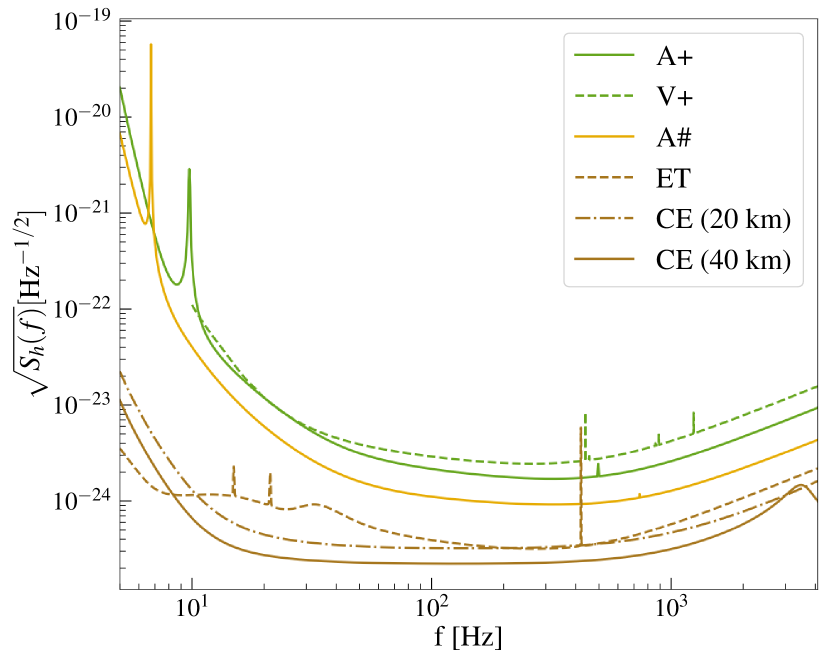
- 利用50,000个模拟双黑洞信号的群体,覆盖不同探测器网络(O5, A#, XG),评估偏差对探测器灵敏度与最低频率的依赖性。
- 通过比值 |δϑ/Δϑ| 量化偏差,其中δϑ为系统性偏差,Δϑ为统计误差,以识别偏差何时主导于不确定性。
- 绘制偏差视界——即系统性偏差超过统计误差的最大距离——针对主自旋(χ₁)等关键参数在不同探测器网络中的表现。
- 分析‘黄金’事件(质量比~6–10,高自旋(0.6–0.9),强进动)对宇宙学与天体物理推断的影响。

实验结果
研究问题
- RQ1系统性偏差在黑洞参数估计中如何随主黑洞自旋幅值变化,特别是在χ₁ = 0.5以上与以下时?
- RQ2波形模型不准确在多大程度上损害对哈勃-勒梅特定律参数(H₀)等宇宙学参数的无偏测量?
- RQ3探测器灵敏度与低频截止如何影响关键参数(如啁啾质量与有效自旋)的偏差-不确定性比?
- RQ4双星不对称性、自旋进动与总质量对引力波参数估计中系统性偏差有何影响?
- RQ5在双黑洞参数空间中,哪些区域——尤其是大质量、高自旋或质量间隙系统——表现出最严重的偏差?为何这些区域对未来发展科学至关重要?
主要发现
- 当主黑洞自旋幅值超过0.5时,黑洞自旋估计的系统性偏差相比低于0.5时增加约6至8倍。
- 当前波形模型能够准确恢复LVK天体物理群体的质量分布,但无法准确恢复自旋分布,引入了显著的系统性误差。
- 系统性偏差随探测器帧总质量、双星质量不对称性和自旋进动而增长,即使在下一代(XG)探测器中,红移达∼3时,多数双星仍受其影响。
- 对于质量比~6–10、自旋0.6–0.9且进动强烈的‘黄金’事件,系统性偏差会阻止对哈勃-勒梅特定律参数与天区定位的无偏测量,即使在当前探测器网络中亦然。
- 主质量>60 M⊙的大质量双星及处于下黑洞质量间隙的系统,其次级伴星质量测量存在偏差,影响对超新星物理与形成通道的解释。
- 对于爱因斯坦望远镜与宇宙探索者网络,主自旋χ₁的偏差视界超过25 Gpc(z ≈ 3),表明系统性偏差在可观测的恒星起源双黑洞中仍具有显著影响。
阅读本论文
在 Nubint 阅读器中打开原文,边读边就任意段落提问。
在 Nubint 中阅读本论文本解读由 AI 根据论文原文生成,引用前请核对原文。