
[论文解读] The All-Seeing Project V2: Towards General Relation Comprehension of the Open World
本文提出 All-Seeing Project V2,引入一种新颖的关联对话(Relation Conversation, ReC)任务,统一多模态模型中的文本生成、目标定位与关系理解。作者提出 ASMv2 模型,基于高质量的 AS-V2 数据集进行训练,并通过 CRPE 基准进行评估,在关系理解方面取得 52.04% 的整体准确率,显著优于 LLaVA-1.5(43.14%)。
We present the All-Seeing Project V2: a new model and dataset designed for understanding object relations in images. Specifically, we propose the All-Seeing Model V2 (ASMv2) that integrates the formulation of text generation, object localization, and relation comprehension into a relation conversation (ReC) task. Leveraging this unified task, our model excels not only in perceiving and recognizing all objects within the image but also in grasping the intricate relation graph between them, diminishing the relation hallucination often encountered by Multi-modal Large Language Models (MLLMs). To facilitate training and evaluation of MLLMs in relation understanding, we created the first high-quality ReC dataset ({AS-V2) which is aligned with the format of standard instruction tuning data. In addition, we design a new benchmark, termed Circular-based Relation Probing Evaluation (CRPE) for comprehensively evaluating the relation comprehension capabilities of MLLMs. Notably, our ASMv2 achieves an overall accuracy of 52.04 on this relation-aware benchmark, surpassing the 43.14 of LLaVA-1.5 by a large margin. We hope that our work can inspire more future research and contribute to the evolution towards artificial general intelligence. Our project is released at https://github.com/OpenGVLab/all-seeing.
研究动机与目标
- 解决现有多模态大语言模型在理解图像中对象关系方面的局限性,此类局限常导致幻觉或依赖语言先验。
- 通过统一文本生成、视觉定位与关系推理,弥合整体图像理解与细粒度关系感知之间的差距。
- 构建一个高质量、适用于指令微调的 AS-V2 数据集,包含 127K 个关系对话样本,以支持训练与评估。
- 设计一个全面的基准测试——基于环形的关系探针评估(Circular-based Relation Probing Evaluation, CRPE),以定量衡量多模态大语言模型的关系理解能力。
- 在开放场景图生成与关系理解任务中实现最先进性能,同时保持通用多模态能力。
提出的方法
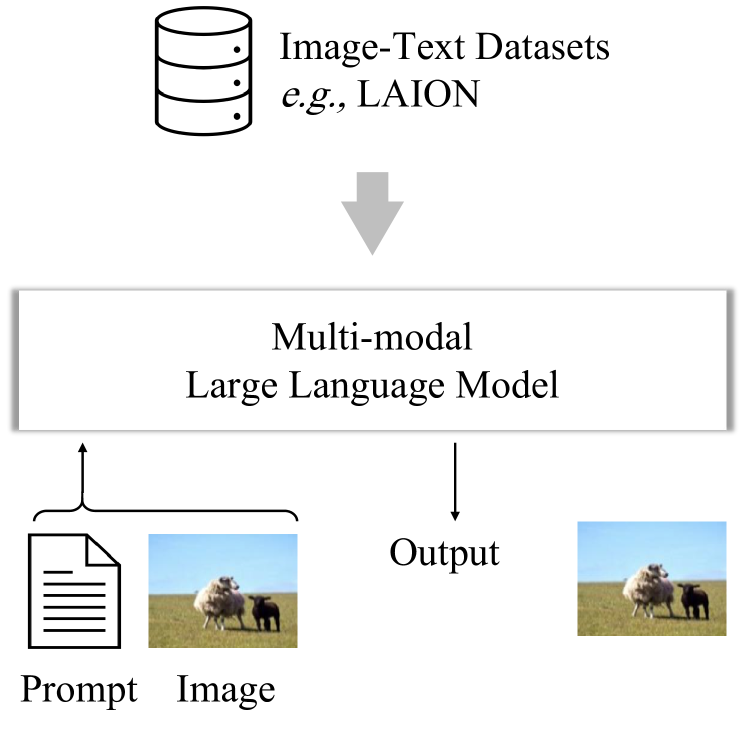
- 提出关联对话(ReC)任务,要求模型在图像区域中定位所有对象与谓词(主语、谓词、宾语),并生成自然语言响应。
- 通过整合现有图像字幕、目标定位与关系标注数据构建 AS-V2 数据集,生成 127K 个高质量 ReC 样本,格式符合标准指令微调规范。
- 使用 AS-V2 及其他多模态语料库训练 All-Seeing Model v2(ASMv2),实现文本生成、目标定位与关系理解的端到端联合学习。
- 设计 CRPE 基准测试,包含四个划分——存在性(Existence)、主语(Subject)、谓词(Predicate)与宾语(Object),以结构化、探针式方式评估关系理解能力。
- 将 ASMv2 适配至三项任务:关联对话、开放场景图生成(OpenSGG)与谓词分类,验证其在不同场景下的泛化能力。
- 采用 IoU > 0.5 作为边界框匹配标准,使用精确匹配三元组召回率作为评估指标,mRecall 与 #Tuples 作为 OpenSGG 的关键指标。
实验结果
研究问题
- RQ1统一的任务格式如关联对话(ReC)是否能有效训练多模态大语言模型,使其联合理解对象关系、定位与文本生成?
- RQ2相较于标准多模态大语言模型,基于高质量、指令微调的 ReC 数据集(AS-V2)进行训练,能否显著提升模型避免关系幻觉的能力?
- RQ3当在 ReC 上进行训练时,模型在开放场景图生成(OpenSGG)任务上的泛化能力如何?与封闭集基线相比表现如何?
- RQ4CRPE 基准是否能有效量化并区分不同多模态大语言模型的关系理解能力?
- RQ5所提出的架构与训练范式是否能在关系特定任务与通用多模态基准上均实现更优性能?
主要发现
- ASMv2 在 CRPE 基准测试中取得 52.04% 的整体准确率,显著优于 LLaVA-1.5(43.14%)与 Qwen-VL(27.27%),证明其在关系理解方面具有卓越能力。
- 在 OpenSGG 任务中,ASMv2 实现 14.2% 的三元组召回率与 10.3% 的 mRecall,尽管平均仅生成 9.2 个三元组,仍优于 TextPSG(4.8% 召回率),表明其具备更高的样本效率与泛化能力。
- 模型在 CRPE 的所有划分中均保持强劲表现,分别达到 87.24%(存在性)、50.55%(主语)、48.46%(谓词)与 57.10%(宾语),体现关系理解的平衡性与鲁棒性。
- ASMv2 在谓词与宾语划分中的表现(48.46% 与 57.10%)超过 LLaVA-1.5(43.68% 与 47.89%),表明其在关系推理方面超越基础目标检测能力。
- CRPE 基准成功揭示,现有多模态大语言模型在关系理解方面显著弱于对象识别能力,凸显针对性评估的必要性。
- ASMv2 在保持竞争性召回率的同时,能够以开放形式生成场景图,表明其对未见谓词标签具备强大泛化能力,是迈向通用人工智能级视觉-语言理解的关键一步。
阅读本论文
在 Nubint 阅读器中打开原文,边读边就任意段落提问。
在 Nubint 中阅读本论文本解读由 AI 根据论文原文生成,引用前请核对原文。