
[论文解读] The foreground transfer function for HI intensity mapping signal reconstruction: MeerKLASS and precision cosmology applications
该论文验证了在H i强度测量巡天中使用前景转移函数重建功率谱的可行性,即使在大尺度上信号损失超过50%的情况下,仍能实现亚百分之一的精度。基于MeerKLASS巡天的模拟,该研究建立了一套稳健的转移函数构建与应用方法,对模拟基准参数的误差具有鲁棒性,并在激进的前景清洁处理下仍能实现精确的宇宙学推断。
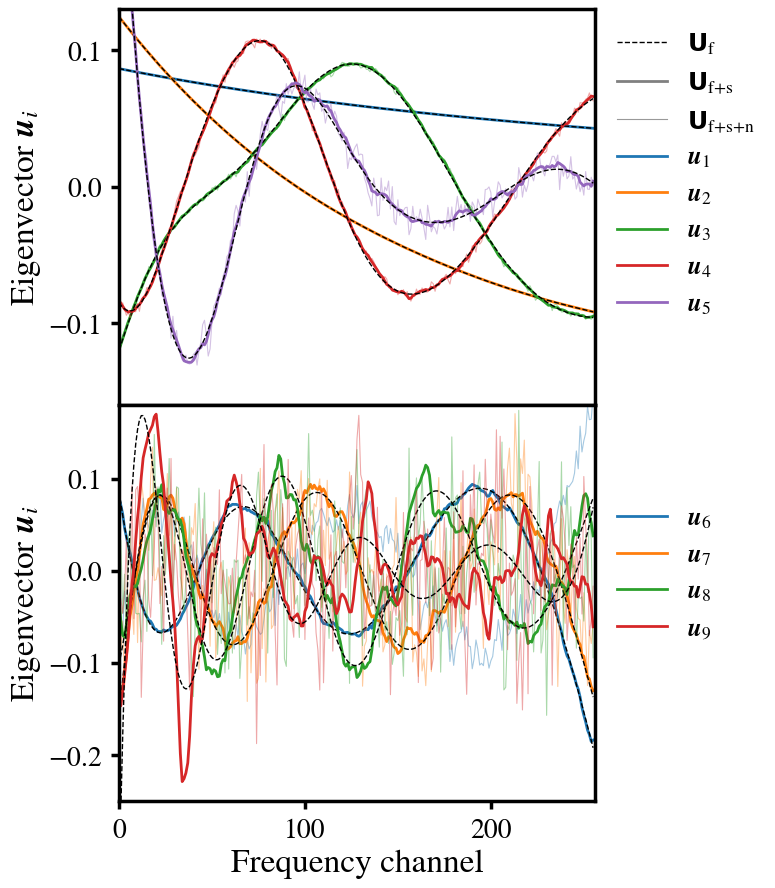
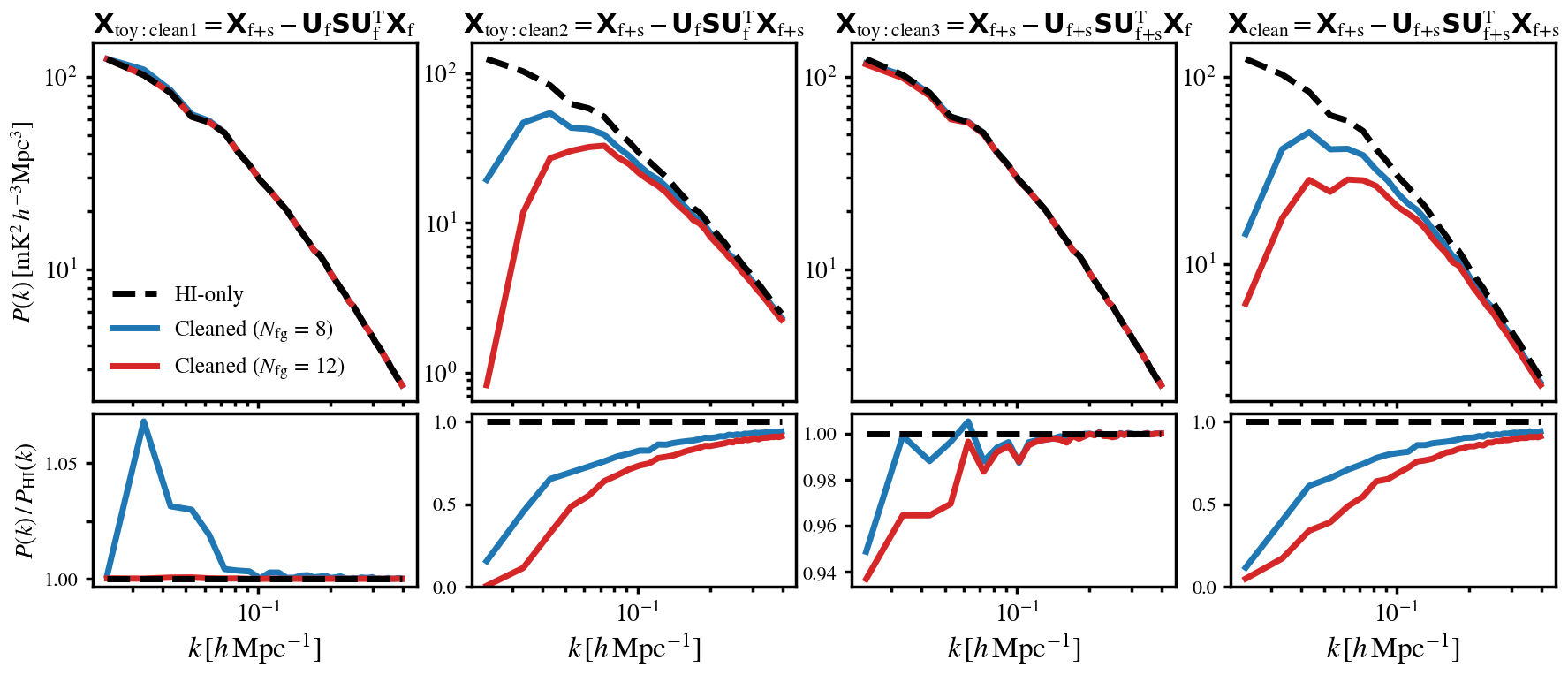
Blind cleaning methods are currently the preferred strategy for handling foreground contamination in single-dish HI intensity mapping surveys. Despite the increasing sophistication of blind techniques, some signal loss will be inevitable across all scales. Constructing a corrective transfer function using mock signal injection into the contaminated data has been a practice relied on for HI intensity mapping experiments. However, assessing whether this approach is viable for future intensity mapping surveys where precision cosmology is the aim, remains unexplored. In this work, using simulations, we validate for the first time the use of a foreground transfer function to reconstruct power spectra of foreground-cleaned low-redshift intensity maps and look to expose any limitations. We reveal that even when aggressive foreground cleaning is required, which causes ${>}\,50\%$ negative bias on the largest scales, the power spectrum can be reconstructed using a transfer function to within sub-percent accuracy. We specifically outline the recipe for constructing an unbiased transfer function, highlighting the pitfalls if one deviates from this recipe, and also correctly identify how a transfer function should be applied in an auto-correlation power spectrum. We validate a method that utilises the transfer function variance for error estimation in foreground-cleaned power spectra. Finally, we demonstrate how incorrect fiducial parameter assumptions (up to ${\pm}100\%$ bias) in the generation of mocks, used in the construction of the transfer function, do not significantly bias signal reconstruction or parameter inference (inducing ${<}\,5\%$ bias in recovered values).
研究动机与目标
- 评估在低红移H i强度测量巡天中使用前景转移函数重建功率谱的可行性,特别是在精确宇宙学研究中的适用性。
- 识别并校正转移函数构建过程中可能引入系统性偏差的错误,这些偏差会影响信号恢复或宇宙学参数推断。
- 在真实巡天条件下(包括激进的前景清洁和不完美的模拟)验证转移函数方法的鲁棒性。
- 为自相关功率谱分析提供一套经验证、可复现的转移函数构建与应用方法。
- 评估转移函数在误差估计中的实用性,以及其对模拟生成中基准宇宙学参数不确定性的鲁棒性。
提出的方法
- 为MeerKLASS巡天模拟真实的H i强度测量观测,包括仪器效应、噪声和前景污染。
- 对模拟数据应用盲前景清洁技术,该技术导致尺度相关的信号损失。
- 在清洁后的数据中注入合成的H i功率谱,以测量恢复的功率谱与真实功率谱的比值,从而形成转移函数。
- 使用一致且经验证的流程构建转移函数,以考虑噪声、波束效应和巡天几何。
- 将转移函数应用于重建真实功率谱,校正所有尺度上的信号损失。
- 通过多个模拟中转移函数的方差来估计重建功率谱的误差。
实验结果
研究问题
- RQ1在前景清洁导致大尺度上信号损失超过50%的情况下,前景转移函数能否准确重建真实的H i功率谱?
- RQ2构建转移函数的关键步骤是什么?如何避免在信号恢复或宇宙学参数推断中引入系统性偏差?
- RQ3转移函数重建对用于生成模拟样本的基准宇宙学参数误差的敏感性如何?
- RQ4转移函数的方差能否可靠地用于估计重建功率谱的不确定性?
- RQ5当应用于具有复杂波束图案或$1/f$噪声的单镜H i强度测量数据时,转移函数方法存在哪些局限性?
主要发现
- 即使前景清洁在最大尺度上导致超过50%的负偏差,转移函数仍能以亚百分之一的精度重建真实的H i功率谱。
- 正确构建的转移函数对模拟中使用的基准参数误差具有鲁棒性,即使在参数偏差达±100%的情况下,恢复信号值的偏差仍低于5%。
- 转移函数的方差可作为重建功率谱不确定性的可靠估计,从而在宇宙学分析中实现正确的误差传播。
- 若偏离推荐的转移函数构建流程(如错误的归一化或尺度依赖的处理),可能在信号恢复中引入显著的系统性偏差。
- 该方法在不同巡天规模和观测效应下均保持有效,表明其在未来的强度测量巡天中具有广泛适用性。
- 本研究强调了尽管盲前景清洁和正向建模技术有所进步,转移函数仍具持续相关性,尤其是在未来数据分析流程存在不确定性的情况下。
阅读本论文
在 Nubint 阅读器中打开原文,边读边就任意段落提问。
在 Nubint 中阅读本论文本解读由 AI 根据论文原文生成,引用前请核对原文。