
[论文解读] The Impact of Reasoning Step Length on Large Language Models
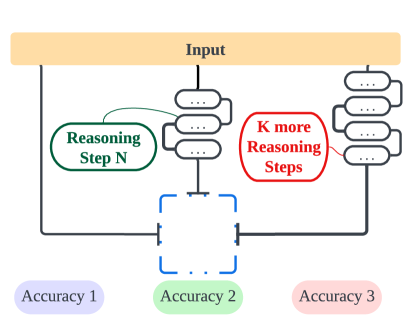
本文研究了思维链(Chain-of-Thought, CoT)提示中推理步骤长度对大语言模型(LLM)性能的影响。通过系统性地扩展或压缩推理步骤,同时保持其他所有因素不变,作者证明了更长的推理链能显著提升推理准确性——即使步骤中包含错误信息——突显了步骤数量在事实正确性之上的关键作用。研究结果为在不同大语言模型上优化复杂推理任务的CoT提供了实用且可扩展的指导。
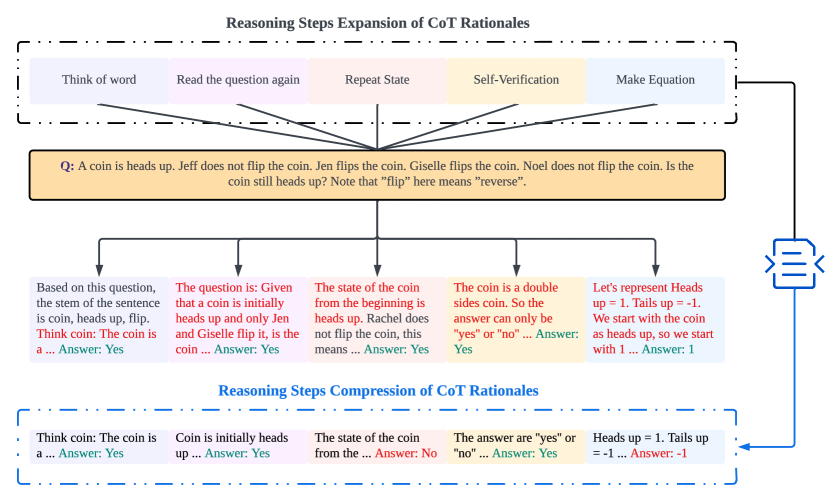
Chain of Thought (CoT) is significant in improving the reasoning abilities of large language models (LLMs). However, the correlation between the effectiveness of CoT and the length of reasoning steps in prompts remains largely unknown. To shed light on this, we have conducted several empirical experiments to explore the relations. Specifically, we design experiments that expand and compress the rationale reasoning steps within CoT demonstrations while keeping all other factors constant. We have the following key findings. First, the results indicate that lengthening the reasoning steps in prompts, even without adding new information into the prompt, considerably enhances LLMs' reasoning abilities across multiple datasets. Alternatively, shortening the reasoning steps, even while preserving the key information, significantly diminishes the reasoning abilities of models. This finding highlights the importance of the number of steps in CoT prompts and provides practical guidance to make better use of LLMs' potential in complex problem-solving scenarios. Second, we also investigated the relationship between the performance of CoT and the rationales used in demonstrations. Surprisingly, the result shows that even incorrect rationales can yield favorable outcomes if they maintain the requisite length of inference. Third, we observed that the advantages of increasing reasoning steps are task-dependent: simpler tasks require fewer steps, whereas complex tasks gain significantly from longer inference sequences. The code is available at https://github.com/MingyuJ666/The-Impact-of-Reasoning-Step-Length-on-Large-Language-Models
研究动机与目标
- 探究推理步骤长度对大语言模型中CoT提示有效性的影响。
- 确定增加或减少推理步骤数量是否会影响模型准确率,且独立于事实正确性。
- 评估更长推理链的优势是否在不同任务和模型规模间保持一致。
- 评估推理步骤的结构而非问题内容,是否驱动性能提升。
提出的方法
- 通过在CoT演示中扩展或压缩推理步骤,同时保留所有其他提示元素,开展受控实验。
- 通过添加“你必须多思考几步”来修改零样本提示,以鼓励更长的推理序列。
- 在多个数据集(如GSM8K、MultiArith)和大语言模型(GPT-3.5、GPT-4、text-davinci-002)上使用Auto-CoT和Few-Shot-CoT设置。
- 压缩演示中的推理步骤以测试性能下降情况,并与基线和完整长度版本进行比较。
- 在推理链中引入误导性信息,以测试仅长度是否足以维持性能提升。
- 分析不同模型规模下的性能表现,以评估缩放行为及对步骤长度操作的容忍度。
实验结果
研究问题
- RQ1在CoT提示中增加推理步骤数量是否能提升大语言模型的推理准确率,即使未引入新信息?
- RQ2当推理步骤被压缩时,即使关键信息被保留,模型性能会发生什么变化?
- RQ3即使推理链包含错误,但若长度足够,是否仍能带来有利结果?
- RQ4更长推理步骤的优势在不同任务和模型架构之间如何变化?
- RQ5与步骤数量相比,问题内容在多大程度上影响CoT性能?
主要发现
- 在CoT提示中延长推理步骤,可在多个数据集上显著提升大语言模型的推理准确率,即使未引入新信息。
- 在保留关键信息的前提下压缩推理步骤,会导致模型性能大幅下降,退化至零样本基线水平。
- 即使推理理由包含错误,只要推理长度足够,仍可能带来有利结果,表明逻辑连贯性比事实正确性更为重要。
- 更长推理链带来的性能提升具有任务依赖性:复杂任务比简单任务获益更多。
- 通过延长推理步骤可提升零样本CoT性能,当提示被修改为要求更多步骤时,可观察到可测量的准确率提升。
- 更大的模型(如GPT-4)对步骤长度操作具有更高的容忍度,而较小的模型(如text-davinci-002)在步骤扩展方面获得的性能提升最大。
阅读本论文
在 Nubint 阅读器中打开原文,边读边就任意段落提问。
在 Nubint 中阅读本论文本解读由 AI 根据论文原文生成,引用前请核对原文。