
[论文解读] Tianyu: search for the second solar system and explore the dynamic universe
Tianyu 项目在中国冷湖部署双台1米望远镜,采用高时间分辨率光度测量,旨在探测长周期凌星系外行星,特别是冷巨星,并探索时域天体现象。该计划对视星等V<14的恒星实现0.1%的光度精度,预计在五年内发现300多颗凌星系外行星,包括约12颗冷巨星,以及1–2个太阳系类地系统,可通过Earth 2.0等后续设施进行确认。
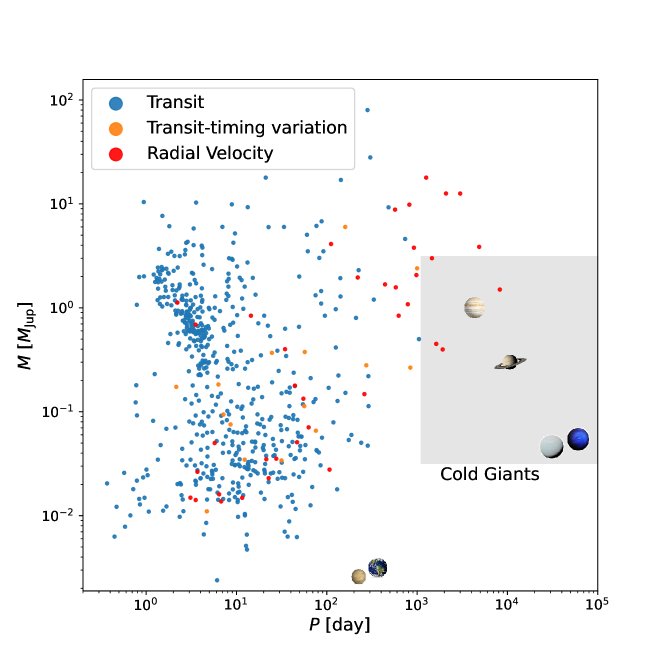
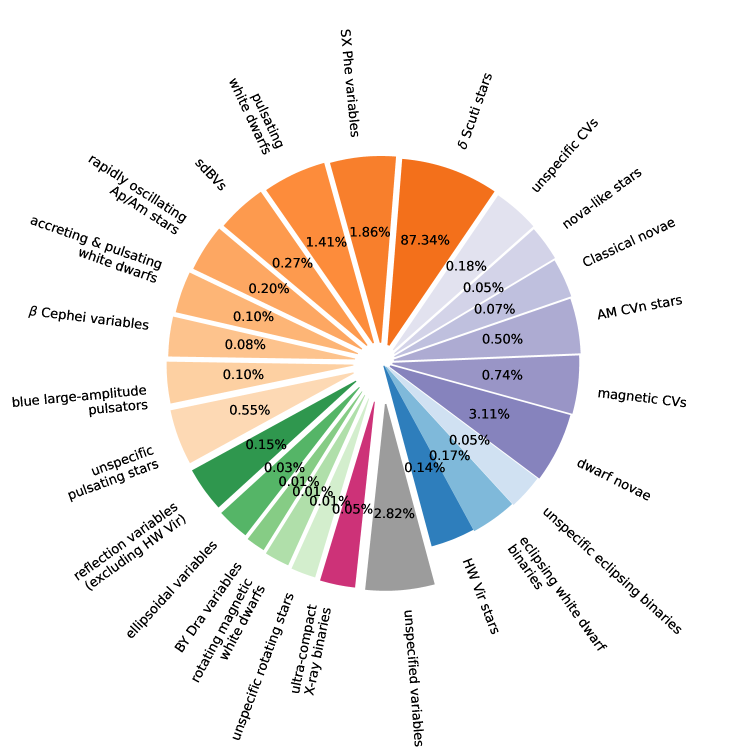
Giant planets like Jupiter and Saturn, play important roles in the formation and habitability of Earth-like planets. The detection of solar system analogs that have multiple cold giant planets is essential for our understanding of planet habitability and planet formation. Although transit surveys such as Kepler and TESS have discovered thousands of exoplanets, these missions are not sensitive to long period planets due to their limited observation baseline. The Tianyu project, comprising two 1-meter telescopes (Tianyu-I and II), is designed to detect transiting cold giant planets in order to find solar system analogs. Featuring a large field of view and equipped with a high-speed CMOS camera, Tianyu-I will perform a high-precision photometric survey of about 100 million stars, measuring light curves at hour-long cadence. The candidates found by Tianyu-I will be confirmed by Tianyu-II and other surveys and follow-up facilities through multi-band photometry, spectroscopy, and high resolution imaging. Tianyu telescopes will be situated at an elevation about 4000 meters in Lenghu, China. With a photometric precision of 1% for stars with V < 18 mag, Tianyu is expected to find more than 300 transiting exoplanets, including about 12 cold giant planets, over five years. A five-year survey of Tianyu would discover 1-2 solar system analogs. Moreover, Tianyu is also designed for non-exoplanetary exploration, incorporating multiple survey modes covering timescales from sub-seconds to months, with a particular emphasis on events occurring within the sub-second to hour range. It excels in observing areas such as infant supernovae, rare variable stars and binaries, tidal disruption events, Be stars, cometary activities, and interstellar objects. These discoveries not only enhance our comprehension of the universe but also offer compelling opportunities for public engagement in scientific exploration.
研究动机与目标
- 寻找具有多个冷巨星的太阳系类地系统,这对于理解行星宜居性与形成机制至关重要。
- 克服开普勒与TESS等凌星巡天的局限性,这些巡天因观测基线较短而对长周期行星不敏感。
- 利用大视场望远镜与高速CMOS成像技术,对约1亿颗恒星开展高精度光度测量巡天。
- 通过Tianyu-II及其他设施的多波段光度、光谱与高分辨率成像,实现对系外行星候选体的确认。
- 超越系外行星研究,探测毫秒至月尺度的快速光学暂现源、稀有变星及太阳系天体。
提出的方法
- 在青海冷湖海拔4,000米的优越大气条件下,部署两台1米望远镜Tianyu-I与Tianyu-II。
- 为Tianyu-I配备大面阵高速CMOS相机,实现宽视场内长达一小时时间间隔的光度测量。
- 实施三模式巡天策略:80%中等时间分辨率(1小时),10%高时间分辨率(亚秒至秒级),10%低时间分辨率(小时至月级)观测。
- 实现对V<14恒星的光度精度低于0.1%,对V<18恒星低于1%,从而能够探测深度且周期长的凌星事件。
- 利用Tianyu-II通过多波段滤光片、光谱仪甚至自适应光学系统,对候选体进行分类与验证。
- 整合TESS、开普勒及其他巡天的数据,提升对长周期凌星系外行星的探测灵敏度与效率。
实验结果
研究问题
- RQ1在为期五年的1亿颗恒星高时间分辨率光度巡天中,预计能探测到多少颗凌星冷巨星?
- RQ2在地球类地行星发生率为10%的假设下,能探测到多少个包含共面多颗冷巨星的太阳系类地系统?
- RQ3Tianyu在探测婴儿超新星、潮汐瓦解事件及引力波事件电磁对应体等快速光学暂现源方面具备何种能力?
- RQ4该巡天在识别稀有变星、Be星及活动小天体(如彗星与星际物体)方面效率如何?
- RQ5Tianyu巡天在近地天体与海王星外天体的探测与表征方面能做出多大贡献?
主要发现
- 预计Tianyu在五年运行期内将探测到300多颗凌星系外行星候选体,其中包括约12颗冷巨星。
- 凭借对V<14恒星0.1%的光度精度与对V<18恒星1%的光度精度,Tianyu对深度、长周期凌星事件具备极高灵敏度。
- 在假设共面性及地球类地行星发生率为10%的前提下,预计可发现1–2个太阳系类地系统,未来任务如Earth 2.0可予以确认。
- 高时间分辨率模式预计五年内将发现20,000颗高振幅变星(HADS)与15个潮汐瓦解事件(TDEs)。
- 中等时间分辨率巡天预计探测到1,500颗超新星与12个超紧凑双星系统,同时发现58颗近地天体与彗星。
- 低时间分辨率巡天将探测到遥远的海王星外天体及其他太阳系外缘天体,有助于研究太阳系外缘区域。
阅读本论文
在 Nubint 阅读器中打开原文,边读边就任意段落提问。
在 Nubint 中阅读本论文本解读由 AI 根据论文原文生成,引用前请核对原文。