
[论文解读] Topology of critical points in boundary matrix duals
本文通过计算反 de Sitter 空间中史瓦西黑洞和带电黑洞及其对应 ${\cal{N}}=4$ $SU(N)$ SYM 矩阵模型的拓扑荷,提出了反 de Sitter/共形场论对偶中临界点与平衡相的拓扑分类。利用一种非守恒的布拉格-威廉姆斯自由能,表明体相与边界矩阵模型中的临界点具有相同的拓扑荷(HP 相变为 +1,稳定/不稳定相分别为 ±1),证实了体相与边界拓扑不变量的一致性,并支持了黑洞总拓扑荷为零的猜想。
Computation of topological charges of the Schwarzschild and charged black holes in AdS in canonical and grand canonical ensembles allows for a classification of the phase transition points via the Bragg-Williams off-shell free energy. We attempt a topological classification of the critical points and the equilibrium phases of the dual gauge theory via a phenomenological matrix model, which captures the features of the ${\cal{N}}=4$, $SU(N)$ Super Yang-Mills theory on $S^3$ at finite temperature at large $N$. With minimal modification of parameters, critical points of the matrix model at finite chemical potential can be classified as well. The topological charges of locally stable and unstable dynamical phases of the system turn out to be opposite to each other, totalling to zero, and this matches the analysis in the bulk.
研究动机与目标
- 通过从非守恒自由能导出的拓扑荷,建立黑洞热力学中临界点的拓扑分类。
- 研究 ${\cal{N}}=4$ $SU(N)$ SYM 理论在 $S^3$ 上有限温度下的对偶边界矩阵模型中是否出现相同的拓扑不变量。
- 通过拓扑不变量验证体相黑洞相变与边界矩阵模型相结构之间的全息一致性。
- 探讨化学势对矩阵模型参数的影响及其对拓扑分类的作用。
- 检验黑洞局部稳定与不稳定相的总拓扑荷之和为零的猜想。
提出的方法
- 为反 de Sitter 空间中的黑洞构建非守恒布拉格-威廉姆斯自由能,以计算临界点的拓扑荷。
- 从边界矩阵模型的有效势定义向量场,以计算相变点的拓扑荷。
- 使用文献 [18] 中的拓扑荷形式化方法,根据向量场零点的指标将临界点分类为 +1 或 -1。
- 映射体相与边界中稳定与不稳定平衡相的拓扑荷,确保双方的一致性。
- 将化学势依赖性纳入矩阵模型参数 (a,b),实现有限化学势下临界点的分类。
- 比较体相与边界模型中霍金-佩奇相变与二阶临界点的拓扑荷。
实验结果
研究问题
- RQ1体相黑洞相图中临界点的拓扑荷是否与边界矩阵模型中计算的拓扑荷一致?
- RQ2体相中霍金-佩奇相变点的拓扑荷及其对偶矩阵模型中的值是多少?在有限化学势下是否保持一致?
- RQ3体相中稳定与不稳定平衡相的拓扑荷如何与边界矩阵模型中的对应荷相关联?
- RQ4所有相(稳定 + 不稳定)的总拓扑荷是否如猜想所示为零?
- RQ5化学势的引入如何影响边界矩阵模型中相变的拓扑分类?
主要发现
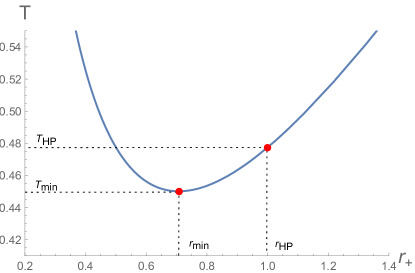
- 体相中霍金-佩奇相变点的拓扑荷为 +1,该值在边界矩阵模型中被精确重现。
- 大系综中临界点的拓扑荷为 +1,与体相分析结果一致。
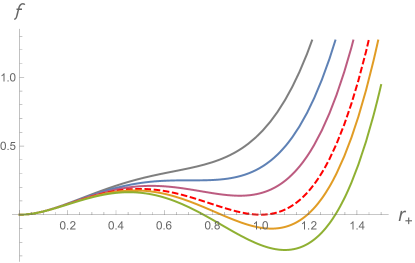
- 体相与边界中稳定平衡相的拓扑荷均为 +1,不稳定相为 -1,总和为零,符合猜想。
- 正则系综中带电黑洞的二阶临界点的拓扑荷为 +1,与 [18] 中结果不同,原因在于热力学框架的差异。
- 边界有效势 $V(\rho)$ 中鞍点的拓扑荷与对应体相黑洞的拓扑荷一致。
- 结果支持了体相黑洞热力学与边界矩阵模型之间拓扑不变量的全息一致性。
阅读本论文
在 Nubint 阅读器中打开原文,边读边就任意段落提问。
在 Nubint 中阅读本论文本解读由 AI 根据论文原文生成,引用前请核对原文。