
[论文解读] TR-ARPES Signal in Pumped Semiconductors within Dynamical Projective Operatorial Approach (DPOA)
该论文提出了一种新型多体理论框架——动力学投影算符方法(DPOA),可高效模拟非平衡态半导体中的时间分辨角分辨光电子能谱(TR-ARPES)。通过结合二次量子化形式、基于Wannier的紧束缚模型以及在偶极子规范下的自定义Peierls展开,DPOA能够精确且快速地计算多体、多时间相关函数,并捕捉复杂的泵浦诱导效应,如能带屏蔽、边带和共振激发,为时间依赖密度泛函理论(TD-DFT)提供了一种计算效率更高且具有更深层次物理洞察力的替代方案。
In this manuscript, after discussing in detail the internals of our recently developed method, the dynamical projective operatorial approach (DPOA), we provide the framework to apply this method to pumped semiconductor lattice systems and, in particular, to study and analyze their electronic excitations and TR-ARPES signal. The expressions for relevant out-of-equilibrium Green's functions and TR-ARPES signal are given within the DPOA framework and, defining a retarded TR-ARPES signal, it is shown that it is possible to obtain an out-of-equilibrium version of the fluctuation-dissipation theorem. We clarify how single- and multi-photon resonances, rigid shifts, band dressings, and different types of sidebands emerge in the TR-ARPES signal. We also propose protocols for evaluating the strength of single- and multi-photon resonances and for assigning the residual excited electronic population at each crystal momentum and band to a specific excitation process. Hamiltonians, where intra- and inter-band transitions are selectively inhibited, are defined and used to analyze the effects on the TR-ARPES signal and the residual electronic excited population. Three relevant cases of light-matter coupling are examined within the dipole gauge: only a local dipole, only the Peierls substitution in the hopping term, and both terms at once. The transient and residual pump effects are studied in detail, including the consequences of the lattice symmetries at different crystal momenta on the TR-ARPES signal. A detailed study of the dependence of the TR-ARPES signal on the probe-pulse characteristics is also reported. To provide a guideline for understanding the complex effects and interplays and the variety of possible physical phenomena without being limited by the characteristics of a single particular real material, we have chosen to study a prototypical pumped two-band semiconductor lattice system.
研究动机与目标
- 解决现有方法(如TD-DFT和单体方法)在模拟非平衡态TR-ARPES信号时存在的计算效率低下和物理洞察有限的问题。
- 开发一种能够同时处理弱关联和强关联体系的框架,通过DFT能带结构的Wannier化保留真实材料的复杂性。
- 通过在二次量子化形式中引入偶极子规范和Peierls替换,实现对泵浦-探测光谱的精确、数值高效的模拟。
- 通过新设计的Peierls展开,阐明单光子和多光子共振、刚性位移和边带的起源。
- 为将残留激发布居分配给特定激发过程提供理论依据,并推导出TR-ARPES的非平衡涨落-耗散定理。
提出的方法
- DPOA采用多体二次量子化形式,使用复合算符描述弱关联和强关联体系中的电子关联效应。
- 通过DFT能带结构的Wannier化,将复杂的真实材料映射到自由度最少的紧束缚模型。
- 在哈密顿量中引入偶极子规范和Peierls替换,以在时变场下模拟光与物质的耦合。
- 提出一种新颖的Peierls展开,以高效计算时间演化格林函数,并阐明边带和能带位移等共振现象的起源。
- 计算多体、多时间相关函数,从而突破单体近似,获得非平衡谱函数。
- 通过傅里叶变换在频率空间推导出先进格林函数和次级格林函数,从而定义非平衡谱函数和TR-ARPES信号。
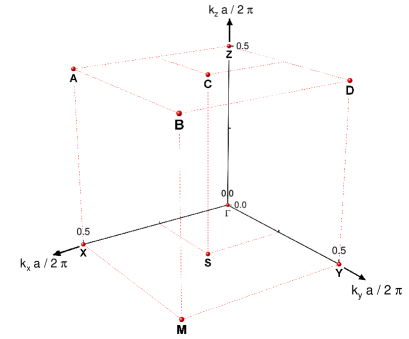
实验结果
研究问题
- RQ1在泵浦-探测TR-ARPES实验中,单光子和多光子共振如何产生?其在时变光-物质耦合中的微观起源是什么?
- RQ2泵浦脉冲后残留的电子布居在多大程度上可归因于特定激发通道?如何对其进行量化?
- RQ3在双能带泵浦系统中,晶格对称性和晶体动量如何影响瞬态和残留的TR-ARPES信号?
- RQ4探测脉冲的持续时间和延迟在多大程度上塑造了观测到的TR-ARPES信号?这对谱分辨率有何影响?
- RQ5是否可为非平衡体系推导出类似涨落-耗散关系的理论?其与TR-ARPES信号有何关联?
主要发现
- DPOA框架成功再现了TR-ARPES谱中边带和能带屏蔽的出现,这些现象源于泵浦脉冲引起的非绝热跃迁。
- 该方法揭示了刚性能带位移和多光子共振起源于Peierls替换中的时间依赖相位累积,其机制通过新提出的Peierls展开得到清晰阐明。
- 泵浦后特定k点处仍存在残留激发布居,其分布反映了体系的对称性和能带结构,如t > 0时占据谱函数所示。
- 在泵浦脉冲期间,先进谱函数变为负值,表明强驱动下物理解释的丧失,但脉冲结束后其恢复为类似平衡态的特征。
- 推导出非平衡涨落-耗散定理,将TR-ARPES信号与时间依赖 regime 下先进格林函数的虚部联系起来。
- 与Houston方法及单体密度矩阵方法的比较表明,DPOA能够捕捉超出平均场近似的多体效应。
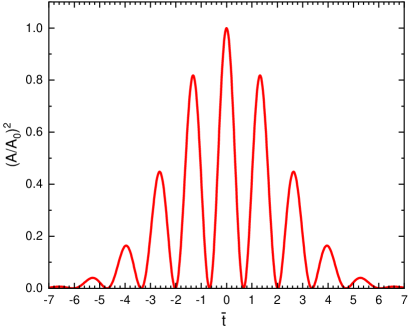
阅读本论文
在 Nubint 阅读器中打开原文,边读边就任意段落提问。
在 Nubint 中阅读本论文本解读由 AI 根据论文原文生成,引用前请核对原文。