
[论文解读] Weakly-Supervised Anomaly Detection in the Milky Way
本文首次将弱监督异常检测方法CWoLa应用于天体物理数据,利用盖亚的十亿恒星数据集,在无需标注训练数据或天体物理假设的前提下检测冷恒星流。CWoLa成功识别出已知的GD-1流以及数十个模拟流,且纯度极高,展示了其在银河系晕中发现新恒星流的潜力。
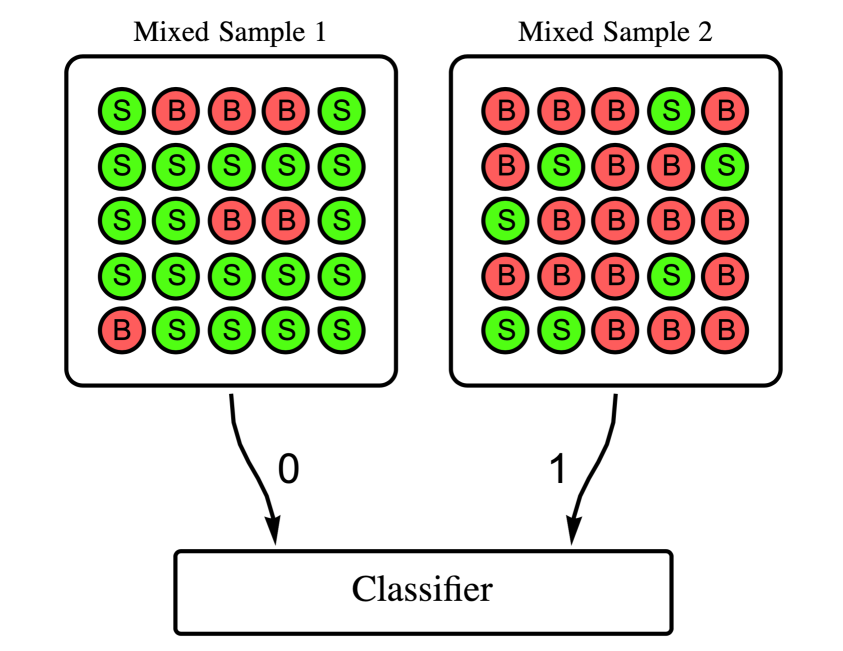
Large-scale astrophysics datasets present an opportunity for new machine learning techniques to identify regions of interest that might otherwise be overlooked by traditional searches. To this end, we use Classification Without Labels (CWoLa), a weakly-supervised anomaly detection method, to identify cold stellar streams within the more than one billion Milky Way stars observed by the Gaia satellite. CWoLa operates without the use of labeled streams or knowledge of astrophysical principles. Instead, we train a classifier to distinguish between mixed samples for which the proportions of signal and background samples are unknown. This computationally lightweight strategy is able to detect both simulated streams and the known stream GD-1 in data. Originally designed for high-energy collider physics, this technique may have broad applicability within astrophysics as well as other domains interested in identifying localized anomalies.
研究动机与目标
- 使用弱监督机器学习在无标注数据或天体物理先验的前提下检测银河系中的冷恒星流。
- 评估CWoLa(最初为高能物理开发)在大规模天体物理数据集中有效识别局部异常的能力。
- 展示该方法在高纯度和计算效率下检测已知流(如GD-1)和模拟流的能力。
- 探索将CWoLa用于在完整盖亚数据集中发现此前未被探测到的恒星流的可行性。
提出的方法
- CWoLa被用作弱监督分类器,基于信号与背景比例未知的混合样本进行训练。
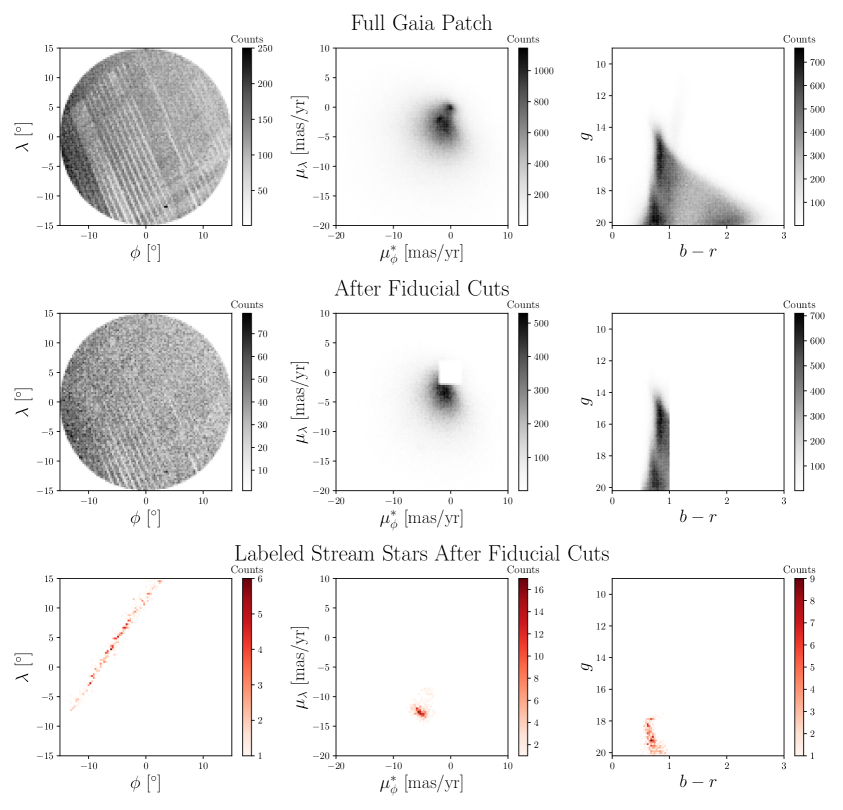
- 该方法使用轻量级神经网络,基于五个输入特征(两个角坐标、一个自行分量坐标,未用于扫描、星等和颜色)为恒星分配异常度分数。
- 沿一个自行分量坐标执行滑动窗口扫描,以识别异常度分数较高的区域,这些区域可能为潜在的流候选区域。
- 通过基于边带的选择策略评估异常度分数,以区分真实异常与背景涨落。
- 该方法具有模型无关性,不假设特定的流轨道或等深线,仅依赖于运动学和光度聚类。
- 后处理可能包括线性查找算法(如改进的霍夫变换),以从检测到的异常中识别出延伸的流状结构。
实验结果
研究问题
- RQ1CWoLa能否在无标注训练数据或天体物理假设的前提下,在盖亚数据中检测到已知的恒星流(如GD-1)?
- RQ2CWoLa在高维相空间中对具有不同密度和形态的模拟恒星流的识别效率如何?
- RQ3CWoLa能否仅通过异常度分数分布和边带分析,有效区分真实局部异常与背景涨落?
- RQ4在将CWoLa扩展至完整盖亚数据集以发现此前未被探测到的新流时,面临哪些计算和实际挑战?
- RQ5当新流候选对象缺乏真实标签时,性能指标应如何重新评估?
主要发现
- CWoLa成功以高纯度检测到已知恒星流GD-1,识别出与先前研究一致的物理特征,如‘分支’、‘团块’、‘包层’、空隙和高密度区域。
- 该方法以高纯度识别出数十个模拟恒星流,证明其对低密度、运动学冷态结构的敏感性。
- CWoLa的神经网络异常度分数突出了那些可能被正式GD-1标注方案遗漏的恒星,提示其可能为新候选成员。
- 当存在真实异常时,异常度分数分布随选择条件日益严格而呈现出明显的形态变化,证实了其检测能力。
- 该技术计算效率高,且无需对等深线、流轨道或银河系引力势做任何假设。
- 该方法可扩展至完整盖亚数据集,并可与线性查找算法结合,从局部异常中识别出延伸的流状特征。
阅读本论文
在 Nubint 阅读器中打开原文,边读边就任意段落提问。
在 Nubint 中阅读本论文本解读由 AI 根据论文原文生成,引用前请核对原文。