
[Paper Review] A Network Science perspective of Graph Convolutional Networks: A survey
This paper establishes a network science perspective on graph convolutional networks (GCNs) by introducing a novel taxonomy that classifies GCNs based on layer-wise message aggregation scope, message content, and overall learning scope. It bridges traditional network science measures—like centrality, clustering, and motifs—with GCNs, revealing how structural insights can enhance GCN design, interpretability, and model selection.
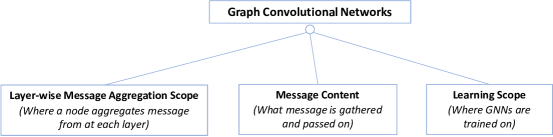
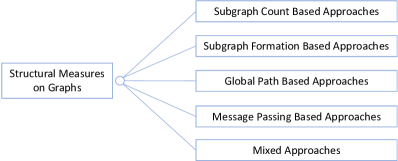
The mining and exploitation of graph structural information have been the focal points in the study of complex networks. Traditional structural measures in Network Science focus on the analysis and modelling of complex networks from the perspective of network structure, such as the centrality measures, the clustering coefficient, and motifs and graphlets, and they have become basic tools for studying and understanding graphs. In comparison, graph neural networks, especially graph convolutional networks (GCNs), are particularly effective at integrating node features into graph structures via neighbourhood aggregation and message passing, and have been shown to significantly improve the performances in a variety of learning tasks. These two classes of methods are, however, typically treated separately with limited references to each other. In this work, aiming to establish relationships between them, we provide a network science perspective of GCNs. Our novel taxonomy classifies GCNs from three structural information angles, i.e., the layer-wise message aggregation scope, the message content, and the overall learning scope. Moreover, as a prerequisite for reviewing GCNs via a network science perspective, we also summarise traditional structural measures and propose a new taxonomy for them. Finally and most importantly, we draw connections between traditional structural approaches and graph convolutional networks, and discuss potential directions for future research.
Motivation & Objective
- To bridge the gap between traditional network science methods and graph convolutional networks (GCNs), which are often treated as separate domains.
- To develop a new taxonomy for traditional structural measures in network science, unifying concepts like centrality, motifs, and graphlets under a structural perspective.
- To classify GCNs through three structural lenses: message aggregation scope, message content, and overall learning scope.
- To explore how traditional structural measures can inform GCN design, improve interpretability, and guide model selection.
- To identify and propose future research directions at the intersection of network science and GCNs, including edge feature integration and explainability enhancement.
Proposed method
- Proposes a unified taxonomy for traditional network science measures based on structural information, grouping concepts like centrality, clustering coefficient, motifs, and graphlets under a common framework.
- Introduces a three-dimensional classification of GCNs: (1) layer-wise message aggregation scope (e.g., local vs. global), (2) message content (e.g., node features, edge attributes, structural patterns), and (3) overall learning scope (e.g., inductive vs. transductive learning).
- Analyzes the structural information exploited by GCNs through the lens of network science, identifying how different GCN architectures utilize topological features.
- Draws conceptual and functional connections between traditional structural measures and GCN mechanisms, such as how motif frequencies or clustering coefficients may influence GCN performance.
- Proposes integrating edge-level structural measures—like edge clustering coefficient and local path index—into GCN message passing to enhance feature representation.
- Suggests using traditional structural metrics as diagnostic tools for model selection and interpretability, e.g., selecting GCN architectures based on graph topology (e.g., triangle-rich vs. quadrangle-rich networks).
Experimental results
Research questions
- RQ1How can traditional network science measures be systematically categorized and unified under a common structural perspective?
- RQ2In what ways do different GCN architectures exploit structural information in graphs, and how can this be formally classified?
- RQ3What are the functional and conceptual connections between traditional structural measures (e.g., centrality, motifs) and the message-passing mechanisms in GCNs?
- RQ4How can traditional structural measures guide the selection and design of GCN models for specific graph types or tasks?
- RQ5What role can edge-level structural features play in enhancing GCN performance and interpretability?
Key findings
- The paper establishes a comprehensive taxonomy for traditional network science measures, unifying diverse concepts like centrality, clustering, motifs, and graphlets under a shared structural framework.
- GCNs are systematically classified along three axes: aggregation scope (local/global), message content (node/edge/structural features), and learning scope (inductive/transductive), revealing design patterns across architectures.
- Traditional structural measures such as the clustering coefficient and motif frequencies are shown to be directly relevant to GCN behavior, suggesting that GCNs implicitly learn and exploit these patterns.
- The integration of edge-level structural measures—like edge clustering coefficient and local path index—into GCN message passing is identified as a promising direction for improving model expressivity and accuracy.
- Structural measures can serve as diagnostic tools for model selection, with specific GCN architectures being better suited for graphs with particular topological traits (e.g., triangle-rich vs. quadrangle-rich graphs).
- The paper identifies explainability and interpretability of GCNs as key challenges, proposing that traditional structural measures can provide insights into why certain GCNs perform better on specific graph types.
Read this paper
Open the full text in the Nubint reader and ask about any passage as you read.
Read this paper on NubintThis review was generated by AI from the original paper. Please check the paper before citing it.