
[论文解读] Causal Influences over Social Learning Networks
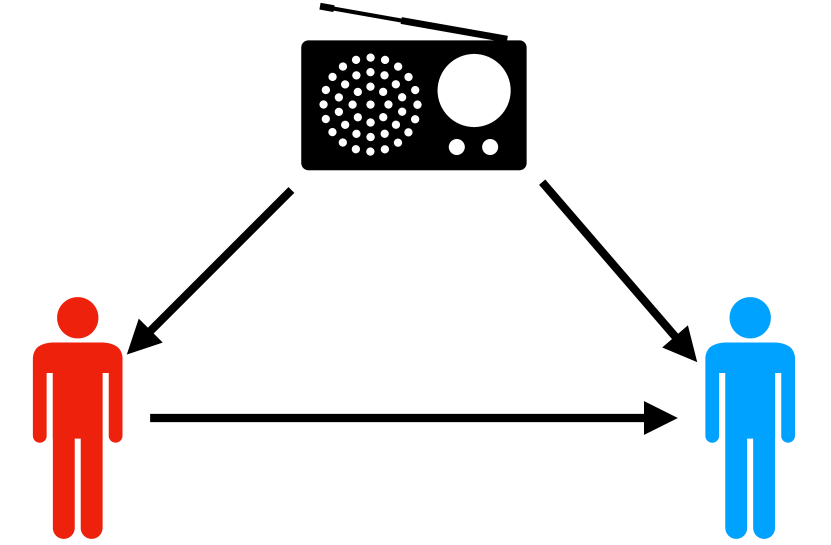
本文提出了一种用于社交学习网络的因果推断框架,通过结构因果模型将影响建模为干预效应。该框架推导出成对因果影响的闭式表达式,提出CausalRank算法以识别关键影响者,并开发了图因果学习(GCL)方法,从未干预的观测数据中估计这些效应——在合成数据和真实Twitter数据上进行了验证,显著提升了对间接影响的检测能力,超越了简单的连通性分析。
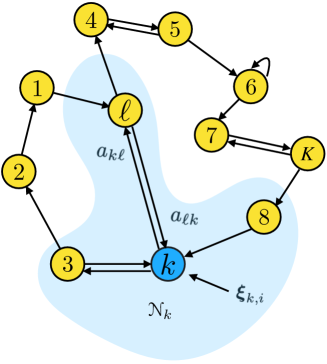
This paper investigates causal influences between agents linked by a social graph and interacting over time. In particular, the work examines the dynamics of social learning models and distributed decision-making protocols, and derives expressions that reveal the causal relations between pairs of agents and explain the flow of influence over the network. The results turn out to be dependent on the graph topology and the level of information that each agent has about the inference problem they are trying to solve. Using these conclusions, the paper proposes an algorithm to rank the overall influence between agents to discover highly influential agents. It also provides a method to learn the necessary model parameters from raw observational data. The results and the proposed algorithm are illustrated by considering both synthetic data and real Twitter data.
研究动机与目标
- 为解决社交网络中因果影响与虚假相关性之间的区分难题,其中混淆因素和时间动态会掩盖真实的影响力。
- 将社交学习动态建模为因果过程,而非依赖于特征向量中心性等基于相关性的中心性度量。
- 开发一种方法,根据网络位置和影响力的资讯性,对代理的整体因果影响进行排序。
- 实现从原始观测数据中估计因果影响参数,避免昂贵的干预实验。
- 在真实世界Twitter数据上验证该框架,证明其能够检测出超越直接关注关系的非直观影响力模式。
提出的方法
- 基于非贝叶斯和自适应社交学习模型,推导出代理对之间因果影响的闭式表达式,捕捉随时间演变的影响扩散过程。
- 引入双部因果关系矩阵以表示成对因果效应,支持对间接和非对称影响流的建模。
- 提出CausalRank算法,对因果关系矩阵计算特征向量中心性,以整体影响力对代理进行排序,更重视影响更大的代理。
- 开发图因果学习(GCL)算法,从未干预的时间序列观测数据中估计模型参数,实现在无干预情况下的因果推断。
- 将该框架应用于合成网络和真实Twitter数据,利用热力图和排名对比可视化并验证因果影响模式。
- 使用结构因果模型(SCM)定义基于干预的因果效应,确保对混淆和虚假关联具有鲁棒性。
实验结果
研究问题
- RQ1如何在相关性或网络拓扑之外,正式定义并量化社交学习网络中代理之间的因果影响?
- RQ2在非贝叶斯和自适应社交学习模型中,一个代理对另一个代理的因果影响由何种闭式表达式描述?
- RQ3网络拓扑结构和信息可得性如何影响因果影响流的结构与大小?
- RQ4在无实验干预的情况下,能在多大程度上准确估计因果影响?
- RQ5所提出的CausalRank算法在现实网络中为何能比传统中心性度量更有效地识别关键影响者?
主要发现
- 埃隆·马斯克在Twitter子网络中被确定为最具影响力的代理,其高因果影响得分得到CausalRank算法的确认,尽管他并非连接最密集的节点。
- 因果影响矩阵揭示了非互惠和间接影响模式——例如,用户14对埃隆·马斯克有显著影响,尽管他们之间并无直接连接。
- 用户2尽管因被埃隆·马斯克关注而具有较高的特征向量中心性,但其因果影响较低,表明中心性本身无法捕捉信息性和有效影响力。
- GCL算法成功从未干预的观测数据中估计出因果效应,实现了无需干预实验的影响力动态准确重建。
- 双部因果影响矩阵捕捉到了信息扩散中的溢出效应和涟漪效应,表明影响力不仅限于直接连接。
- 该框架优于传统基于拓扑的度量方法,通过基于因果影响而非单纯连通性或关注者数量来识别关键影响者。
更好的研究,从现在开始
从阅读论文到最终审阅,大幅缩短您的研究时间。
无需绑定信用卡
本解读由 AI 生成,并经人工编辑审核。