
[Paper Review] Deep Texture-Aware Features for Camouflaged Object Detection
The paper introduces TANet, a deep texture-aware refinement framework (TARM) that amplifies texture differences to improve camouflaged object detection, achieving state-of-the-art results on COD benchmarks.
Camouflaged object detection is a challenging task that aims to identify objects having similar texture to the surroundings. This paper presents to amplify the subtle texture difference between camouflaged objects and the background for camouflaged object detection by formulating multiple texture-aware refinement modules to learn the texture-aware features in a deep convolutional neural network. The texture-aware refinement module computes the covariance matrices of feature responses to extract the texture information, designs an affinity loss to learn a set of parameter maps that help to separate the texture between camouflaged objects and the background, and adopts a boundary-consistency loss to explore the object detail structures.We evaluate our network on the benchmark dataset for camouflaged object detection both qualitatively and quantitatively. Experimental results show that our approach outperforms various state-of-the-art methods by a large margin.
Motivation & Objective
- Motivate camouflaged object detection (COD) as a texture discrimination challenge due to background similarity.
- Propose texture-aware refinement modules to learn and amplify texture differences between camouflaged objects and the background.
- Incorporate boundary-consistency losses to improve object detail and boundary accuracy.
- Evaluate against state-of-the-art COD, SOD, and semantic segmentation methods on standard benchmarks.
- Demonstrate improvements via qualitative visualizations and quantitative metrics.
Proposed method
- Introduce TANet architecture with multiple texture-aware refinement modules (TARMs) across CNN layers.
- Within each TARM, compute per-pixel covariance matrices of channel responses to capture texture information.
- Learn affinity-based parameter maps (gamma, beta) to transform features and amplify textural differences.
- Apply a boundary-consistency loss to enforce detail preservation across object boundaries on high-resolution maps.
- Train with multi-layer supervision and residual refine blocks to refine features before texture refinement.
- Evaluate using standard COD metrics (S_alpha, E_phi, F_beta^w, MAE) across three benchmark datasets.
Experimental results
Research questions
- RQ1Can texture-aware refinements improve the discrimination between camouflaged objects and similar-textured backgrounds?
- RQ2Do covariance-based texture features plus affinity transformations enhance COD performance over existing methods?
- RQ3Does a boundary-consistency loss improve boundary detail without extra testing cost?
- RQ4How does TANet compare to state-of-the-art COD, SOD, and semantic segmentation methods on COD benchmarks?
Key findings
- TANet achieves superior average performance across CHAMELEON, CAMO-Test, and COD10K-Test compared to 13 state-of-the-art methods.
- On TANet (our method), S_alpha=0.888, E_phi=0.911, F_beta^w=0.786, M=0.036 on CHAMELEON; S_alpha=0.793, E_phi=0.834, F_beta^w=0.690, M=0.083 on CAMO-Test; S_alpha=0.803, E_phi=0.848, F_beta^w=0.629, M=0.041 on COD10K-Test.
- Compared to SINet, TANet yields higher S_alpha, E_phi, and F_beta^w, with lower MAE on all three datasets.
- Ablation studies show that adding Residual Refine Blocks (RRB) and TARMs with boundary-consistency loss (BCL) progressively improves COD metrics.
- The boundary-consistency loss improves boundary quality and detail in TARMs without increasing testing cost.
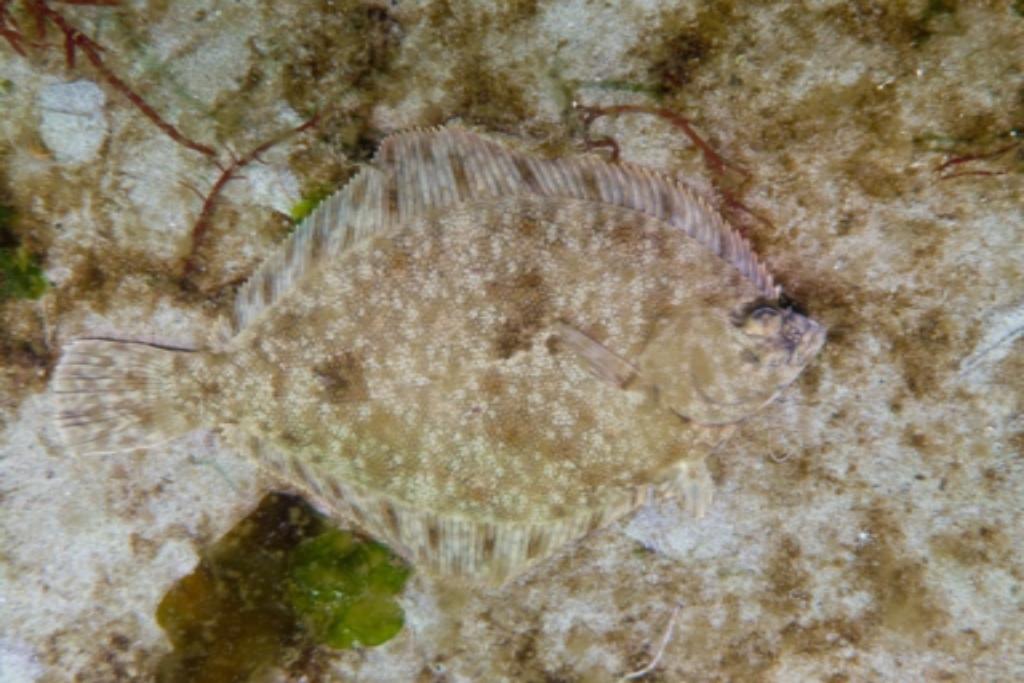
- Qualitative visualizations demonstrate amplified texture differences and more accurate COD maps with TANet.
Read this paper
Open the full text in the Nubint reader and ask about any passage as you read.
Read this paper on NubintThis review was generated by AI from the original paper. Please check the paper before citing it.