
[论文解读] Electric Vehicle E-hailing Fleet Dispatching and Charge Scheduling
该论文提出一个用于完全电动化网约车车队的概率匹配框架,结合充电调度与司机合规激励,以最大化预期利润。
With recent developments in vehicle and battery technologies, electric vehicles (EVs) are rapidly getting established as a sustainable alternative to traditional fossil-fuel vehicles. This has made the large-scale electrification of ride-sourcing operations a practical viability, providing an opportunity for a leap toward urban sustainability goals. Despite having a similar driving range to fossil-fuel vehicles, EVs are disadvantaged by their long charging times which compromises the total fleet service time. To efficiently manage an EV fleet, the operator needs to address the charge scheduling problem as part of the dispatch strategy. This paper introduces a probabilistic matching method which evaluates the optimal trip and charging decisions for a fully electrified e-hailing fleet, with the goal of maximising the operator's expected market profit. In the midst of the technological transition towards autonomous vehicles, it is also critical to include stochastic driver behaviours in transport models as presented in this paper. Since drivers may either comply with trip dispatching or choose to reject a charging trip order considering the additional fees, contrary to the commonly assumed fleet autonomy, the proposed method designs an incentivisation scheme (charging discounts) to encourage driver compliance so that the planned charging trips and the associated profit can be realised.
研究动机与目标
- 通过将调度与充电调度整合,推动并解决大规模电动化出行的采用。
- 开发一个集中式概率匹配方法,考虑动态需求、充电时间和司机行为。
- 设计激励政策(充电折扣)以提高司机对充电行程的合规性。
- 在车队管理模型中纳入随机的司机行为和乘客取消。
提出的方法
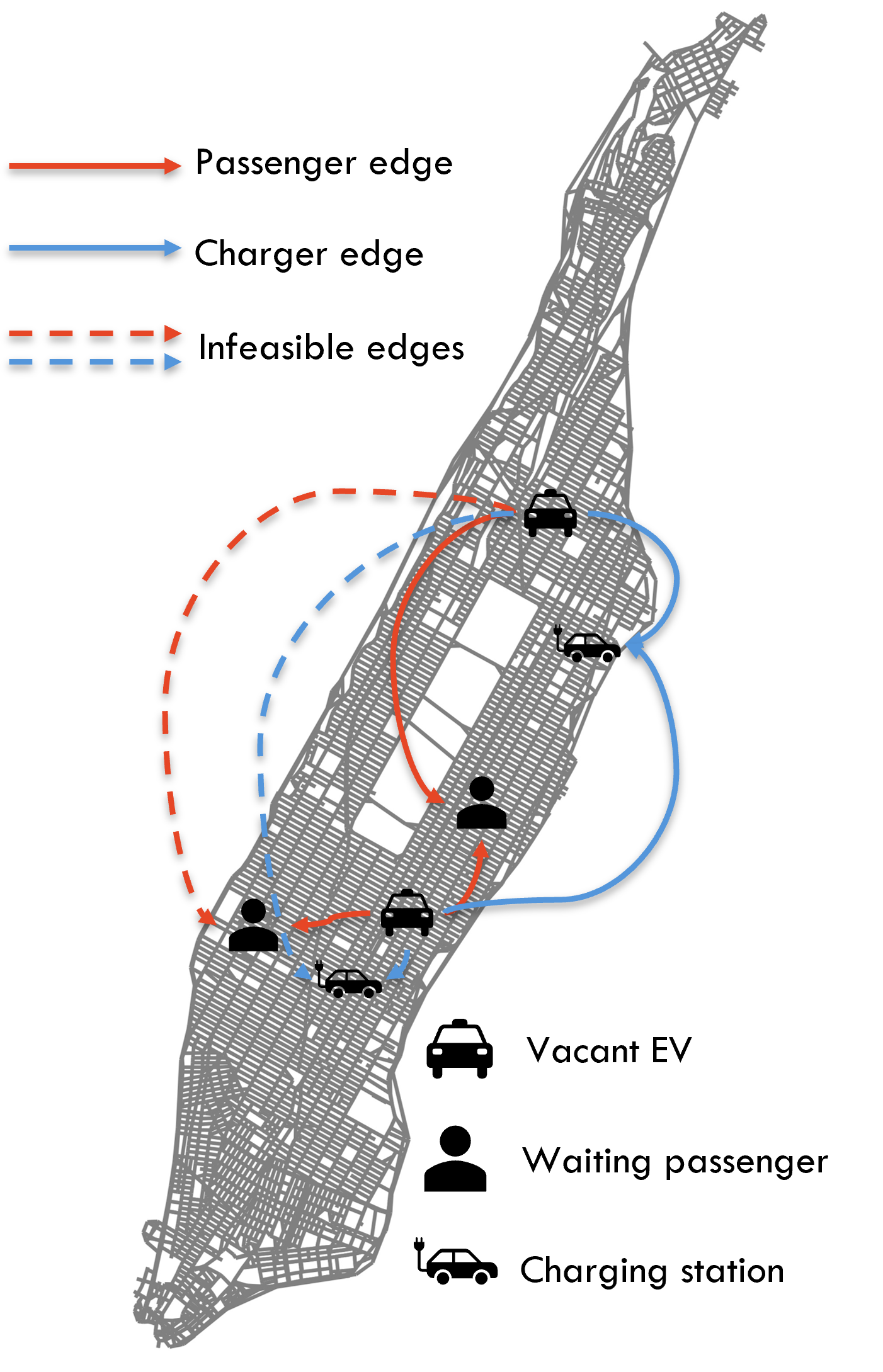
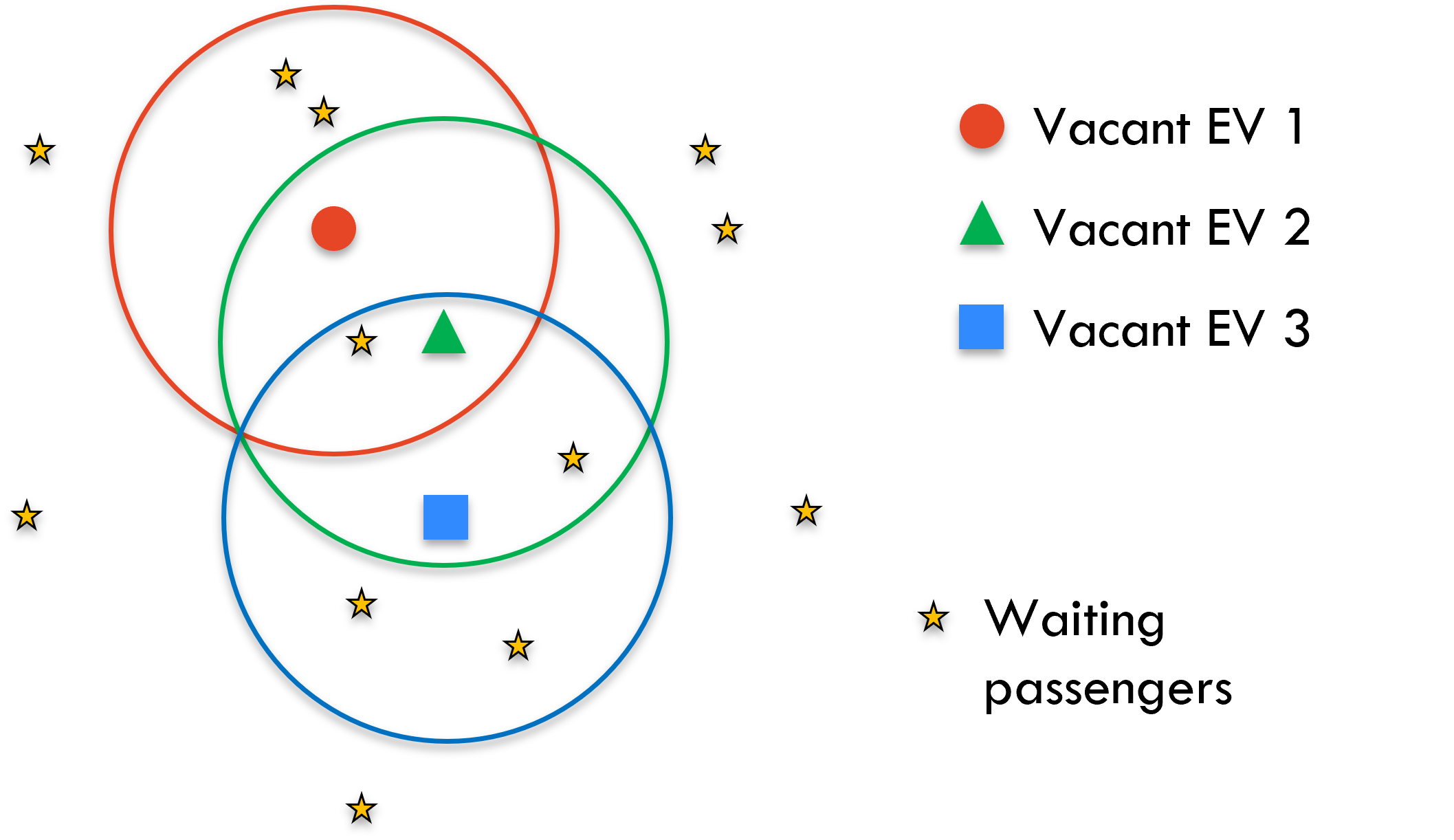
- 在离散间隔定义一个批量匹配框架,将空置的 EV 与等待的乘客或充电桩在 SoC 限制内配对。
- 在考虑货币利润、服务质量和充电边际价值(rho_e)的前提下,量化调度选项的预期收益。
- 对动态充电价格和折扣进行建模,以计算对充电行程的司机合规性;采用两步优化(激励设计然后是双边匹配)。
- 通过基于本地区域的利润基线和未来需求/供给预测来计算充电边际价值 rho_e。
- 将乘客等候与上客时间、以及车队 SoC 的未来盈利能力等因素纳入考量,以反映现实市场动态。
实验结果
研究问题
- RQ1在 EV 充电调度约束下,如何通过集中式概率匹配框架最大化网约车 TNC 的预期利润?
- RQ2应如何设计充电激励以在随机司机与乘客行为下最大化司机合规性与总体调度利润?
- RQ3SoC 动态和充电时间对最优调度决策与服务质量有何影响?
- RQ4如何在本地区域估计充电的边际价值以用于匹配决策?
- RQ5哪些行为模型(乘客取消、司机合规、班次)会影响所 proposed 方法的性能?
主要发现
- 一种概率匹配方法可以将充电决策与司机合规性纳入考虑,从而提高预期利润。
- 充电激励(折扣)影响司机合规性,可在两步流程中优化,以支持匹配解。
- 模型考虑了乘客等待与接送时间,以及车队 SoC 的边际价值以捕捉未来盈利能力。
- 在每个车辆-区域计算局部充电边际价值 rho_e,以引导调度与充电决策。
- 仿真设置在曼哈顿网络上,包含电动车、充电站和真实的乘客耐心度,用以验证方法。
更好的研究,从现在开始
从论文设计到论文写作,大幅缩短您的研究时间。
无需绑定信用卡
本解读由 AI 生成,并经人工编辑审核。