
[Paper Review] Face Hallucination via Split-Attention in Split-Attention Network
This paper proposes a split-attention in split-attention network (SISN) for face hallucination that enhances both facial structure consistency and texture detail fidelity by using an external-internal split attention group (ESAG) to separately process facial structure and texture features before fusing them. The method achieves state-of-the-art performance in face hallucination and significantly improves downstream face recognition accuracy.
Recently, convolutional neural networks (CNNs) have been widely employed to promote the face hallucination due to the ability to predict high-frequency details from a large number of samples. However, most of them fail to take into account the overall facial profile and fine texture details simultaneously, resulting in reduced naturalness and fidelity of the reconstructed face, and further impairing the performance of downstream tasks (e.g., face detection, facial recognition). To tackle this issue, we propose a novel external-internal split attention group (ESAG), which encompasses two paths responsible for facial structure information and facial texture details, respectively. By fusing the features from these two paths, the consistency of facial structure and the fidelity of facial details are strengthened at the same time. Then, we propose a split-attention in split-attention network (SISN) to reconstruct photorealistic high-resolution facial images by cascading several ESAGs. Experimental results on face hallucination and face recognition unveil that the proposed method not only significantly improves the clarity of hallucinated faces, but also encourages the subsequent face recognition performance substantially. Codes have been released at https://github.com/mdswyz/SISN-Face-Hallucination.
Motivation & Objective
- Address the limitation of existing CNN-based face hallucination methods that fail to simultaneously preserve facial structure consistency and texture detail fidelity.
- Overcome the drawbacks of shape-oriented methods that rely on extra prior information (e.g., landmarks, parsing maps), which increase model complexity and risk introducing errors.
- Develop an end-to-end, parameter-efficient architecture that improves both internal feature correlation and external multi-path feature fusion for high-quality face super-resolution.
- Enhance downstream face recognition performance by generating photorealistic, high-resolution facial images from low-resolution inputs.
Proposed method
- Propose an internal-feature split attention (ISA) mechanism that splits and classifies the channel dimension of feature maps to enhance internal correlation and focus on information-rich regions.
- Design an internal-feature split attention block (ISAB) that uses ISA to emphasize facial texture detail restoration through deep semantic feature learning.
- Introduce an external-internal split attention group (ESAG) that fuses two parallel paths: one with cascaded ISABs for texture details and another using ISA for facial structure modeling.
- Implement multi-path feature fusion as external-feature attention to strengthen the correlation between structure and texture representations.
- Construct a split-attention in split-attention network (SISN) by stacking multiple ESAGs to progressively refine high-resolution facial images.
- Train the end-to-end SISN model using perceptual and adversarial losses to generate photorealistic outputs with improved structural and textural fidelity.

Experimental results
Research questions
- RQ1Can a unified deep learning framework effectively balance facial structure consistency and high-frequency texture detail restoration in face hallucination?
- RQ2Does the proposed split-attention mechanism outperform conventional attention or residual networks in preserving both global facial layout and fine-grained texture?
- RQ3Can the absence of external priors (e.g., landmarks, parsing maps) still yield high-quality hallucinated faces without increasing model complexity?
- RQ4To what extent does the proposed method improve downstream face recognition performance compared to existing face hallucination techniques?
Key findings
- The proposed SISN method achieves the highest average face similarity (0.540106) among all compared methods on the SCface dataset, significantly outperforming baseline and state-of-the-art models in face recognition tasks.
- SISN improves face recognition performance by increasing the normalized similarity score from 0.490079 (baseline LR) to 0.540106 (SISN-reconstructed), indicating stronger feature consistency.
- The method achieves a PSNR of 0.475734 and SSIM of 0.599383 on the LFW dataset, surpassing RCAN, SRFBN, and MTC, demonstrating superior image reconstruction quality.
- SISN successfully reconstructs photorealistic high-resolution faces with enhanced clarity and naturalness, as validated by both quantitative metrics and qualitative visual comparisons.
- The model maintains high performance even on challenging surveillance images with low resolution and poor quality, confirming robustness in real-world applications.
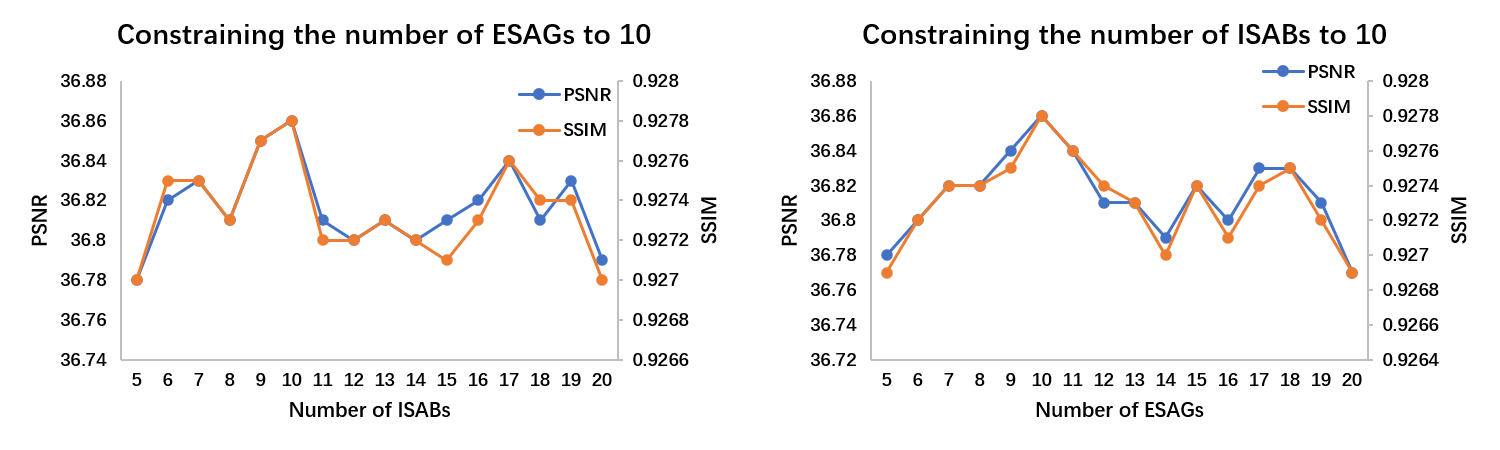
- The ablation study confirms that the split-attention mechanism effectively enhances both internal feature correlation and inter-path feature fusion, leading to improved reconstruction fidelity.
Read this paper
Open the full text in the Nubint reader and ask about any passage as you read.
Read this paper on NubintThis review was generated by AI from the original paper. Please check the paper before citing it.