
[Paper Review] Harnessing the Power of Artificial Intelligence to Vitalize Endangered Indigenous Languages: Technologies and Experiences
This paper proposes a community-driven AI development cycle to revitalize endangered Indigenous languages in Brazil using fine-tuned large language models (LLMs) and small-scale data. By engaging Indigenous communities in co-design, the authors demonstrate successful creation of high-quality machine translators, spell-checkers, and writing assistants—proving that even minimal data can yield impactful, scalable language technologies when guided by ethical, decolonial principles.
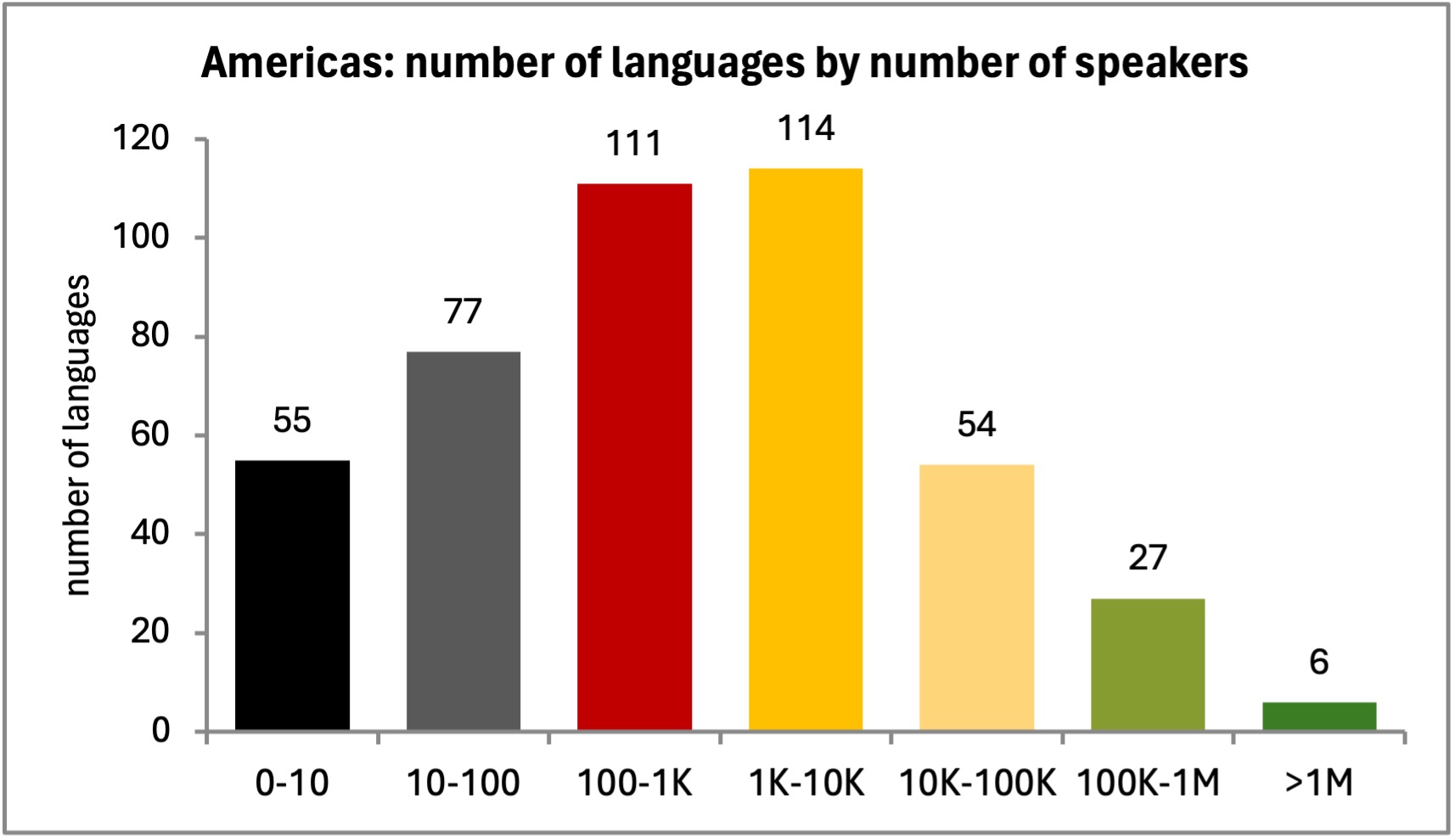
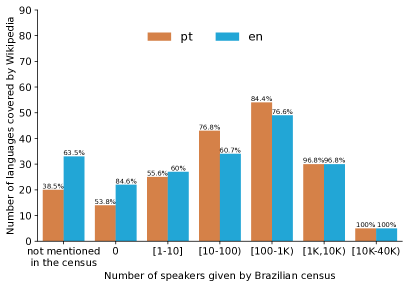
Since 2022 we have been exploring application areas and technologies in which Artificial Intelligence (AI) and modern Natural Language Processing (NLP), such as Large Language Models (LLMs), can be employed to foster the usage and facilitate the documentation of Indigenous languages which are in danger of disappearing. We start by discussing the decreasing diversity of languages in the world and how working with Indigenous languages poses unique ethical challenges for AI and NLP. To address those challenges, we propose an alternative development AI cycle based on community engagement and usage. Then, we report encouraging results in the development of high-quality machine learning translators for Indigenous languages by fine-tuning state-of-the-art (SOTA) translators with tiny amounts of data and discuss how to avoid some common pitfalls in the process. We also present prototypes we have built in projects done in 2023 and 2024 with Indigenous communities in Brazil, aimed at facilitating writing, and discuss the development of Indigenous Language Models (ILMs) as a replicable and scalable way to create spell-checkers, next-word predictors, and similar tools. Finally, we discuss how we envision a future for language documentation where dying languages are preserved as interactive language models.
Motivation & Objective
- Address the underrepresentation of Indigenous languages in AI and NLP by centering community engagement and Indigenous Data Sovereignty.
- Overcome the scarcity of linguistic data for Indigenous languages by developing scalable, replicable AI tools using minimal data and fine-tuning.
- Create practical, interactive language technologies—such as translators and writing assistants—that support language documentation, education, and revitalization.
- Establish a sustainable, community-owned AI development cycle where Indigenous communities lead the design, governance, and evolution of language technologies.
- Demonstrate that fine-tuning state-of-the-art LLMs with tiny datasets can produce high-quality, domain-specific tools for endangered languages.
Proposed method
- Adopt a community-engaged AI development cycle that prioritizes Indigenous leadership, data sovereignty, and co-creation over top-down technological deployment.
- Fine-tune state-of-the-art (SOTA) multilingual translators using minimal, high-quality parallel corpora from Indigenous language communities.
- Develop Indigenous Language Models (ILMs) as a foundation for building downstream tools like spell-checkers, next-word predictors, and writing assistants.
- Utilize prompt engineering and Retrieval-Augmented Generation (RAG) to enhance model performance despite limited training data.
- Build and test prototypes with Indigenous communities (e.g., Nheengatu, Guarani, Terena) in real-world educational and cultural contexts.
- Design a modular, extensible framework for ILM production, including synthetic data generation and reusable training data pipelines for replication across languages.
Experimental results
Research questions
- RQ1How can AI and NLP be ethically applied to support the revitalization of endangered Indigenous languages with minimal data?
- RQ2What role does community co-design and data sovereignty play in ensuring the sustainability and legitimacy of AI tools for Indigenous languages?
- RQ3To what extent can fine-tuning large language models with tiny datasets produce usable, high-quality language tools such as translators and spell-checkers?
- RQ4How can writing assistants and language models be designed to support literacy and language use among Indigenous youth and communities?
- RQ5What technical and social frameworks enable the replication and scaling of Indigenous Language Model (ILM) development across diverse Indigenous languages?
Key findings
- Fine-tuning state-of-the-art multilingual translators with minimal data (e.g., hundreds to low thousands of sentence pairs) produced high-quality, usable machine translation systems for Indigenous languages.
- The development of Indigenous Language Models (ILMs) enabled the creation of practical tools such as spell-checkers, next-word predictors, and writing assistants, even with limited linguistic resources.
- Community workshops with Nheengatu-speaking students and educators revealed strong demand for digital tools and interest in computer science education, indicating potential for long-term community ownership.
- The project demonstrated that fine-tuning LLMs on small, high-quality datasets avoids contamination issues and produces reliable, domain-specific outputs, especially when combined with prompt engineering.
- A replicable, community-driven AI development cycle was established, with prototypes being iteratively refined through direct collaboration with Indigenous communities and educators.
- The project laid the groundwork for a future where endangered languages are preserved not just as static texts, but as interactive, functional language models capable of active use in education, law, health, and economic domains.
Read this paper
Open the full text in the Nubint reader and ask about any passage as you read.
Read this paper on NubintThis review was generated by AI from the original paper. Please check the paper before citing it.