
[论文解读] HiTZ@Antidote: Argumentation-driven Explainable Artificial Intelligence for Digital Medicine
本文提出了 HiTZ@Antidote,一种基于论辩的可解释人工智能框架,用于数字医疗,通过整合深度学习与类人论辩,为临床诊断生成高质量、可交互的解释。该研究提出了 CasiMedicos 数据集——包含多语言、论辩结构化的正确与错误医学问答解释,以推动医疗领域可解释人工智能的发展。
Providing high quality explanations for AI predictions based on machine learning is a challenging and complex task. To work well it requires, among other factors: selecting a proper level of generality/specificity of the explanation; considering assumptions about the familiarity of the explanation beneficiary with the AI task under consideration; referring to specific elements that have contributed to the decision; making use of additional knowledge (e.g. expert evidence) which might not be part of the prediction process; and providing evidence supporting negative hypothesis. Finally, the system needs to formulate the explanation in a clearly interpretable, and possibly convincing, way. Given these considerations, ANTIDOTE fosters an integrated vision of explainable AI, where low-level characteristics of the deep learning process are combined with higher level schemes proper of the human argumentation capacity. ANTIDOTE will exploit cross-disciplinary competences in deep learning and argumentation to support a broader and innovative view of explainable AI, where the need for high-quality explanations for clinical cases deliberation is critical. As a first result of the project, we publish the Antidote CasiMedicos dataset to facilitate research on explainable AI in general, and argumentation in the medical domain in particular.
研究动机与目标
- 为临床人工智能系统中高质量、可解释的解释提供支持,特别是用于学生临床医生的培训。
- 弥合低层次深度学习表征与高层次人类论辩模式在医疗决策中的差距。
- 开发一种系统,不仅能为正确诊断提供支持性论据,还能提供反驳其他假设的反论据。
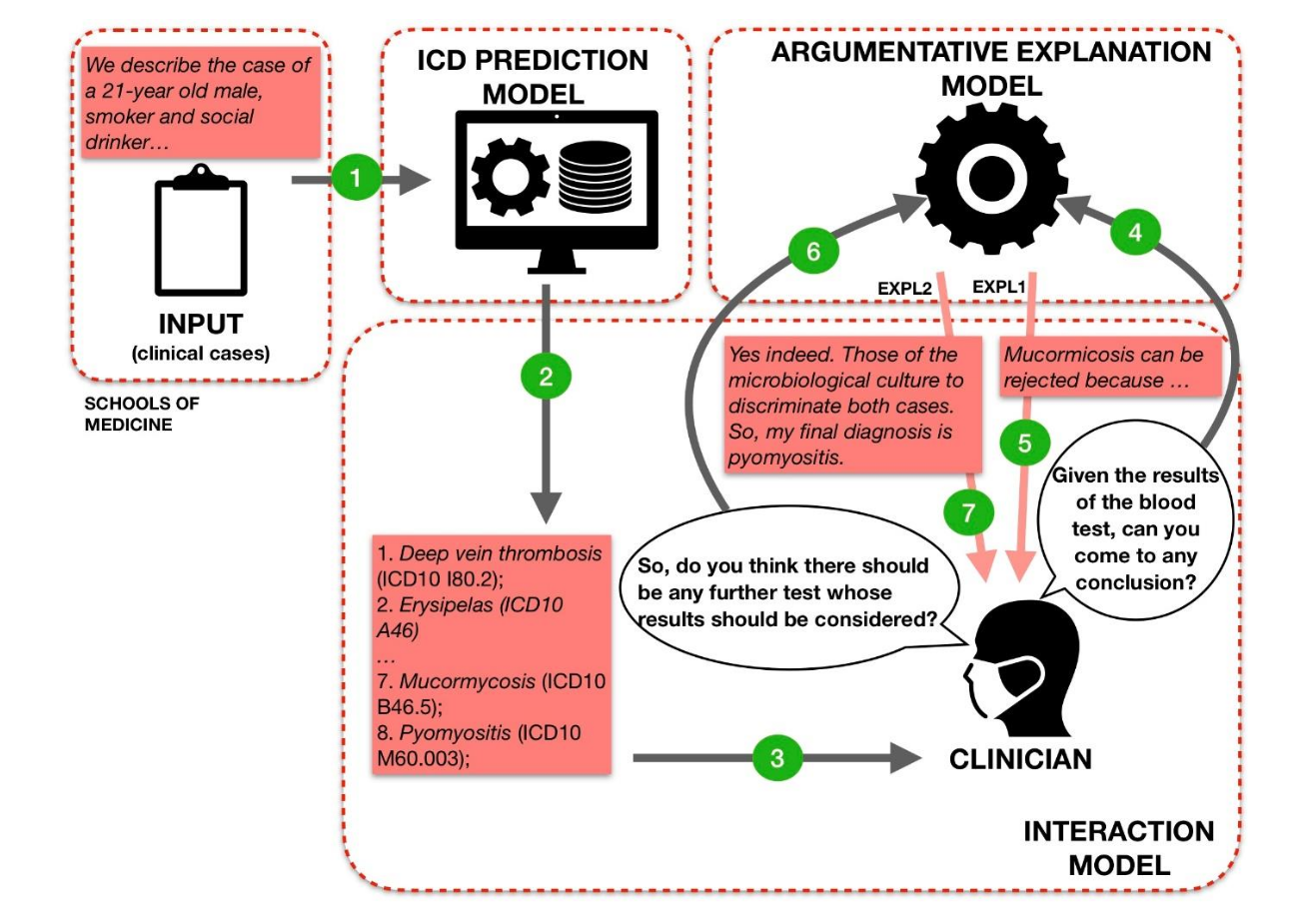
- 实现交互式、对话式解释生成,支持用户发起的澄清与更深层次的推理。
- 创建并发布一个多语言、论辩标注的数据集(CasiMedicos),以推动医疗可解释人工智能与论辩挖掘的研究。
提出的方法
- 结合深度学习模型与论辩模式,生成基于医学证据与推理的解释。
- 采用混合方法,整合抽取式与生成式问答,为正确与错误答案生成解释。
- 应用多语言大语言模型(如 mBERT、mT5)实现论辩挖掘与解释生成中的跨语言迁移。
- 采用结构化论辩话语标注:将解释与特定答案关联,标注层级化论辩结构,并识别话语标记。
- 设计一种交互式 XAI 场景,允许临床医生动态查询、质疑并探索解释。
- 将西班牙语医学考试数据(SAEI 和 CasiMedicos)翻译并重新标注为英文,以支持多语言研究与模型训练。
实验结果
研究问题
- RQ1如何有效整合论辩理论与深度学习,以在医疗人工智能中生成高质量、人类可理解的解释?
- RQ2论辩解释的关键结构与语言特征是什么,使其在临床决策支持中具有有效性?
- RQ3多语言大语言模型在医疗领域中,能在多大程度上将论辩推理从英语迁移至西班牙语、法语和意大利语?
- RQ4如何设计解释,使其不仅包含对正确诊断的支持,还包含拒绝其他假设的证据?
- RQ5何种标注模式能够实现医疗问答数据集中可靠、可复现且语言丰富的论辩结构?
主要发现
- CasiMedicos 数据集是首个在医疗领域中以论辩结构标注的多语言语料库,包含对正确与错误答案的解释。
- 该数据集支持新型问答任务——包括抽取式与生成式任务——聚焦于识别与生成医疗诊断的论辩解释。
- 跨语言迁移实验表明,多语言大语言模型可通过有效微调,在西班牙语、法语和意大利语中执行论辩挖掘与解释生成。
- 将论辩模式与深度学习相结合,显著提升了人工智能生成的医疗解释的可解释性与说服力。
- 该系统成功支持交互式对话,允许用户提出后续问题并获得连贯、上下文感知的解释。
- 通过以 CC BY 4.0 许可发布免费、开放获取的数据集,本项目为基于论辩的可解释人工智能研究奠定了基础,确保可复现性与社区采纳。
更好的研究,从现在开始
从阅读论文到最终审阅,大幅缩短您的研究时间。
无需绑定信用卡
本解读由 AI 生成,并经人工编辑审核。