
[论文解读] Mapper of the IGM spin temperature: instrument overview
论文描述了设计、校准形式化以及MIST的电磁表征,这是一个地面基站、单天线的全球21 cm 实验,在25–105 MHz工作,且没有金属接地平面,包括土壤效应的仿真和初步现场测量。
The observation of the global 21 cm signal produced by neutral hydrogen gas in the intergalactic medium (IGM) during the Dark Ages, Cosmic Dawn, and Epoch of Reionization requires measurements with extremely well-calibrated wideband radiometers. We describe the design and characterization of the Mapper of the IGM Spin Temperature (MIST), which is a new ground-based, single-antenna, global 21 cm experiment. The design of MIST was guided by the objectives of avoiding systematics from an antenna ground plane and cables around the antenna, as well as maximizing the instrument's on-sky efficiency and portability for operations at remote sites. We have built two MIST instruments, which observe in the range 25-105 MHz. For the 21 cm signal, this frequency range approximately corresponds to redshifts 55.5 > z > 12.5, encompassing the Dark Ages and Cosmic Dawn. The MIST antenna is a horizontal blade dipole of 2.42 m in length, 60 cm in width, and 52 cm in height above the ground. This antenna operates without a metal ground plane. The instruments run on 12 V batteries and have a maximum power consumption of 17 W. The batteries and electronics are contained in a single receiver box located under the antenna. We present the characterization of the instruments using electromagnetic simulations and lab measurements. We also show sample sky measurements from recent observations at remote sites in California, Nevada, and the Canadian High Arctic. These measurements indicate that the instruments perform as expected. Detailed analyses of the sky measurements are left for future work.
研究动机与目标
- 描述 MIST 仪器设计及其在暗时代和宇宙黎明期间对全球21 cm测量的目标。
- 提出一个将天空温度、天线与接收机参数以及杂散/损耗因素联系起来的校准框架。
- 通过电磁仿真和实验室测量对 MIST 天线、balun 和接收机进行表征。
- 探究土壤特性对天线性能的影响,并量化辐射效率与波束指向性。
- 提供来自偏远现场的初步现场测量,以验证仪器行为并评估数据分析准备情况。
提出的方法
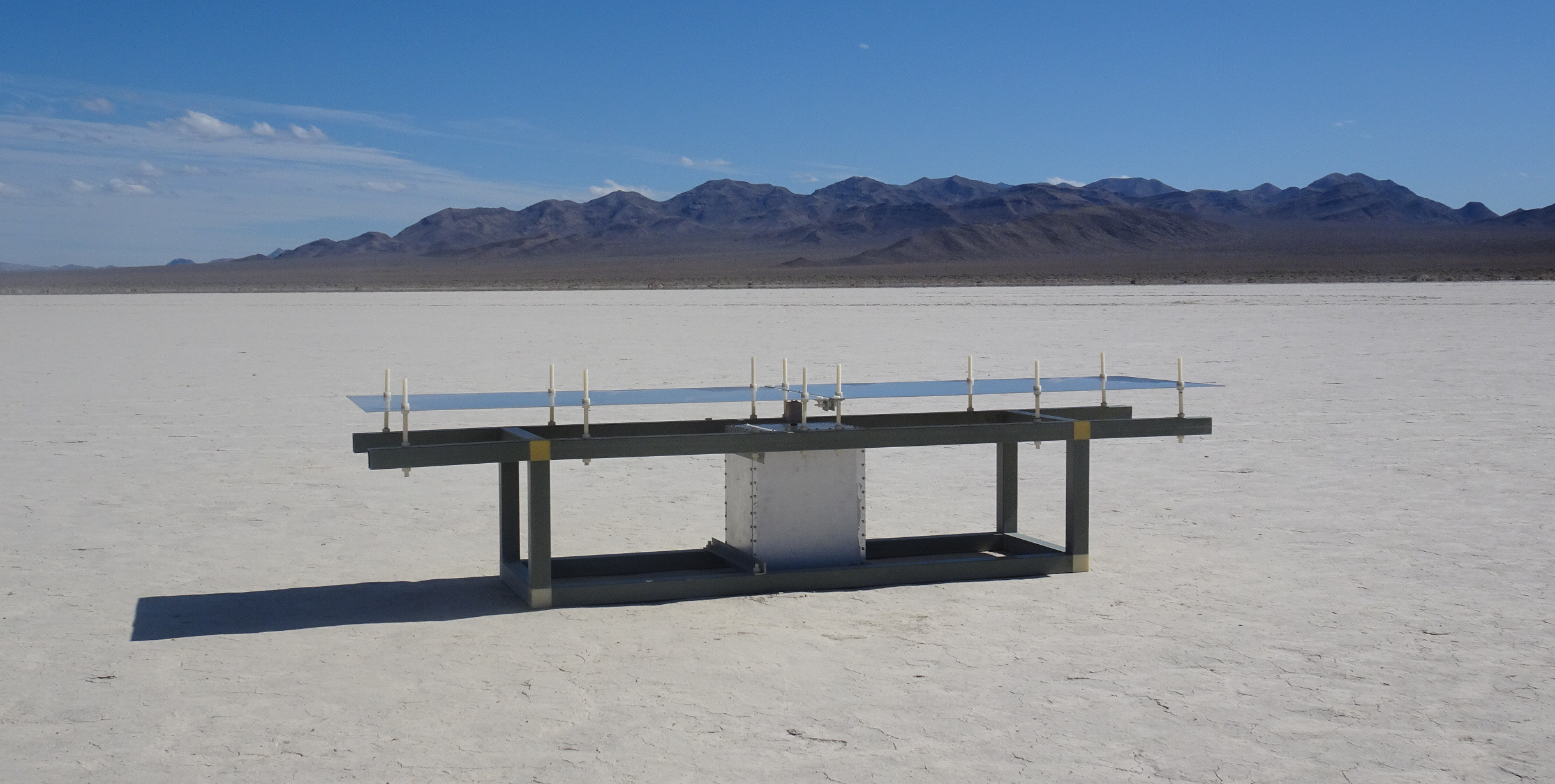
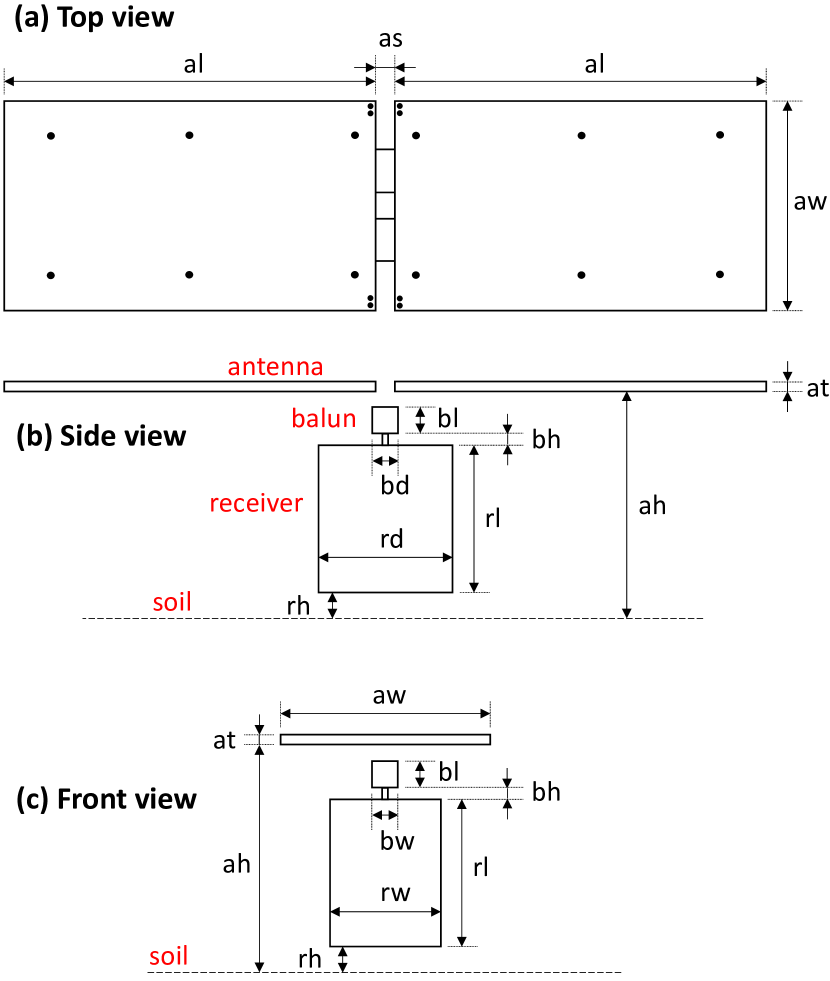
- 单天线、单偏振射度计设计,采用水平叶片偶极子,长度2.42 m、宽度0.60 m,离地52 cm,高于土壤,无金属接地平面。
- 使用 FEKO 进行电磁仿真,以预测在不同土壤模型下的辐射效率、波束指向性、波束效率和反射系数。
- 将 T_S、T_A 与接收机参数联系起来的校准形式,包括天空温度(Eq. 2)、天线温度(Eq. 3)、天空温度提取(Eq. 4)以及接收机校准(Eqs. 6–7)的方程。
- 使用九个 FEKO 土壤配置(nominal、1L_xx、2L_xx)进行土导电率和相对介电常数对天线性能影响的建模(Table 2)。
- 通过辐射效率、波束指向性、波束效率和反射系数在 25–125 MHz 的变化来评估天线性能(并在 25–105 MHz 天空观测中使用)。
- 在 Deep Springs Valley(加利福尼亚州)、Death Valley(内华达州)和 McGill Arctic Research Station(加利福尼亚州)进行野外部署,并进行初步天空测量。
实验结果
研究问题
- RQ1在25–105 MHz范围内,地面基站、单天线全球21 cm 仪器在没有金属接地平面的情况下表现如何?
- RQ2土壤电性属性(导电率和相对介电常数)如何影响 MIST 的辐射效率、波束指向性和波束效率?
- RQ3给定接收机和 balun 特性及天线阻抗,校准形式是否能够可靠地提取天空温度?
- RQ4在偏远现场的现场测量是否能够验证仪器性能并指导全球21 cm探测的系统误差评估?
- RQ5基于推导出的波束特性和土壤相关效应,预计的信号恢复含义是什么?
主要发现
- 名义土壤的辐射效率在 25–125 MHz 范围内为 99.93%–99.99%,土壤性质相对于名义值的变化最多约为 ~0.08%。
- 波束指向性在天顶处达到峰值,在 25–125 MHz 范围内大约从 0.6 到 5.1,天顶处值更高,水平方面的波束在 H 平面更宽。
- 波束效率随频率上升,在 25 MHz 时为 9%–15%,在 125 MHz 为 54%–74%,在两层土壤模型中呈现土壤模型依赖的纹波。
- 在偶极端口的反射系数在约 52 MHz 处出现共振最小值,在约 25 MHz 附近接近 ~0 dB,在 90–95 MHz 附近接近 ~-4 dB,某些土壤模型显示出强烈的土壤对阻抗匹配的影响。
- 天线性能与地面相互作用显著依赖土壤模型,支撑了对准确土壤感知的校准与建模的需要。
更好的研究,从现在开始
从论文设计到论文写作,大幅缩短您的研究时间。
无需绑定信用卡
本解读由 AI 生成,并经人工编辑审核。