
[论文解读] Measurement of the cosmic p+He energy spectrum from 50 GeV to 0.5 PeV with the DAMPE space mission
本文利用DAMPE空间任务,首次在46 GeV至316 TeV能量范围内精确测量了宇宙射线质子+氦的能谱。研究在约29 TeV处观测到显著性达6.6σ的谱软化现象,并在约600 GeV处发现谱硬化,同时在约150 TeV附近强烈暗示存在第二个谱硬化,将空间与地面观测结果联系起来,挑战了银河系宇宙射线的单幂律模型。
Recent observations of the light component of the cosmic-ray spectrum have revealed unexpected features that motivate further and more precise measurements up to the highest energies. The Dark Matter Particle Explorer is a satellite-based cosmic-ray experiment that has been operational since December 2015, continuously collecting data on high-energy cosmic particles with very good statistics, energy resolution, and particle identification capabilities. In this work, the latest measurements of the energy spectrum of proton+helium in the energy range from 46 GeV to 464 TeV are presented. Among the most distinctive features of the spectrum, a spectral hardening at 600 GeV has been observed, along with a softening at 29 TeV measured with a 6.6σ significance. Moreover, the detector features and the analysis approach allowed for the extension of the spectral measurement up to the sub-PeV region. Even if with small statistical significance due to the low number of events, data suggest a new spectral hardening at about 150 TeV.
研究动机与目标
- 利用DAMPE空间任务,在46 GeV至316 TeV能量范围内精确测量宇宙射线质子+氦的能谱。
- 研究偏离单幂律行为的谱特征,如谱硬化与软化。
- 通过将能谱延伸至更高能量,建立空间实验(DAMPE)与地面实验之间的联系。
- 通过识别谱 break 及其显著性,约束银河系宇宙射线加速与传播的模型。
提出的方法
- DAMPE卫星收集了高统计量的高能宇宙射线粒子数据,具备优异的能量分辨率和粒子识别能力。
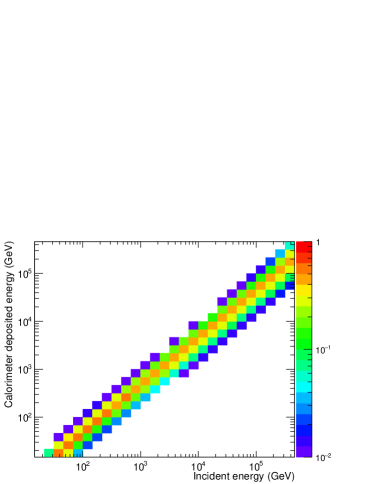
- 通过量能器与触发技术相结合的方法重建质子+氦的能谱,以区分质子+氦与其他粒子。
- 采用平滑断裂幂律(SBPL)模型拟合数据以描述谱特征,模型参数包括归一化、谱指数、断点能量及平滑度。
- 系统误差通过乘以模型的多余参数进行建模,协方差矩阵由蒙特卡罗模拟推导得出。
- 通过将SBPL拟合与单幂律拟合进行比较,评估谱特征的显著性,结果在约29 TeV处的软化具有6.6σ的显著性。
- 通过采用不同强子相互作用模型(FLUKA、DPMJET-3、GEANT4-QGSP_BERT)重复拟合,进一步估算额外的不确定性,以反映模型依赖性差异。
实验结果
研究问题
- RQ1在10 TeV以上能量区域,质子+氦能谱是否表现出谱软化?其显著性如何?
- RQ2在500 GeV以上能量区域,质子+氦能谱中是否存在谱硬化?其与以往观测结果相比如何?
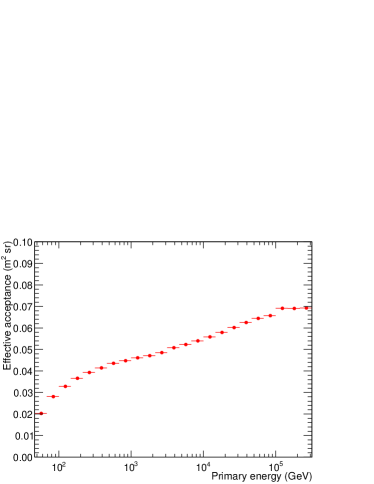
- RQ3DAMPE数据是否能将质子+氦能谱的覆盖范围扩展至316 TeV,从而实现与地面实验的直接比较?
- RQ4所观测到的谱特征(特别是约29 TeV处的软化)具有多高的统计显著性?
- RQ5在约150 TeV附近是否存在第二个谱硬化的证据?其对宇宙射线传播机制的解释有何影响?
主要发现
- 在约29 TeV处观测到显著性达6.6σ的谱软化,表明其与单幂律行为存在稳健偏离。
- 在约600 GeV处检测到谱硬化,与以往观测一致,暗示宇宙射线源或传播机制发生改变。
- 能谱延伸至316 TeV,实现了与地面实验的直接比较,证实了不同能量区段之间的连续性。
- 在约150 TeV附近发现第二个谱硬化的证据,数据支持该现象,且与SBPL拟合模型一致。
- 最佳拟合的SBPL模型得到断点能量为 E_B = 28.8+6.2−4.4 TeV,谱指数变化量 Δγ = 0.43+0.066−0.057。
- SBPL拟合的 χ²/dof 为 0.9/2,表明对数据的描述良好;而单幂律拟合的 χ²/dof 为 48.14/4,显著更差,进一步证实了谱特征的显著性。
更好的研究,从现在开始
从阅读论文到最终审阅,大幅缩短您的研究时间。
无需绑定信用卡
本解读由 AI 生成,并经人工编辑审核。