
[Paper Review] Methods of Informational Trends Analytics and Fake News Detection on Twitter
This paper proposes a hybrid deep learning model combining DistilBERT, user retweet embeddings, and SVD-processed TF-IDF features to detect fake and manipulative news on Twitter related to the 2022 Russian invasion of Ukraine. It integrates frequent itemset analysis and graph-based community detection to uncover semantic structures and suspicious user networks, achieving improved detection of propaganda trends through multi-modal feature engineering and structural analysis of retweet behavior.
In the paper, different approaches for the analysis of news trends on Twitter has been considered. For the analysis and case study, informational trends on Twitter caused by Russian invasion of Ukraine in 2022 year have been studied. A deep learning approach for fake news detection has been analyzed. The use of the theory of frequent itemsets and association rules, graph theory for news trends analytics have been considered.
Motivation & Objective
- To detect and analyze manipulative news trends on Twitter related to the 2022 Russian invasion of Ukraine.
- To develop a multi-component deep learning model that leverages text, user behavior, and structural network features for fake news detection.
- To apply frequent itemset and association rule mining to uncover semantic patterns in propaganda narratives.
- To identify suspicious user communities using graph theory and community detection algorithms such as Walktrap and Fruchterman-Reingold.
- To evaluate the predictive power of structural features like support and confidence in association rules for improving model performance.
Proposed method
- A three-stream deep neural network is constructed: one using DistilBERT for contextual tweet embedding, another for averaging word and username embeddings from retweeters, and a third for SVD components of TF-IDF matrices of retweeter usernames.
- Twitter API v2 is used to collect tweets using thematic keyword queries, including 'ukraine nazi' and 'ukraine biological weapon', with case-insensitive matching.
- Frequent itemsets and association rules are mined from tweet keywords using Apriori-like algorithms, with results visualized as graphs and grouped matrices.
- User interaction networks are modeled as graphs where nodes are users and edges represent retweet relationships; community structure is detected using the Community Walktrap algorithm.
- Graph visualization is performed using the Fruchterman-Reingold layout algorithm to identify isolated, highly connected communities indicative of coordinated disinformation campaigns.
- The model is trained and evaluated using PyTorch, with validation performance reported on a labeled dataset of retweeted tweets.
Experimental results
Research questions
- RQ1How can deep learning models effectively combine textual content, user retweet behavior, and structural network features to detect fake news on Twitter?
- RQ2What role do frequent itemsets and association rules play in revealing the semantic structure of propaganda narratives during geopolitical crises?
- RQ3Can graph-based community detection identify suspicious, isolated user clusters that amplify manipulative content?
- RQ4To what extent do quantitative metrics like support and confidence in association rules serve as predictive features in fake news detection models?
- RQ5How do coordinated disinformation campaigns manifest in user network structures during large-scale information operations?
Key findings
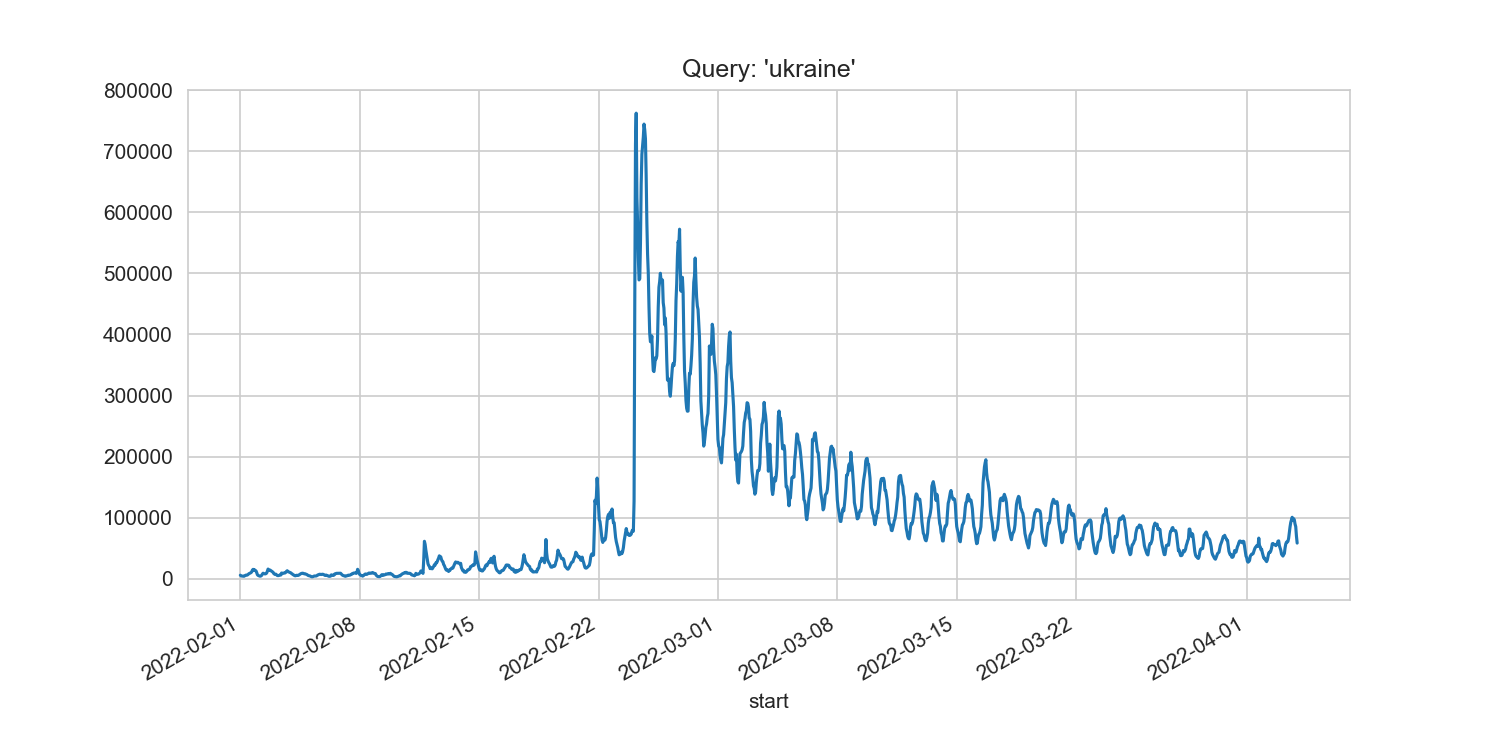
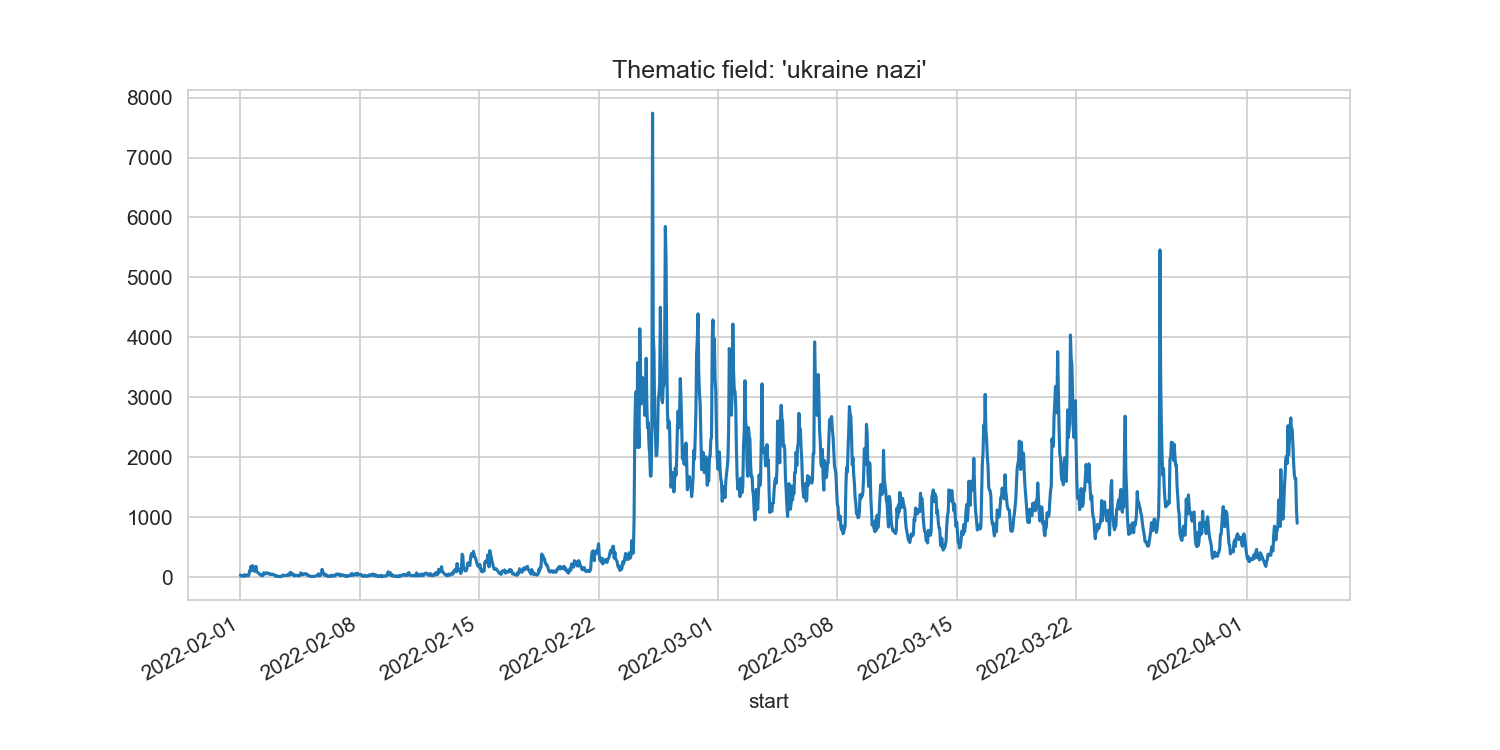
- The 'ukraine nazi' and 'ukraine biological weapon' thematic fields showed a sharp spike in tweet volume starting February 24, 2022, aligning with the onset of the Russian invasion.
- The deep learning model achieved effective detection of fake and manipulative news by combining DistilBERT embeddings with retweeter network features, including SVD-processed TF-IDF representations.
- Association rule mining revealed high-frequency semantic patterns, such as links between 'fake', 'nazi', and 'biological weapon', indicating coordinated narrative framing.
- Graph-based analysis identified isolated user communities with high internal connectivity, suggesting artificial coordination typical of disinformation campaigns.
- The support and confidence values of frequent itemsets were identified as useful predictive features for machine learning models.
- The integration of graph structure, semantic patterns, and deep neural networks significantly enhanced the detection of coordinated propaganda efforts on Twitter.
Read this paper
Open the full text in the Nubint reader and ask about any passage as you read.
Read this paper on NubintThis review was generated by AI from the original paper. Please check the paper before citing it.