
[论文解读] Model of Cosmic Ray Propagation in the Milky Way at the Knee
论文提出一种各向异性、时间依赖的在银河系中传播的PeV宇宙射线模型,其中CRs由离散瞬态源注入,并在真实的银河磁场中传播,导致在膝部附近局部通量高度非均匀。
We present a new model of anisotropic cosmic ray propagation in the Milky Way, where cosmic rays are injected at discrete transient sources in the disc and propagated in the Galactic magnetic field. In the framework of our model, we show that the cosmic ray spectrum is time-dependent and space-dependent around the energy of the knee. It has a major contribution of one or a few nearby recent sources at any given location in the Galaxy, in particular at the position of the Solar system. We find that the distribution of $\sim$ PeV cosmic rays in our Galaxy is significantly clumpy and inhomogeneous, and therefore substantially different from the smoother distribution of GeV cosmic rays. Our findings have important implications for the calculation and future interpretation of the diffuse Galactic gamma-ray and neutrino fluxes at very high energies.
研究动机与目标
- 提出一个传播框架,通过在银河平面的离散瞬态源注入并在Jansson-Farrar银河磁场模型中单独传播,以解释膝部由各向异性扩散引起的现象。
- 研究离散瞬态源如何塑造PeV能量下随时间和空间分布的CR分布。
- 评估有规律磁场对CR约束与局部通量波动的影响。
- 探讨银河 diffuse γ射线和中微子通量的含义。
提出的方法
- 在银河平面中以离散参考源注入CR,并在Jansson-Farrar银河磁场模型中进行单独传播。
- 使用外部湍流尺度Lmax = 25 pc,并降低湍流磁场强度以满足B/C约束。
- 在能量{1, 3, 10, 30, 100} PeV下对每个源进行10^3条轨迹模拟,并在30年到30 Myr内记录位置。
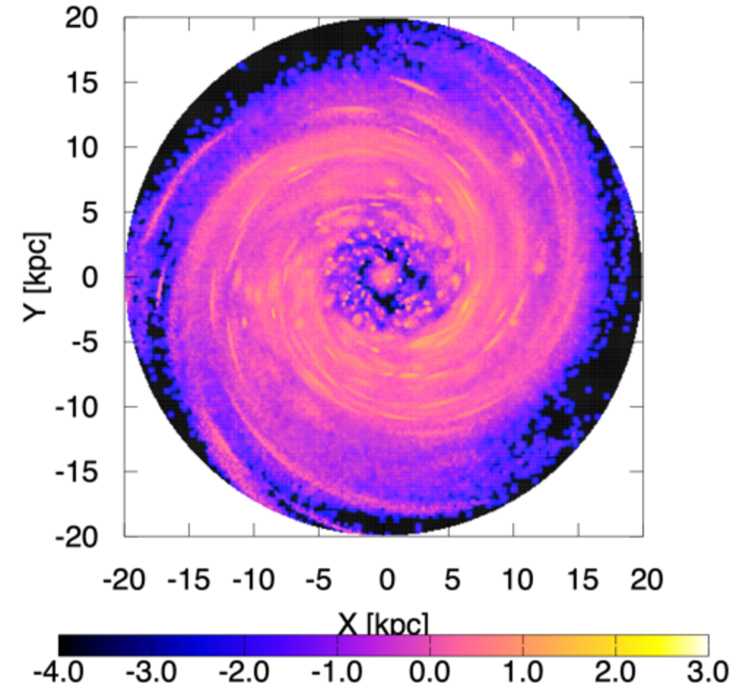
- 在银河平面中放置网格,在100 pc^3的小胞中计算CR密度,覆盖R=20 kpc、|z|=400 pc。
- 通过参数α和Emax将注入谱与观测数据联系起来,并调整源密度(SNe的1.6% vs 10%)以拟合膝部区域数据。
实验结果
研究问题
- RQ1各向异性扩散在银河磁场的规则场中如何影响PeV CRs的分布,与各向同性扩散模型相比的差异为何?
- RQ2几个邻近的近期源在塑造膝部及以上区域的局部CR通量中起什么作用?
- RQ3预测的PeV CR簇状性如何影响预期的漫射伽马射线和中微子信号?
- RQ4在JF12模型中降低湍流场是否能在保持B/C约束的同时实现更现实的CR限域时间?
- RQ5哪些源密度和谱指数最能再现来自KASCADE、IceTop、AMS-02、DAMPE、CALET等观测的膝部区域数据?
主要发现
- 膝部附近的CR通量是随时间和空间变化的,在给定位置(包括地球)通常被一个或几个邻近的最近源主导。
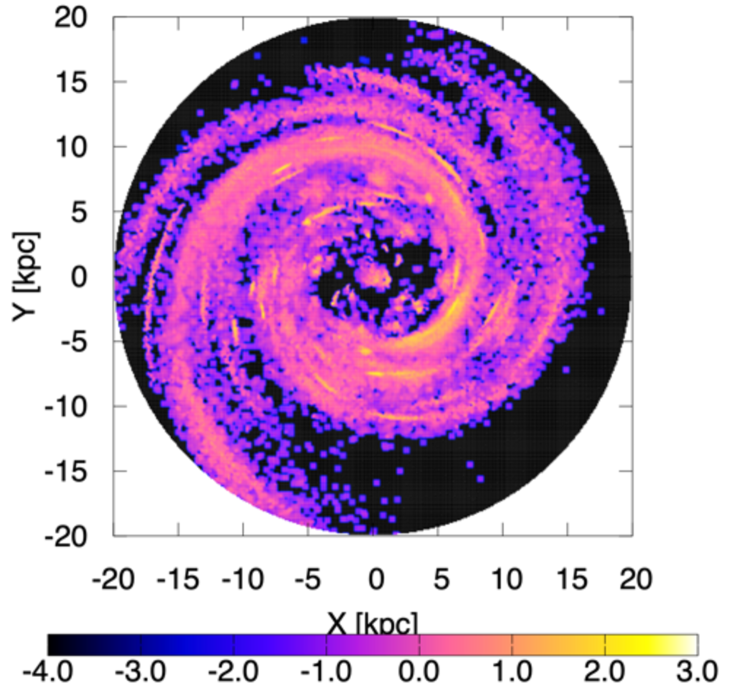
- 在1 PeV时,通量分布高度斑块化,在银河系范围内对比度可达到数个数量级。
- 在10 PeV及以上,分布变得更加非均匀,只有少数源在大多数位置(包括地球)起作用。
- 地球接收的膝部通量在Myr时间尺度内可由约100个源贡献主导,且在约100 kyr内存在显著波动,取决于源密度(SNe的1.6% vs 10%)。
- 需要两类源群以拟合膝部区域和约10 TeV的峰值,谱指数在约2.1–2.2之间,不同能量区间贡献不同。
更好的研究,从现在开始
从论文设计到论文写作,大幅缩短您的研究时间。
无需绑定信用卡
本解读由 AI 生成,并经人工编辑审核。