
[Paper Review] Organic Electronics in Biosensing: A Promising Frontier for Medical and Environmental Applications
This review explores organic electronics as a transformative platform for biosensing, leveraging conductive polymers and flexible devices to enable sensitive, real-time, label-free detection of biomolecules and environmental pollutants. It highlights applications in wearable diagnostics, implantable sensors, and IoT-integrated systems, emphasizing biocompatibility, tunable materials, and scalable fabrication for personalized medicine and environmental monitoring.
The promising field of organic electronics has ushered in a new era of biosensing technology, thus offering a promising frontier for applications in both medical diagnostics and environmental monitoring. This review paper provides a comprehensive overview of organic electronics' remarkable progress and potential in biosensing applications. It explores the multifaceted aspects of organic materials and devices, thereby highlighting their unique advantages, such as flexibility, biocompatibility, and low-cost fabrication. The paper delves into the diverse range of biosensors enabled by organic electronics, including electrochemical, optical, piezoelectric, and thermal sensors, thus showcasing their versatility in detecting biomolecules, pathogens, and environmental pollutants. Furthermore, integrating organic biosensors into wearable devices and the Internet of Things (IoT) ecosystem is discussed, wherein they offer real-time, remote, and personalized monitoring solutions. The review also addresses the current challenges and future prospects of organic biosensing, thus emphasizing the potential for breakthroughs in personalized medicine, environmental sustainability, and the advancement of human health and well-being.
Motivation & Objective
- To provide a comprehensive overview of organic electronics in biosensing for medical and environmental applications.
- To analyze the unique advantages of organic materials—such as flexibility, biocompatibility, and low-cost fabrication—over traditional inorganic sensors.
- To examine the integration of organic biosensors into wearable devices and the Internet of Things (IoT) for real-time, remote health and environmental monitoring.
- To identify key challenges in biocompatibility, stability, scalability, and data security, and evaluate emerging strategies to overcome them.
- To project future directions, including AI-integrated smart sensors, self-calibrating systems, and sustainable, energy-harvesting designs.
Proposed method
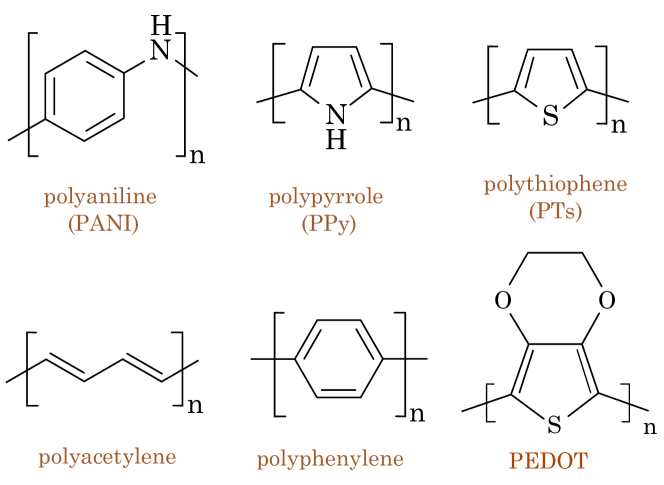
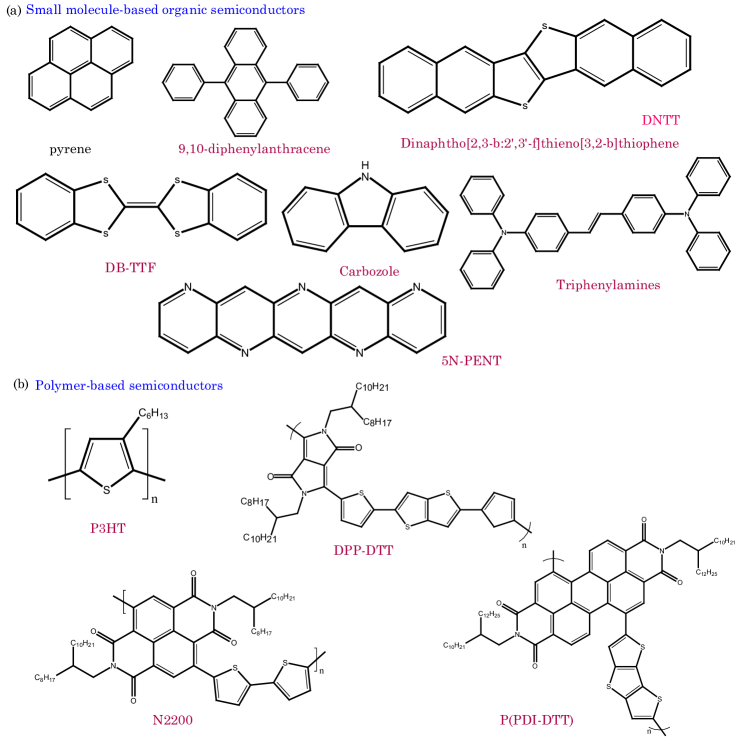
- Systematic review of recent advances in organic bioelectronic materials, including conducting polymers, organic field-effect transistors (OFETs), organic electrochemical transistors (OECTs), and organic photodetectors (OPDs).
- Analysis of sensing mechanisms across electrochemical, optical, piezoelectric, and thermo-responsive organic devices for detecting biomolecules and pollutants.
- Evaluation of fabrication techniques such as inkjet printing, spin coating, and roll-to-roll processing for scalable, low-cost production of flexible biosensors.
- Integration of organic biosensors with wireless communication modules and IoT platforms to enable real-time, remote data transmission and monitoring.
- Exploration of emerging concepts such as dynamic sampling, self-calibration, multi-modal sensor fusion, and energy harvesting from ambient sources.
- Assessment of sustainability trends, including biodegradable materials and reduced environmental impact in sensor design and manufacturing.
Experimental results
Research questions
- RQ1How do the intrinsic properties of organic materials—such as biocompatibility, flexibility, and tunable conductivity—enhance biosensing performance compared to inorganic alternatives?
- RQ2What are the key device architectures (e.g., OFETs, OECTs, OPDs) that enable sensitive, label-free detection of biological and chemical analytes?
- RQ3How can organic biosensors be effectively integrated into wearable platforms and IoT ecosystems for continuous, real-time health and environmental monitoring?
- RQ4What are the major technical and systemic challenges—such as long-term stability, scalability, and data privacy—limiting the clinical and environmental deployment of organic biosensors?
- RQ5What future innovations, including AI-driven decision-making, self-calibration, and energy harvesting, could enable next-generation intelligent biosensing platforms?
Key findings
- Conducting polymers exhibit tunable electrical conductivity through chemical or electrochemical doping, enabling high-sensitivity detection of biomolecules via charge carrier modulation.
- Organic field-effect transistors (OFETs) and organic electrochemical transistors (OECTs) demonstrate rapid response times and high sensitivity in detecting ions, metabolites, and proteins in complex biological fluids.
- Flexible and conformable organic biosensors enable seamless integration with human skin and tissues, supporting long-term in-vivo and wearable health monitoring applications.
- Integration of organic biosensors with IoT platforms enables real-time, remote, and personalized monitoring of physiological and environmental parameters, enhancing telehealth and preventive care.
- Emerging trends such as self-calibrating sensors, dynamic sampling, and multi-modal sensor fusion improve accuracy, reliability, and energy efficiency in biosensing systems.
- Sustainable design approaches—using biodegradable materials and energy-harvesting technologies—demonstrate potential for reducing environmental impact and enabling deployment in low-resource settings.
Read this paper
Open the full text in the Nubint reader and ask about any passage as you read.
Read this paper on NubintThis review was generated by AI from the original paper. Please check the paper before citing it.