
[论文解读] Predicting Patient COVID-19 Disease Severity by means of Statistical and Machine Learning Analysis of Blood Cell Transcriptome Data
本研究开发了一套机器学习框架,利用常规血液转录组数据,对COVID-19疾病严重程度和死亡率的预测准确率超过90%。通过整合统计分析与多种机器学习算法(包括随机森林、梯度提升和SVM),基于CRP、D-二聚体和乳酸等临床参数,该模型识别出预测严重结局的关键生物标志物,实现在资源有限环境中的早期风险分层。
Introduction: For COVID-19 patients accurate prediction of disease severity and mortality risk would greatly improve care delivery and resource allocation. There are many patient-related factors, such as pre-existing comorbidities that affect disease severity. Since rapid automated profiling of peripheral blood samples is widely available, we investigated how such data from the peripheral blood of COVID-19 patients might be used to predict clinical outcomes. Methods: We thus investigated such clinical datasets from COVID-19 patients with known outcomes by combining statistical comparison and correlation methods with machine learning algorithms; the latter included decision tree, random forest, variants of gradient boosting machine, support vector machine, K-nearest neighbour and deep learning methods. Results: Our work revealed several clinical parameters measurable in blood samples, which discriminated between healthy people and COVID-19 positive patients and showed predictive value for later severity of COVID-19 symptoms. We thus developed a number of analytic methods that showed accuracy and precision for disease severity and mortality outcome predictions that were above 90%. Conclusions: In sum, we developed methodologies to analyse patient routine clinical data which enables more accurate prediction of COVID-19 patient outcomes. This type of approaches could, by employing standard hospital laboratory analyses of patient blood, be utilised to identify, COVID-19 patients at high risk of mortality and so enable their treatment to be optimised.
研究动机与目标
- 利用标准医院血液检查改善对COVID-19疾病严重程度和死亡风险的早期预测。
- 识别在住院患者中对严重结局具有强预测价值的临床可测量血液参数。
- 开发一种稳健、自动化的决策支持系统,用于ICU资源分配,尤其适用于低资源环境。
- 评估多种机器学习模型在常规临床数据上的表现,以确保方法的稳定性和可推广性。
提出的方法
- 应用统计比较和相关性分析,识别健康个体与COVID-19患者之间显著不同的血液参数。
- 采用多种机器学习算法:决策树、随机森林、梯度提升(XGBoost、LightGBM)、支持向量机(SVM)、K近邻(KNN)以及深度学习模型。
- 在包含已知结局的住院COVID-19患者外周血参数临床数据集上训练和验证模型。
- 通过特征重要性分析,对C-反应蛋白(CRP)、D-二聚体和降钙素原等单个生物标志物的预测能力进行排序。
- 使用准确率、精确率和受试者工作特征曲线下面积(AUC)等标准指标评估模型性能。
- 通过在相同数据集上测试多种算法,确保模型的稳健性,确认各类方法间均保持一致的高性能表现。
![Figure 1: Proposed methodology and workflow of this research for machine learning analysis. [NCD = Non-Communicable Disease]](https://ar5iv.labs.arxiv.org/html/2011.10657/assets/blood.png)
实验结果
研究问题
- RQ1哪些常规血液参数与严重COVID-19结局和死亡率关联最强?
- RQ2基于标准临床血液检查训练的机器学习模型能否以高准确率预测疾病严重程度?
- RQ3在相同临床数据集上,不同机器学习算法在预测COVID-19严重程度方面的表现如何比较?
- RQ4基于现有可及血液检测的模型在临床环境中能在多大程度上改善早期风险分层?
- RQ5炎症和凝血标志物(如CRP、D-二聚体和铁蛋白)在分类疾病严重程度方面的预测价值如何?
主要发现
- 该模型利用标准血液检测数据,对疾病严重程度和死亡率的预测准确率和精确率均超过90%。
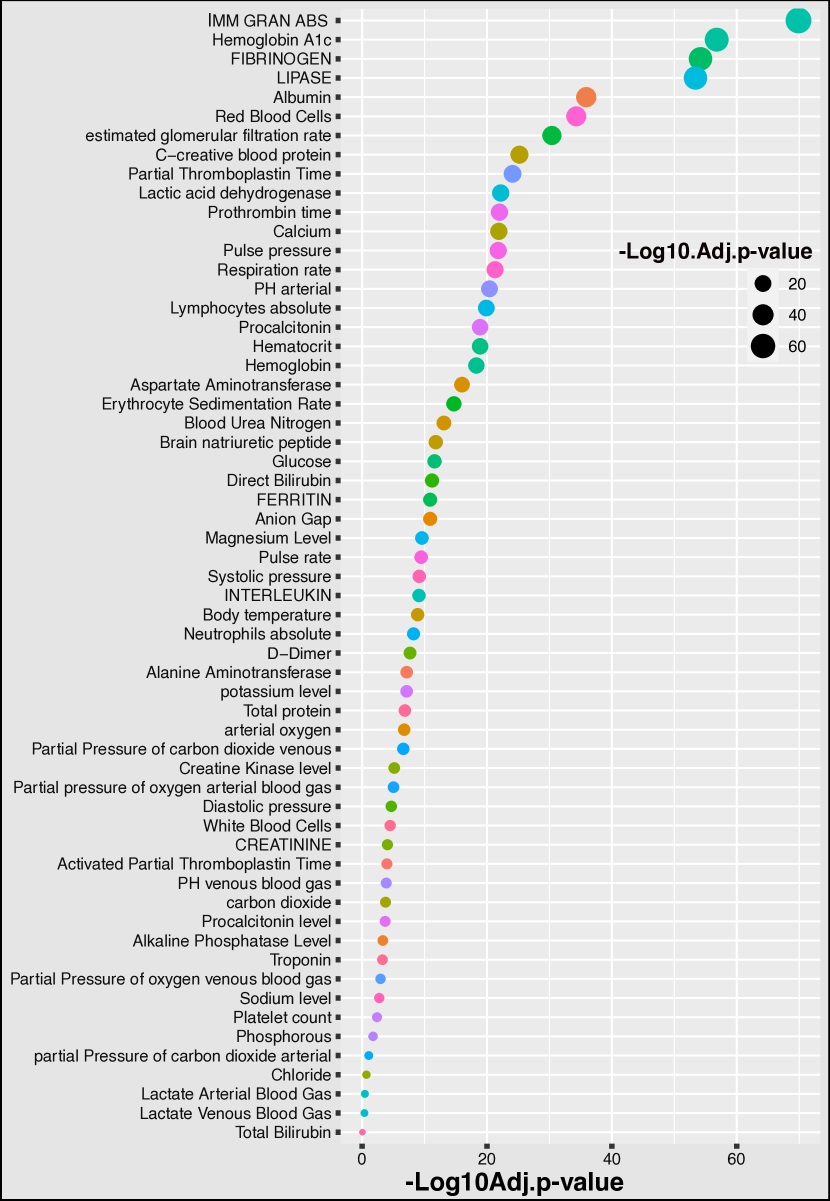
- C-反应蛋白(CRP)成为最具预测力的生物标志物,其次为D-二聚体、降钙素原、铁蛋白和脑钠肽。
- 血红蛋白、红细胞沉降率、血小板计数和乳酸水平在重症病例中也表现出显著差异,并对预测能力有贡献。
- 呼吸频率、血压(收缩压和舒张压)、血细胞比容、碱剩余(静脉和动脉)、中性粒细胞计数、白蛋白和尿素水平表现出较不显著但依然显著的差异和预测价值。
- 多种机器学习算法(如随机森林、XGBoost、SVM)在性能上的一致性表明模型具有稳健性,且对模型选择不敏感。
- 本研究凸显了利用现有、低成本的医院实验室检测实现高风险患者早期识别的潜力,尤其在ICU容量有限的医疗体系中。
更好的研究,从现在开始
从阅读论文到最终审阅,大幅缩短您的研究时间。
无需绑定信用卡
本解读由 AI 生成,并经人工编辑审核。