
[Paper Review] Quasi-Framelets: Robust Graph Neural Networks via Adaptive Framelet Convolution
This paper proposes Quasi-Framelets (QUFG), a novel spectral graph convolution method that directly designs adaptive filtering functions in the spectral domain to enhance robustness and flexibility in graph neural networks. By incorporating multiscale framelet-like filtering with learnable modulation, QUFG improves performance on noisy and heterogeneous graphs, outperforming state-of-the-art models in node classification under both homogeneous and heterogeneous settings with significant gains in accuracy and noise resilience.
This paper aims to provide a novel design of a multiscale framelet convolution for spectral graph neural networks (GNNs). While current spectral methods excel in various graph learning tasks, they often lack the flexibility to adapt to noisy, incomplete, or perturbed graph signals, making them fragile in such conditions. Our newly proposed framelet convolution addresses these limitations by decomposing graph data into low-pass and high-pass spectra through a finely-tuned multiscale approach. Our approach directly designs filtering functions within the spectral domain, allowing for precise control over the spectral components. The proposed design excels in filtering out unwanted spectral information and significantly reduces the adverse effects of noisy graph signals. Our approach not only enhances the robustness of GNNs but also preserves crucial graph features and structures. Through extensive experiments on diverse, real-world graph datasets, we demonstrate that our framelet convolution achieves superior performance in node classification tasks. It exhibits remarkable resilience to noisy data and adversarial attacks, highlighting its potential as a robust solution for real-world graph applications. This advancement opens new avenues for more adaptive and reliable spectral GNN architectures.
Motivation & Objective
- To address the limitations of existing spectral GNNs in handling incomplete or perturbed graph data.
- To overcome the rigidity of mathematically predefined filters and the data sensitivity of end-to-end learned filters.
- To enable flexible spectral filtering by directly designing modulation functions in the spectral domain.
- To improve node classification in heterogeneous graphs without relying on attention mechanisms.
- To demonstrate superior robustness under feature noise and enhanced performance in multi-level graph representation.
Proposed method
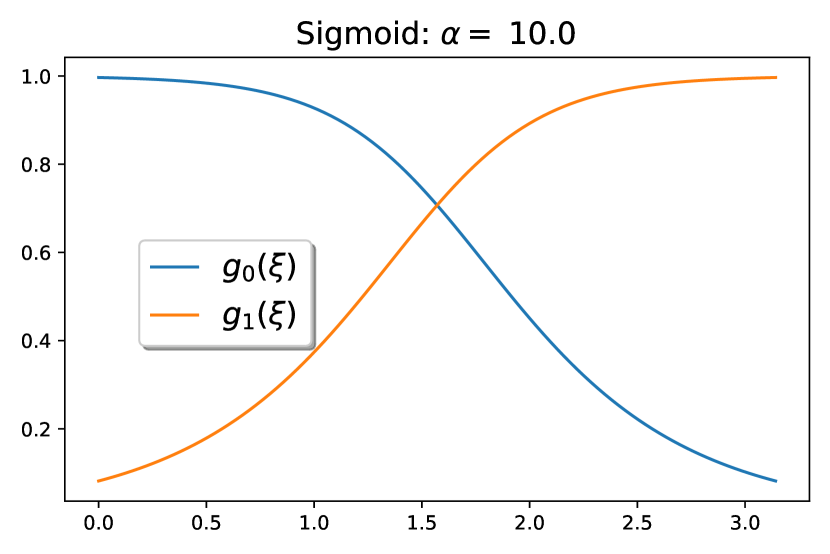
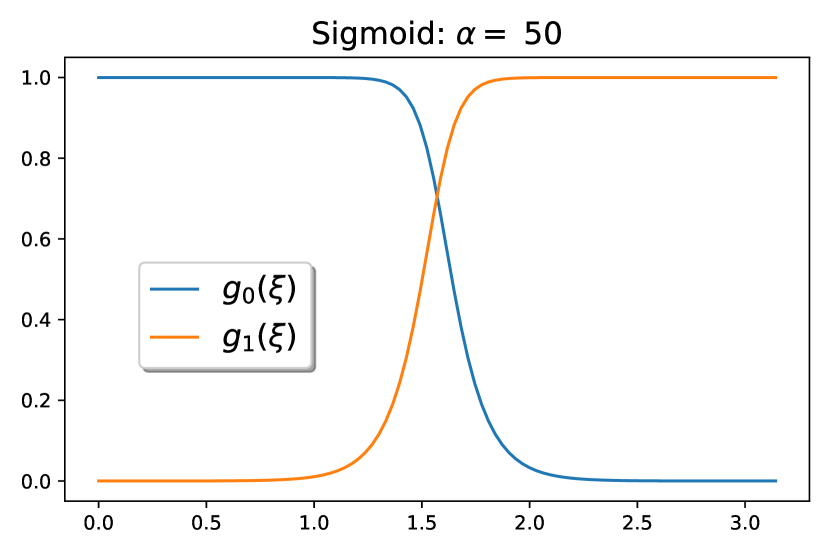
- Proposes a new graph convolution layer, QUFGConv, that applies learnable modulation functions directly in the spectral domain to control spectral filtering.
- Introduces two sets of modulation functions to decompose and regulate different frequency components of graph signals.
- Uses a multiscale framelet-inspired design to enable simultaneous low-pass and high-pass filtering for improved signal representation.
- Applies the QUFGConv layer in both homogeneous and heterogeneous GNN frameworks, replacing attention mechanisms in HAN for fair comparison.
- Employs spectral decomposition of the graph Laplacian to project node features into the spectral domain for filtering.
- Aggregates meta-path-based representations in heterogeneous graphs using QUFGConv to capture topological semantics across multiple node and edge types.
Experimental results
Research questions
- RQ1Can spectral filtering be made more flexible and robust by directly designing modulation functions in the spectral domain rather than relying on learned or fixed mathematical filters?
- RQ2How does the proposed QUFG convolution improve performance on graphs with noisy or incomplete features compared to existing spectral GNNs?
- RQ3Can QUFG effectively capture heterogeneous topological structures in multi-type graphs without using attention mechanisms?
- RQ4Does the multiscale filtering capability of QUFG lead to better representation learning in both homogeneous and heterogeneous graph settings?
- RQ5How does QUFG compare to state-of-the-art models in terms of robustness under varying noise levels and graph perturbations?
Key findings
- QUFG achieves 43.61% ± 2.97 accuracy on Pubmed under Gaussian noise (σ=0.05), outperforming GCN (44.13%) and UFG (43.30%) in the same setting.
- On the same dataset with σ=0.2, QUFG maintains 41.47% ± 2.24 accuracy, surpassing UFG (41.35%) and GCN (41.11%), demonstrating strong denoising capability.
- In heterogeneous graph node classification, QUFG achieves 92.72% Macro-F1 on ACM and 55.69% Macro-F1 on IMDB, outperforming HAN (89.40% and 50.00%) and UFG (91.45% and 54.96%).
- QUFG reduces variance in performance, with standard deviations of 0.64 and 0.56 on DBLP and ACM, respectively, indicating greater training stability.
- The model shows consistent superiority over UFG (its linear framelet predecessor) across all datasets and metrics, proving the benefit of adaptive modulation.
- QUFG achieves state-of-the-art performance without using attention mechanisms, suggesting that explicit frequency component control can replace attention for capturing complex graph semantics.
Read this paper
Open the full text in the Nubint reader and ask about any passage as you read.
Read this paper on NubintThis review was generated by AI from the original paper. Please check the paper before citing it.