
[Paper Review] STAR: Simultaneous Transmission And Reflection for 360° Coverage by Intelligent Surfaces
This paper proposes Simultaneous Transmitting and Reflecting Reconfigurable Intelligent Surfaces (STAR-RIS), a novel RIS architecture enabling 360° wireless coverage by splitting incident signals into transmitted and reflected waves. The authors introduce three operating protocols—energy splitting, mode switching, and time switching—and demonstrate through numerical results that STAR-RISs outperform conventional RISs and omni-surfaces in both unicast and multicast scenarios by fully exploiting degrees of freedom in transmission and reflection.
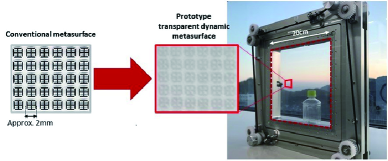
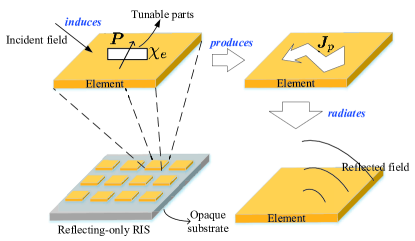
A novel simultaneously transmitting and reflecting (STAR) system design relying on reconfigurable intelligent surfaces (RISs) is conceived. First, an existing prototype is reviewed and the potential benefits of STAR-RISs are discussed. Then, the key differences between conventional reflecting-only RISs and STAR-RISs are identified from the perspectives of hardware design, physics principles, and communication system design. Furthermore, the basic signal model of STAR-RISs is introduced, and three practical protocols are proposed for their operation, namely energy splitting, mode switching, and time switching. Based on the proposed protocols, a range of promising application scenarios are put forward for integrating STAR-RISs into next-generation wireless networks. By considering the downlink of a typical RIS-aided multiple-input single-output (MISO) system, numerical case studies are provided for revealing the superiority of STAR-RISs over other baselines, when employing the proposed protocols. Finally, several open research problems are discussed.
Motivation & Objective
- To address the limited spatial coverage of conventional reflecting-only RISs by proposing a new RIS architecture that enables full-space signal manipulation.
- To identify key differences between conventional RISs and STAR-RISs in hardware design, physics principles, and system-level communication design.
- To develop practical operating protocols (energy splitting, mode switching, time switching) for STAR-RISs to enable flexible and efficient signal control.
- To evaluate the performance of STAR-RISs in MISO downlink systems and compare them with conventional RISs and omni-surfaces in unicast and multicast scenarios.
- To highlight open research challenges in spatial modeling, channel estimation, and deployment strategies for STAR-RIS-aided networks.
Proposed method
- Proposes a new RIS architecture—STAR-RIS—that allows incident signals to be simultaneously transmitted through and reflected from the surface, enabling 360° coverage.
- Introduces three practical operating protocols: energy splitting (simultaneous transmission and reflection using power division), mode switching (dynamic switching between transmission and reflection), and time switching (sequential operation in time slots).
- Develops a signal model for STAR-RISs that accounts for both transmission and reflection coefficients per reconfigurable element, enabling joint optimization of both links.
- Applies the proposed protocols to a downlink MISO system with a single-antenna user, optimizing beamforming and RIS coefficients to maximize spectral efficiency.
- Uses numerical case studies to compare STAR-RISs with conventional RISs (reflect-only) and omni-surfaces (identical transmission and reflection coefficients) under unicast and multicast scenarios.
- Employs stochastic geometry and system-level simulations to analyze performance gains and trade-offs across different protocols and user configurations.
Experimental results
Research questions
- RQ1How can RISs be reconfigured to enable simultaneous transmission and reflection, thereby achieving full-space 360° coverage?
- RQ2What are the key hardware and physical differences between conventional reflecting-only RISs and STAR-RISs?
- RQ3Which operating protocol—energy splitting, mode switching, or time switching—best balances spectral efficiency and pilot overhead in practical systems?
- RQ4How do STAR-RISs compare to conventional RISs and omni-surfaces in terms of spectral efficiency for unicast and multicast scenarios?
- RQ5What are the major open challenges in deploying STAR-RISs in real-world networks, particularly in spatial modeling, channel estimation, and deployment optimization?
Key findings
- STAR-RISs outperform conventional RISs and omni-surfaces in both unicast and multicast scenarios due to their ability to fully exploit degrees of freedom in transmission and reflection.
- In unicast scenarios, STAR-RISs consistently achieve higher spectral efficiency than conventional RISs and omni-surfaces, with the energy-splitting protocol showing the best performance due to simultaneous link utilization.
- In multicast scenarios, conventional RISs outperform time-switching STAR-RISs for small numbers of RIS elements (M), but STAR-RISs surpass them as M increases due to better utilization of available degrees of freedom.
- The omni-surface performs nearly as well as mode-switching STAR-RISs in multicast due to the absence of inter-user interference, but still underperforms energy-splitting STAR-RISs due to reduced beamforming flexibility.
- Numerical results confirm that the proposed protocols enable STAR-RISs to achieve significant spectral efficiency gains, especially in high-DoF regimes.
- The performance gap between conventional RISs and STAR-RISs widens with increasing M, highlighting the advantage of full-space signal control in large-scale deployments.
Read this paper
Open the full text in the Nubint reader and ask about any passage as you read.
Read this paper on NubintThis review was generated by AI from the original paper. Please check the paper before citing it.