
[论文解读] Tackling Cyberattacks through AI-based Reactive Systems: A Holistic Review and Future Vision
本文全面综述了自2017年以来人工智能驱动的网络攻击响应反应式系统,分析了近年来的最新进展。评估了机器学习和神经网络等人工智能技术在威胁检测与自动化对策选择中的应用,识别出关键挑战,并为自主、自适应且标准化的人工智能驱动防御系统提出了未来研究方向。
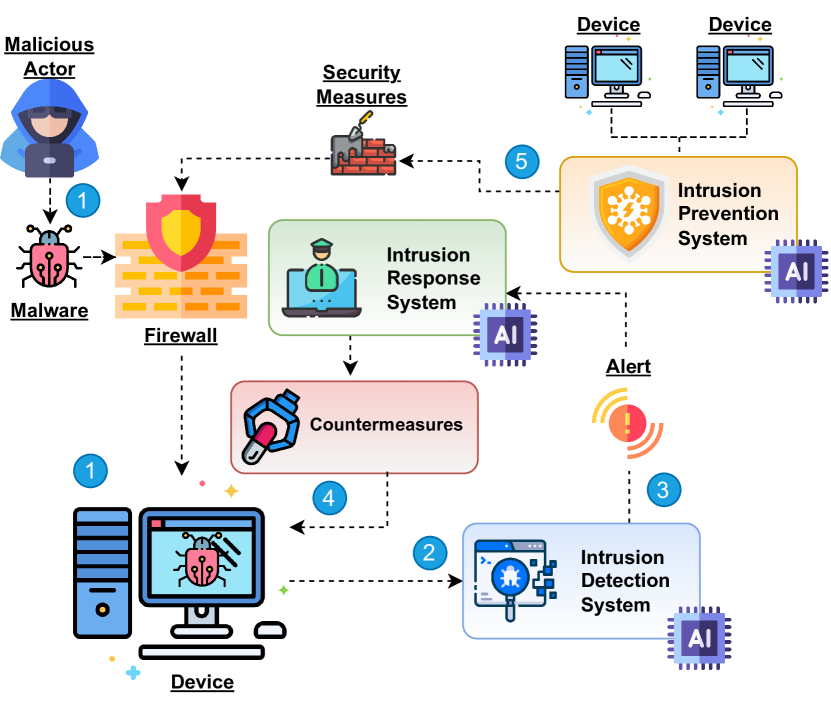
There is no denying that the use of Information Technology (IT) is undergoing exponential growth in today's world. This digital transformation has also given rise to a multitude of security challenges, notably in the realm of cybercrime. In response to these growing threats, public and private sectors have prioritized the strengthening of IT security measures. In light of the growing security concern, Artificial Intelligence (AI) has gained prominence within the cybersecurity landscape. This paper presents a comprehensive survey of recent advancements in AI-driven threat response systems. To the best of our knowledge, the most recent survey covering the AI reaction domain was conducted in 2017. Since then, considerable literature has been published, and therefore, it is worth reviewing it. In this comprehensive survey of the state of the art reaction systems, five key features with multiple values have been identified, facilitating a homogeneous comparison between the different works. In addition, through a meticulous methodology of article collection, the 22 most relevant publications in the field have been selected. Then each of these publications has been subjected to a detailed analysis using the features identified, which has allowed for the generation of a comprehensive overview revealing significant relationships between the papers. These relationships are further elaborated in the paper, along with the identification of potential gaps in the literature, which may guide future contributions. A total of seven research challenges have been identified, pointing out these potential gaps and suggesting possible areas of development through concrete proposals.
研究动机与目标
- 为应对网络攻击日益复杂和频繁的态势,通过回顾自上一次重大综述(2017年)以来人工智能驱动的威胁响应系统的研究进展,以解决该问题。
- 分析并比较各类用于反应式网络安全系统的AI技术,重点关注其在威胁检测、预防及自主响应方面的能力。
- 识别人工智能集成中的关键研究挑战,包括模型适应性、实时响应能力以及系统标准化问题。
- 提出未来研究路线图,以推动开发稳健、协作性强且可扩展的人工智能驱动网络安全防御平台。
- 探索新兴机遇,如生成式人工智能在操作员界面中的应用,以及在动态威胁环境中实现自动化模型更新。
提出的方法
- 对近年来关于基于人工智能的威胁响应系统的研究论文进行了系统性文献回顾,重点关注其共性特征与通用评估标准。
- 根据所采用的AI技术对研究进行分类与比较,例如监督学习与强化学习、神经网络以及混合架构。
- 评估系统在威胁检测、适当对策选择以及对不断演变的攻击模式实现实时适应方面的能力。
- 提出一个概念框架,将AI技术与响应机制相连接,强调自动化、准确性与系统韧性。
- 识别关键集成挑战,包括模型可解释性、数据质量以及安全架构中各层级之间的系统互操作性。
- 引入一个研究挑战图(图7),以可视化未来研究方向之间的相互关联,包括协作需求。
实验结果
研究问题
- RQ1自2017年以来,人工智能技术在网络威胁响应系统中的演变情况如何?当前文献中占主导地位的方法有哪些?
- RQ2在真实网络安全环境中部署人工智能驱动的反应式系统时,面临的关键技术和操作挑战是什么?
- RQ3如何有效利用实时威胁数据对人工智能模型进行更新与适应,以保持其长期有效性?
- RQ4生成式人工智能在提升网络安全操作员与人工智能之间的人机交互方面可发挥何种作用?
- RQ5为实现基于人工智能的响应系统之间的互操作性与基准测试,需要哪些标准化与平台级解决方案?
主要发现
- 近年来,人工智能驱动的反应式系统越来越多地依赖机器学习与神经网络,以提升威胁检测的准确性与响应速度。
- 一个显著趋势是将人工智能与现有安全工具(如SIEM、IDS和IPS)集成,以实现自动化、实时响应的工作流。
- 尽管已取得进展,但在模型可解释性、对抗性攻击下的鲁棒性,以及在动态威胁环境下保持系统性能方面仍存在挑战。
- 目前亟需标准化平台,以测试和比较不同人工智能技术在威胁响应中的表现,但此类平台尚属空白。
- 生成式人工智能在为网络安全操作员创建直观界面方面展现出潜力,但该领域仍处于探索阶段,亟需进一步研究。
- 利益相关方之间的协作——尤其是公共部门与私营部门之间的协作——被识别为推动人工智能驱动网络安全防御系统发展的关键推动力。
更好的研究,从现在开始
从阅读论文到最终审阅,大幅缩短您的研究时间。
无需绑定信用卡
本解读由 AI 生成,并经人工编辑审核。