
[论文解读] Towards 6G Evolution: Three Enhancements, Three Innovations, and Three Major Challenges
本文通过识别三项关键增强(HRLLC、沉浸式通信、大容量通信)和三项核心技术创新(ISAC、无处不在的连接性、AI集成),概述了向6G无线网络演进的路径,同时分析了三大主要挑战:太赫兹传播损耗、跨技术协同以及AI驱动的安全问题。研究通过一个在135–170 GHz频段实现的OAM复用技术概念验证,展示了15 dB的模式隔离度,验证了该复用技术在6G系统中的潜力。
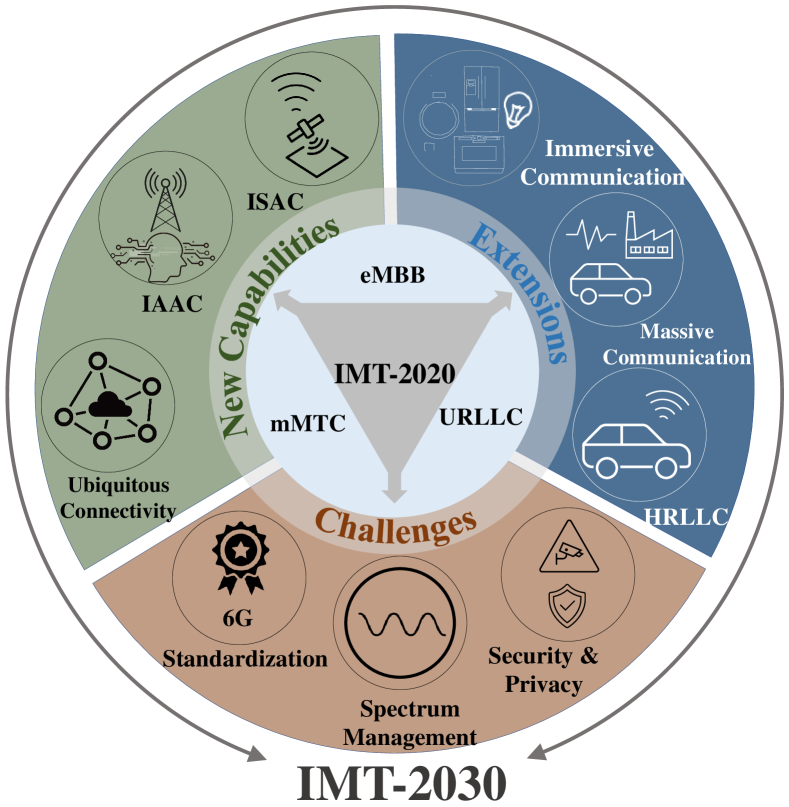
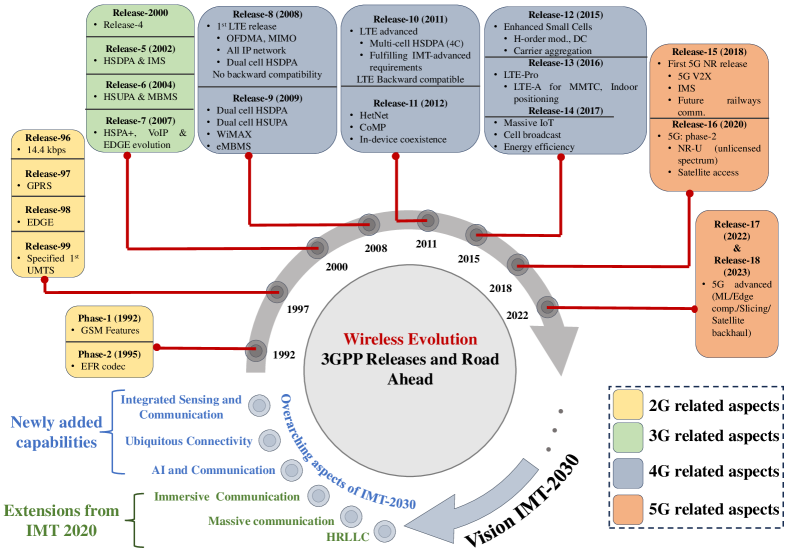
Over the past few decades, wireless communication has witnessed remarkable growth, experiencing several transformative changes. This article aims to provide a comprehensive overview of wireless communication technologies, from the foundations to the recent wireless advances. Specifically, we take a neutral look at the state-of-the-art technologies for 5G and the ongoing evolutions towards 6G, reviewing the recommendations of the International Mobile Communication vision for 2030 (IMT-2030). We first highlight specific features of IMT 2030, including three IMT-2020 extensions (URLLC+, eMBB+, and mMTC+) and three new innovations (Ubiquitous connectivity and integrating the new capabilities of sensing & AI with communication functionality). Then, we delve into three major challenges in implementing 6G, along with global standardization efforts. Besides, a proof of concept is provided by demonstrating terahertz (THz) signal transmission using Orbital Angular Momentum (OAM) multiplexing, which is one of the potential candidates for 6G and beyond. To inspire further potential research, we conclude by identifying research opportunities and future visions on IMT-2030 recommendations.
研究动机与目标
- 提供从5G到6G演进的全面概述,重点聚焦于IMT-2030建议。
- 识别并分析将5G能力(URLLC+、eMBB+、mMTC+)扩展至6G的三项关键增强。
- 探索6G中的三项变革性创新:集成感知与通信(ISAC)、通过非地面网络(NTN)实现的无处不在连接性,以及AI集成的网络管理。
- 突出6G部署中的主要技术与标准化挑战,特别是在频谱使用、互操作性与安全方面。
- 通过在亚太赫兹频段实现的OAM复用系统概念验证,验证一种有前景的6G传输技术。
提出的方法
- 本文回顾了国际电联无线电通信部门(ITU-R)和3GPP发布的IMT-2030建议,分析了5G三大支柱(URLLC、eMBB、mMTC)的扩展。
- 提出三项新创新:集成感知与通信(ISAC)、通过非地面网络(NTN)和AI实现的无处不在连接性,以及AI驱动的网络虚拟化与资源管理。
- 概念验证实验采用多层8×8巴特矩阵,在亚太赫兹频段(135–170 GHz)生成并分离OAM波束,无需数字信号处理。
- 系统采用均匀圆形阵列(UCAs)和光学对准技术,确保波束轴对齐,实现多个OAM模式的同时传输。
- 实现了超过15 dB的模式隔离度,支持在8个OAM模式上复用最多16路数据流,采用双极化技术。
- 实验在屏蔽室内进行,传输距离为1米,通过使用抛物面反射器可扩展至20米。
实验结果
研究问题
- RQ15G的核心能力(URLLC、eMBB、mMTC)如何扩展以满足6G应用的需求?
- RQ2定义6G的关键创新是什么?它们如何支持实时感知和沉浸式通信等新用例?
- RQ36G网络部署的主要技术与标准化挑战是什么,特别是在太赫兹频谱利用和跨技术集成方面?
- RQ4在亚太赫兹频段中,OAM复用能否作为未来6G系统中可行的复用技术?可实现哪些性能指标?
- RQ5AI与可重构智能表面(RIS)如何集成到6G网络中,以提升频谱效率、能量效率与安全性?
主要发现
- IMT-2030框架扩展了5G的三大支柱:URLLC演变为超可靠低时延通信(HRLLC),eMBB演进为沉浸式通信,mMTC演变为大容量通信。
- 提出三项新创新:集成感知与通信(ISAC)、通过非地面网络(NTNs)实现的无处不在连接性,以及AI集成的网络管理。
- 概念验证的OAM复用系统在135–170 GHz频段实现了超过15 dB的模式隔离度,支持多达16路数据流的无干扰传输。
- 该OAM系统采用无源8×8巴特矩阵生成并分离OAM波束,无需数字处理,降低了功耗与系统复杂度。
- 实验设置在屏蔽室内实现了1米距离的稳定传输,通过使用抛物面反射器可扩展至20米。
- 本研究证实了在亚太赫兹频段中OAM复用技术的可行性,是未来高容量6G回传与接入链路的有前景候选方案。
更好的研究,从现在开始
从阅读论文到最终审阅,大幅缩短您的研究时间。
无需绑定信用卡
本解读由 AI 生成,并经人工编辑审核。