
[论文解读] Towards AI Accountability Infrastructure: Gaps and Opportunities in AI Audit Tooling
本文盘点了AI审计工具,访谈了从业者,并认为当前的工具侧重于评估,但不足以实现问责,呼吁建立更广泛的AI问责基础设施。
Audits are critical mechanisms for identifying the risks and limitations of deployed artificial intelligence (AI) systems. However, the effective execution of AI audits remains incredibly difficult, and practitioners often need to make use of various tools to support their efforts. Drawing on interviews with 35 AI audit practitioners and a landscape analysis of 435 tools, we compare the current ecosystem of AI audit tooling to practitioner needs. While many tools are designed to help set standards and evaluate AI systems, they often fall short in supporting accountability. We outline challenges practitioners faced in their efforts to use AI audit tools and highlight areas for future tool development beyond evaluation -- from harms discovery to advocacy. We conclude that the available resources do not currently support the full scope of AI audit practitioners' needs and recommend that the field move beyond tools for just evaluation and towards more comprehensive infrastructure for AI accountability.
研究动机与目标
- 映射AI审计工具在审计过程各阶段的现有生态系统。
- 了解实际在实践中使用的AI审计工具及其应用方式。
- 识别可用工具与从业者的问责需求之间的差距。
- 为研究人员、决策者和从业者提供开发超越评估的基础设施的建议。
提出的方法
- 汇集了390个AI审计工具的数据集。
- 开发将工具分为审计过程七个阶段的分类法。
- 对24个组织的35名审计从业者进行了27次半结构访谈。
- 对访谈文本应用质性编码(描述性编码和价值观编码)。
- 在Crunchbase、GitHub和Google Scholar API等来源的辅助下进行景观分析。
- 在tools.auditing-ai.com提供交互式数据集,以及在github.com/ryansteed/oat-analysis提供随附分析。
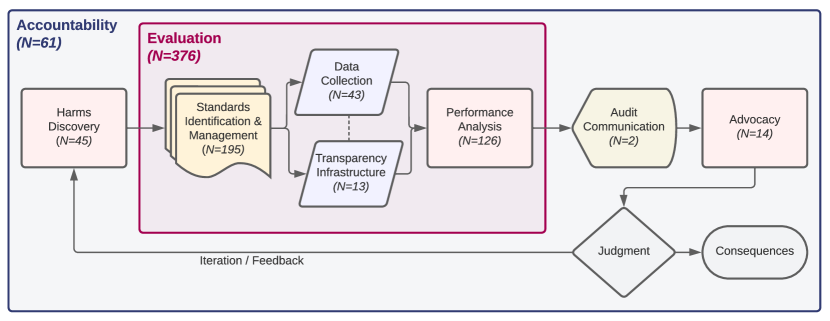
实验结果
研究问题
- RQ1RQ1:有哪些AI审计工具可用来支持AI审计工作?
- RQ2RQ2:哪些AI审计工具实际被使用,以及如何使用?
- RQ3RQ3:AI审计从业者真正需要什么?
主要发现
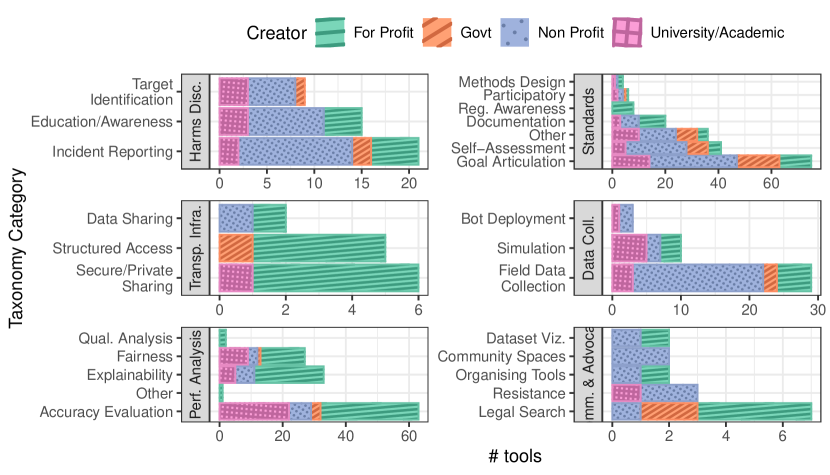
- 存在大量工具用于评估和标准管理,但用于问责关键阶段的工具较少,如伤害发现、数据收集、透明度基础设施、倡导和审计沟通。
- 从业者经常调整或自行构建工具以适应工作流程,揭示可用工具与现实需求之间的差距。
- 获取高质量、未被污染的数据、一致的全面标准、审计完整性以及跨学科协作是持续挑战。
- 大多数识别的工具是公开可用或开源的,但若没有支持问责的基础设施,工具的实际影响有限。
- 本研究倡导超越评估,转向支持伤害发现、利益相关者包容和倡导的全面AI问责基础设施。
更好的研究,从现在开始
从论文设计到论文写作,大幅缩短您的研究时间。
无需绑定信用卡
本解读由 AI 生成,并经人工编辑审核。