
[Paper Review] Unlocking the Power of LSTM for Long Term Time Series Forecasting
Proposes P-sLSTM, an LSTM-based long-term time series forecasting model built on sLSTM with patching and channel independence to overcome memory limitations and achieve state-of-the-art results.
Traditional recurrent neural network architectures, such as long short-term memory neural networks (LSTM), have historically held a prominent role in time series forecasting (TSF) tasks. While the recently introduced sLSTM for Natural Language Processing (NLP) introduces exponential gating and memory mixing that are beneficial for long term sequential learning, its potential short memory issue is a barrier to applying sLSTM directly in TSF. To address this, we propose a simple yet efficient algorithm named P-sLSTM, which is built upon sLSTM by incorporating patching and channel independence. These modifications substantially enhance sLSTM's performance in TSF, achieving state-of-the-art results. Furthermore, we provide theoretical justifications for our design, and conduct extensive comparative and analytical experiments to fully validate the efficiency and superior performance of our model.
Motivation & Objective
- Explain why sLSTM improves memory capacity and its applicability to time series forecasting.
- Show that sLSTM cannot guarantee long memory for long-term dependencies in TSF and address this with patching.
- Introduce P-sLSTM, integrating patching and channel independence to enhance memory and efficiency in TSF.
- Demonstrate through extensive experiments that P-sLSTM outperforms LSTM and sLSTM and is competitive with SOTA models.
Proposed method
- Explain sLSTM memory properties and its geometric ergodicity through a Markov chain formulation.
- Propose P-sLSTM by applying patching to divide multivariate series into independent channels and process univariate patches.
- Incorporate channel independence to reduce overfitting and improve efficiency.
- Use a linear projection pipeline to combine patch-wise predictions into final multivariate forecasts.
- Compare P-sLSTM to a range of baselines across multiple datasets with MSE/MAE metrics.

Experimental results
Research questions
- RQ1Can sLSTM effectively capture long-term dependencies in time series forecasting?
- RQ2Does patching restore or enhance long-range memory in sLSTM for TSF?
- RQ3Does channel independence improve forecast accuracy and reduce overfitting in RNN-based TSF models?
- RQ4How does P-sLSTM perform relative to LSTM, sLSTM, Transformer, MLP, and SSM baselines on standard TSF datasets?
Key findings
- P-sLSTM achieves superior accuracy across multiple datasets, outperforming sLSTM in the majority of settings and generally beating LSTM.
- P-sLSTM attains competitive performance with state-of-the-art Transformer/MLP/SSM models while offering lower training cost.
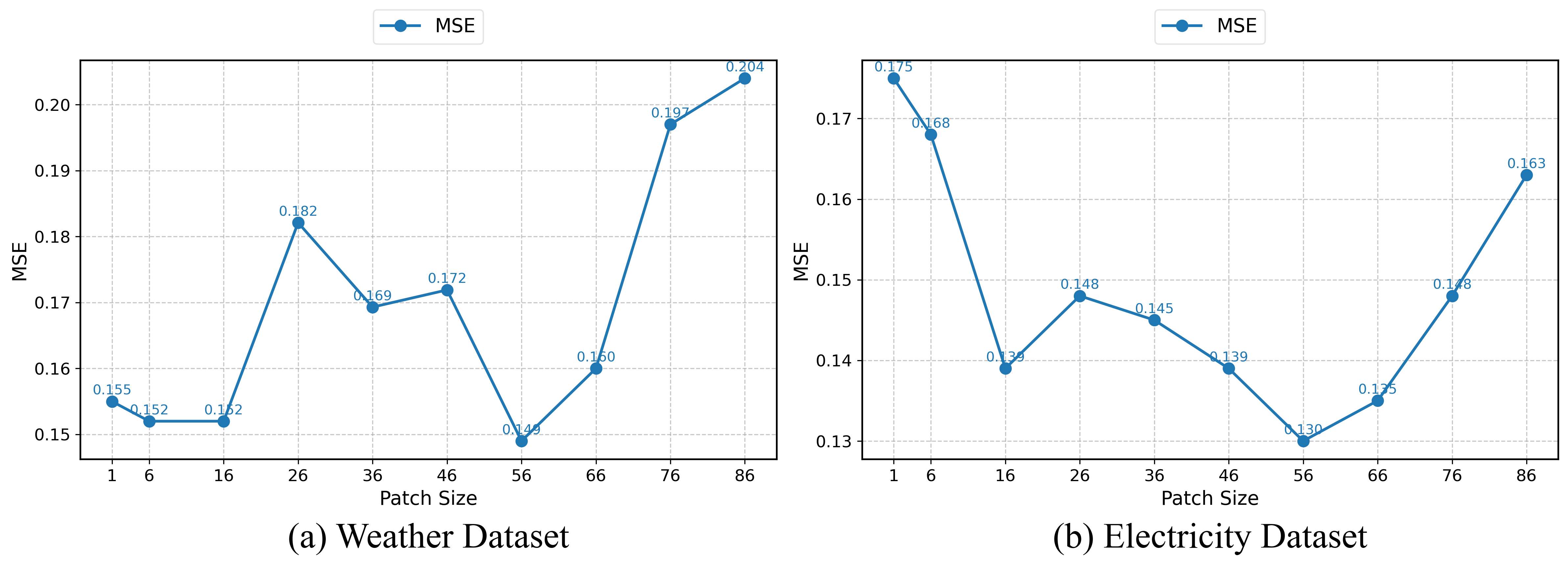
- Patching helps capture long-term dependencies by enabling piecewise processing of segments within channels.
- Channel independence helps prevent overfitting and improves generalization compared to channel-mixed variants.
- Ablation studies show memory mixing provides marginal gains and CI reduces training error while improving validation/testing performance.
- P-sLSTM demonstrates lower computational cost than competitive baselines in the reported experiments.
Read this paper
Open the full text in the Nubint reader and ask about any passage as you read.
Read this paper on NubintThis review was generated by AI from the original paper. Please check the paper before citing it.