
[Paper Review] VGGFace2: A dataset for recognising faces across pose and age
Introduces VGGFace2, a large-scale face dataset with extensive pose and age variation, and shows state-of-the-art results on IJB benchmarks using CNNs trained on it.
In this paper, we introduce a new large-scale face dataset named VGGFace2. The dataset contains 3.31 million images of 9131 subjects, with an average of 362.6 images for each subject. Images are downloaded from Google Image Search and have large variations in pose, age, illumination, ethnicity and profession (e.g. actors, athletes, politicians). The dataset was collected with three goals in mind: (i) to have both a large number of identities and also a large number of images for each identity; (ii) to cover a large range of pose, age and ethnicity; and (iii) to minimize the label noise. We describe how the dataset was collected, in particular the automated and manual filtering stages to ensure a high accuracy for the images of each identity. To assess face recognition performance using the new dataset, we train ResNet-50 (with and without Squeeze-and-Excitation blocks) Convolutional Neural Networks on VGGFace2, on MS- Celeb-1M, and on their union, and show that training on VGGFace2 leads to improved recognition performance over pose and age. Finally, using the models trained on these datasets, we demonstrate state-of-the-art performance on all the IARPA Janus face recognition benchmarks, e.g. IJB-A, IJB-B and IJB-C, exceeding the previous state-of-the-art by a large margin. Datasets and models are publicly available.
Motivation & Objective
- Create a large-scale face dataset with broad pose, age, ethnicity, and profession variation while minimizing label noise.
- Describe a robust dataset construction pipeline with automated and manual filtering stages.
- Demonstrate that models trained on VGGFace2 achieve state-of-the-art results on IJB benchmarks and across pose/age recognition tasks.
Proposed method
- Collect 3.31 million images for 9131 identities from Google Image Search with pose/age variation emphasis.
- Apply multi-stage filtering, including automatic classification, near-duplicate removal, and manual review to reduce label noise.
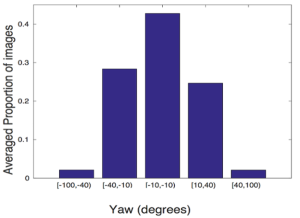
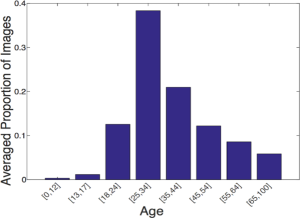
- Annotate pose (yaw/pitch/roll) and apparent age using pre-trained classifiers.
- Train ResNet-50 and SE-ResNet-50 models on VGGFace2, MS-Celeb-1M, and their union; evaluate on IJB-A/B/C benchmarks.
- Provide pose and age templates for evaluation of cross-pose and cross-age recognition.
Experimental results
Research questions
- RQ1How does increasing intra-identity pose and age variation affect face recognition performance?
- RQ2Does pre-training on a broad, noisy dataset (MS-Celeb-1M) followed by fine-tuning on VGGFace2 improve generalization?
- RQ3How do models trained on VGGFace2 perform on IJB-A/B/C benchmarks compared to models trained on other datasets?
- RQ4What is the impact of pose and age variation on recognition across different templates (pose/age)?
Key findings
- Training on VGGFace2 yields lower top-1 error (3.9%) on the VGGFace2 test set compared to VGGFace (10.6%) and MS1M (5.6%).
- Models trained on VGGFace2 outperform MS1M and VGGFace on IJB-A verification and identification metrics.
- SE-ResNet-50 and SENet variants trained on VGGFace2 achieve state-of-the-art results on IJB-A, IJB-B, and IJB-C benchmarks across multiple protocols.
- Pose and age templates show that recognition is easier when poses are similar and across-age matching remains challenging, with VGGFace2 models providing higher similarity scores than others.
Better researchstarts right now
From reading papers to final review, dramatically reduce your research time.
No credit card · Free plan available
This review was created by AI and reviewed by human editors.