
[论文解读] ATLASGAL: 3-mm class I methanol masers in high-mass star formation regions
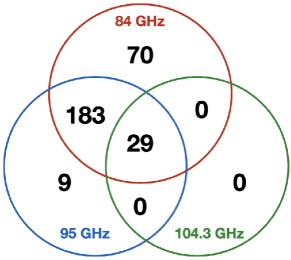
本研究利用IRAM 30米望远镜对408个ATLASGAL星团进行了3毫米谱线 survey,探测了84、95和104.3 GHz频段的I类甲醇脉泽。分别检测到54个、100个和4个新的脉泽源,结果表明95 GHz脉泽比84 GHz脉泽更强,且脉泽与SiO激波示踪剂以及星团性质(如总辐射 luminosity 和H₂柱密度)密切相关,表明其作为大质量恒星形成早期激波的显著标志。
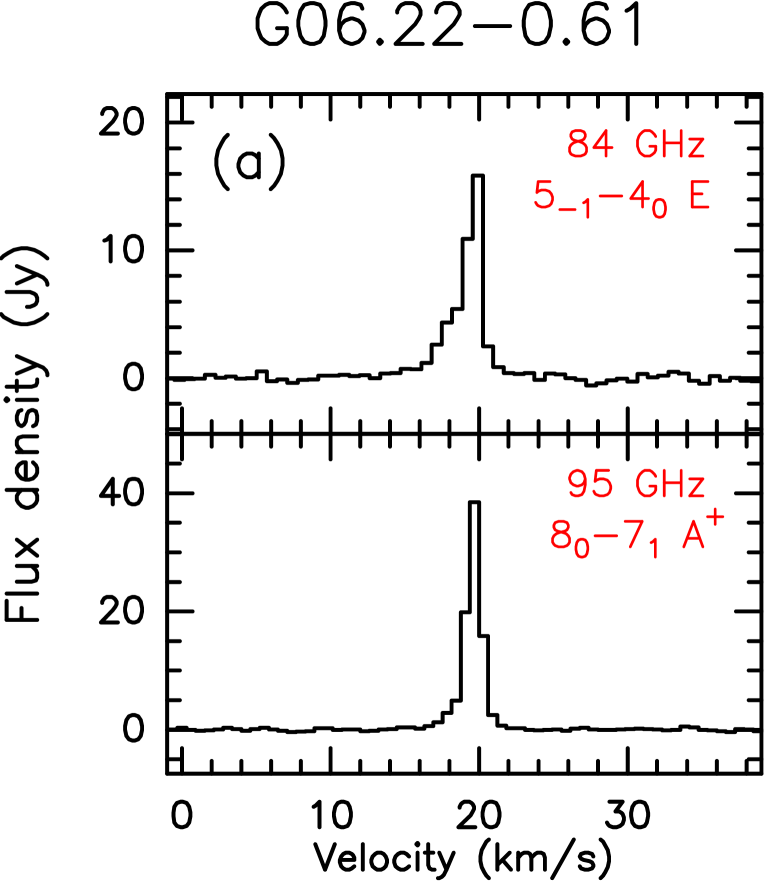
We analyzed the 3-mm wavelength spectral line survey of 408 ATLASGAL clumps observed with the IRAM 30m-telescope, focusing on the class I methanol masers with frequencies near 84, 95 and 104.3 GHz. We detect narrow, maser-like features towards 54, 100 and 4 sources in the maser lines near 84, 95 and 104.3 GHz, respectively. Among them, fifty 84 GHz masers, twenty nine 95 GHz masers and four rare 104.3 GHz masers are new discoveries. The new detections increase the number of known 104.3 GHz masers from 5 to 9. The 95 GHz class I methanol maser is generally stronger than the 84 GHz maser counterpart. We find 9 sources showing class I methanol masers but no SiO emission, indicating that class I methanol masers might be the only signpost of protostellar outflow activity in extremely embedded objects at the earliest evolutionary stage. Class I methanol masers that are associated with sources that show SiO line wings are more numerous and stronger than those without such wings. The total integrated intensity of class I methanol masers is well correlated with the integrated intensity and velocity coverage of the SiO (2--1) emission. The properties of class I methanol masers are positively correlated with the bolometric luminosity, clump mass, peak H$_2$ column density of their associated clumps but uncorrelated with the luminosity-to-mass ratio, dust temperature, and mean H$_2$ volume density. We suggest that the properties of class I masers are related to shocks traced by SiO. Based on our observations, we conclude that class I methanol masers at 84 and 95 GHz can trace a similar evolutionary stage as H$_2$O maser, and appear prior to 6.7 and 12.2 GHz methanol and OH masers. Despite their small number, the 104.3 GHz class I masers appear to trace a short and more evolved stage compared to the other class I masers. [abridged]
研究动机与目标
- 在大质量恒星形成区域探测84、95和104.3 GHz频段的I类甲醇脉泽。
- 研究I类脉泽与SiO发射等激波示踪剂之间的统计关系。
- 比较不同演化阶段中脉泽特性与其宿主星团性质的关联。
- 约束多个I类脉泽同时激发的物理条件。
- 确定不同I类脉泽跃迁所追踪的演化阶段相对于其他脉泽物种的位置。
提出的方法
- 利用IRAM 30米望远镜对408个ATLASGAL星团开展3毫米谱线 survey。
- 聚焦于识别I类甲醇脉泽在84、95和104.3 GHz跃迁中的窄线、脉泽样特征。
- 将脉泽检测结果与SiO (2–1)发射相关联,特别关注指示激波的线翼特征。
- 分析脉泽积分强度与星团性质(总辐射 luminosity、质量、H₂柱密度、尘埃温度和H₂体积密度)之间的相关性。
- 通过物理建模估算同时存在多个脉泽跃迁区域的动能温度、正-H₂密度和甲醇柱密度。
- 应用统计分析评估基于 luminosity-to-mass 比值和脉泽存在性所确定的演化阶段关联性。
实验结果
研究问题
- RQ1在大质量恒星形成星团中,I类甲醇脉泽在84、95和104.3 GHz频段的检测率如何?
- RQ2脉泽特性如何与SiO发射特征(特别是指示激波的线翼)相关?
- RQ3哪些星团性质(如 luminosity、质量、H₂柱密度)与脉泽强度相关性最强?
- RQ484和95 GHz I类脉泽是否与H₂O脉泽处于相同的演化阶段?与6.7/12.2 GHz甲醇脉泽和OH脉泽相比有何异同?
- RQ5同时激发多个I类脉泽跃迁需要何种物理条件?
主要发现
- 检测到54个新的84 GHz、29个新的95 GHz和4个新的104.3 GHz I类甲醇脉泽,使已知的104.3 GHz脉泽总数从5个增至9个。
- 95 GHz I类脉泽通常比84 GHz脉泽更强,且脉泽与系统速度的相对径向速度差在~5 km s⁻¹以内。
- 9个源检测到I类脉泽但无SiO发射,表明在最早嵌入阶段,脉泽可作为原恒星喷流活动的唯一标志。
- 脉泽强度与SiO (2–1)积分强度和速度覆盖范围(FWZP)正相关,表明与激波特性的强关联。
- I类脉泽特性与总辐射 luminosity、星团质量及H₂峰值柱密度正相关,但与luminosity-to-mass比值、尘埃温度和平均H₂体积密度无关。
- 104.3 GHz脉泽仅在H II区阶段被探测到,且其星团luminosity(>10⁴ L⊙)、质量(>200 M⊙)和H₂柱密度(>10²³ cm⁻²)均高于低频脉泽,表明其处于更成熟的演化阶段。
阅读本论文
在 Nubint 阅读器中打开原文,边读边就任意段落提问。
在 Nubint 中阅读本论文本解读由 AI 根据论文原文生成,引用前请核对原文。