
[论文解读] 6G Positioning and Sensing Through the Lens of Sustainability, Inclusiveness, and Trustworthiness
本文提出将可持续性、包容性和可信性(SIT)作为6G定位与感知的核心设计原则,通过可量化的关键价值指标(KVIs)重新定义关键性能指标(KPIs)。论文提出一个整体性框架,将ISAC(感知与通信一体化)技术与联合国可持续发展目标(SDGs)对齐,强调SIT与传统KPI之间的协同效应与权衡关系,同时识别出人工智能(AI)、可重构智能表面(RIS)和太赫兹频段作为具有双重影响的价值与性能推动者。
6G promises a paradigm shift by integrating positioning and sensing, enhancing not only the communication performance but also enabling location- and context-aware services. Historically, positioning and sensing were focused on cost and performance tradeoffs, implying an escalated demand for resources, such as radio, physical, and computational resources, for improved performance. However, 6G expands this perspective, embracing a set of broader values, namely sustainability, inclusiveness, and trustworthiness. From a joint industrial/academic perspective, this paper aims to shed light on these important value indicators and their relationship with the conventional key performance indicators in the context of positioning and sensing.
研究动机与目标
- 通过将可持续性、包容性和可信性(SIT)作为首要设计原则,重新构想6G定位与感知,超越传统KPI的局限。
- 识别并量化可将6G ISAC与联合国可持续发展目标(SDGs)对齐的关键价值指标(KVIs)。
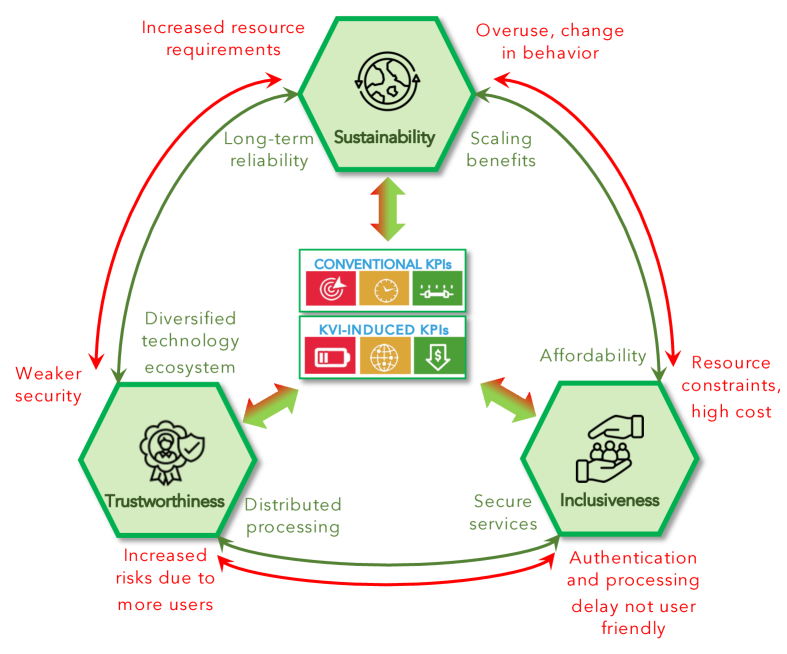
- 在感知与通信一体化(ISAC)背景下,分析SIT KVIs与传统KPI之间的协同效应与权衡关系。
- 提出一种将SIT KVIs转化为可测量、可操作的KPI的系统化方法,用于系统设计与评估。
提出的方法
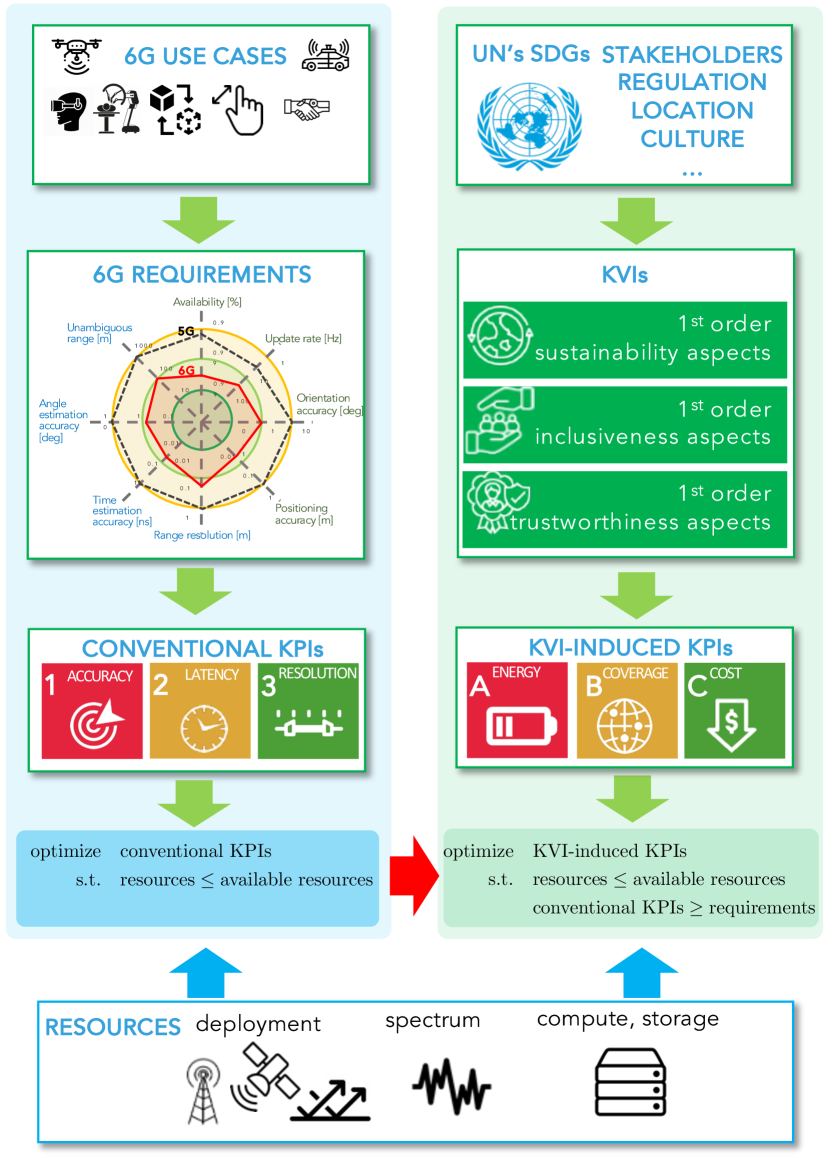
- 本文提出双层框架:首先将SIT原则映射到KVIs,然后将这些KVIs转化为可用于系统优化的可量化KPI。
- 从其对SIT的影响角度,分析6G使能技术(如可重构智能表面(RIS)、非地面网络(NTN)、AI和亚太赫兹信号)。
- 作者采用工业与学术相结合的视角,评估D-MIMO、OTFS以及雷达-通信一体化(JRC)等技术对SIT指标的影响。
- 通过AI驱动的攻击与防御案例研究,说明模型不透明性如何损害可信性,以及形式化验证如何提升透明度。
- 利用可视化框架(图6)将技术使能器与SIT影响进行映射,突出其优势与隐性成本。
- 提出一种整体性设计方法,使SIT KVIs与传统KPI并行优化,确保以价值为导向的系统演进。
实验结果
研究问题
- RQ1如何系统性地将可持续性、包容性和可信性(SIT)整合到6G定位与感知系统的设计中?
- RQ2哪些可量化的关键价值指标(KVIs)可用于表征6G ISAC中的SIT?它们如何与传统KPI对应?
- RQ3SIT KVIs与传统KPI(如精度、时延和覆盖范围)在ISAC中的协同效应与权衡关系是什么?
- RQ4新兴的6G使能技术(如RIS、AI和亚太赫兹)如何影响SIT的三个维度?其隐性成本是什么?
- RQ56G ISAC在价值驱动设计的框架下,如何通过SIT原则助力实现联合国可持续发展目标(SDGs)?
主要发现
- 将SIT原则整合到6G ISAC设计中,可实现与联合国17项目标(SDGs)的对齐,尤其体现在基础设施与服务层面的贡献。
- 通过高效频谱利用和节能波形设计,可降低资本支出与运营支出(CAPEX/OPEX),从而提升可持续性。
- 通过非地面网络(NTN)和低复杂度设备,实现对未连通群体的连接,推动包容性,支持全球接入。
- 借助6G内置的加密与安全硬件,可信性得到加强;但AI攻击与模型不透明性问题,要求采用形式化验证与透明机制。
- RIS与AI在提升定位精度与覆盖范围方面具有显著优势,但同时也带来隐私与安全方面的新风险,需实施稳健的威胁建模。
- 本文表明,SIT KVIs并非仅作为附加项,反而能驱动创新,例如在安全定位与AI加固波形方面,催生新型可信应用。
更好的研究,从现在开始
从阅读论文到最终审阅,大幅缩短您的研究时间。
无需绑定信用卡
本解读由 AI 生成,并经人工编辑审核。