
[论文解读] A closed-form multigrid smoothing factor for an additive Vanka-type smoother applied to the Poisson equation
本论文通过局部傅里叶分析,推导了在泊松方程上应用加性Vanka型平滑因子的闭式表达式。研究发现,逐单元Vanka平滑因子等价于线性/双线性有限元方法中的缩放质量矩阵,从而提出一种高效的质量基松弛格式,仅需一次矩阵-向量乘积即可实现极低的平滑因子,为传统Vanka平滑因子提供了一种快速、稀疏且条件良好的替代方案。
We consider an additive Vanka-type smoother for the Poisson equation discretized by the standard finite difference centered scheme. Using local Fourier analysis, we derive analytical formulas for the optimal smoothing factors for two types of smoothers, called vertex-wise and element-wise Vanka smoothers, and present the corresponding stencils. Interestingly, in one dimension the element-wise Vanka smoother is equivalent to the scaled mass operator obtained from the linear finite element method, and in two dimensions the element-wise Vanka smoother is equivalent to the scaled mass operator discretized by bilinear finite element method plus a scaled identity operator. Based on these discoveries, the mass matrix obtained from finite element method can be used as an approximation to the inverse of the Laplacian, and the resulting mass-based relaxation scheme features small smoothing factors in one, two, and three dimensions. Advantages of the mass operator are that the operator is sparse and well conditioned, and the computational cost of the relaxation scheme is only one matrix-vector product; there is no need to compute the inverse of a matrix. These findings may help better understand the efficiency of additive Vanka smoothers and develop fast solvers for numerical solutions of partial differential equations.
研究动机与目标
- 通过局部傅里叶分析,理论分析加性Vanka平滑因子在泊松方程上的收敛行为。
- 推导一维和二维中顶点级与单元级Vanka平滑因子的最优平滑因子的闭式表达式。
- 识别出单元级Vanka平滑因子与缩放有限元质量矩阵之间的数学等价性。
- 提出一种基于质量矩阵的松弛格式,作为传统加性Vanka平滑因子的计算高效替代方案。
- 通过数值实验验证分析结果,并在多重网格求解器中展示所提方案的有效性。
提出的方法
- 在结构化网格上应用局部傅里叶分析(LFA),计算加性Vanka型平滑因子的平滑因子。
- 推导一维和二维中顶点级与单元级Vanka子域的最优松弛参数和平滑因子的解析公式。
- 识别出在一维中,单元级Vanka平滑因子等价于线性有限元的缩放质量矩阵;在二维中,等价于双线性有限元质量矩阵加上一个缩放单位矩阵。
- 提出一种基于质量矩阵的松弛格式,利用有限元质量矩阵近似逆拉普拉斯算子,避免子问题求解。
- 通过数值实验验证分析预测,计算LFA两网格收敛因子,并与平滑因子进行比较。
- 通过提出使用三线性有限元质量矩阵的基于质量的平滑因子,将分析扩展至三维。
实验结果
研究问题
- RQ1加性Vanka平滑因子在泊松方程上的一维和二维最优平滑因子的闭式表达式是什么?
- RQ2顶点级与单元级Vanka平滑因子的模板如何与有限元质量矩阵关联?
- RQ3有限元质量矩阵能否作为标准加性Vanka平滑因子的有效且高效的替代方案?
- RQ4为何单元级Vanka平滑因子能实现如此低的平滑因子?其理论基础是什么?
- RQ5所提出的基于质量的松弛格式在收敛性和计算成本方面与传统Vanka平滑因子相比表现如何?
主要发现
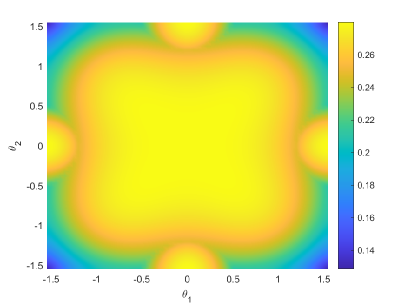
- 在一维中,单元级Vanka平滑因子的最优平滑因子为 12/17 ≈ 0.706,在二维中为 24/25 = 0.96,表明其具有极佳的平滑性能。
- 在一维中,单元级Vanka平滑因子在数学上等价于线性有限元的缩放质量矩阵。
- 在二维中,单元级Vanka平滑因子等价于双线性有限元质量矩阵加上一个缩放单位算子。
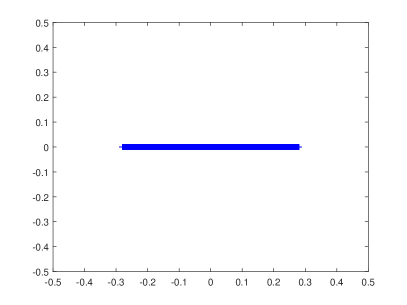
- 所提出的基于质量的松弛格式在二维中采用 ω = 3/4 时,实现两网格收敛因子为 0.333,与理论平滑因子完全匹配。
- 在一维中,顶点级Vanka平滑因子的平滑因子为 81/104 ≈ 0.779,但LFA两网格收敛因子仅为 0.067,表明平滑因子与实际收敛之间存在微小差距。
- 在三维中,基于质量的平滑因子采用 ω = 729/848 时,实现两网格收敛因子为 0.618,尽管维度增加,仍表现出强劲性能。
更好的研究,从现在开始
从阅读论文到最终审阅,大幅缩短您的研究时间。
无需绑定信用卡
本解读由 AI 生成,并经人工编辑审核。