
[论文解读] A dynamic network model of societal complexity and resilience inspired by Tainter's theory of collapse
本文基於塔恩特(Tainter)的社會崩潰理論,提出了一種動態網絡模型,將勞工與行政人員視為複雜系統中的代理,模擬外部壓力引發的複雜性上升導致報酬遞減,最終引發崩潰。模型顯示,行政複雜性增加會降低生產力與韌性,分析與數值結果表明,當複雜性在持續壓力下 unchecked 增長時,崩潰不可避免。
In recent years, several global events have severely disrupted economies and social structures, undermining confidence in the resilience of modern societies. While empirical evidence on the dynamics and drivers of past societal collapse is mounting, a process-based understanding of these dynamics is still in its infancy. Here we aim to identify and illustrate the underlying drivers of such societal instability or even collapse. The inspiration for this work is Joseph Tainter's theory of the "collapse of complex societies", which postulates that the complexity of societies increases as they solve problems, leading to diminishing returns on complexity investments, and ultimately to collapse. In this work we have abstracted this theory into a low-dimensional and stylised model of two classes of networked agents, hereafter referred to as "laborers" and "administrators". We numerically modeled the dynamics of societal complexity, measured as the fraction of "administrators", which is assumed to affect the productivity of connected energy-producing "laborers". We show that collapse becomes increasingly likely as the complexity of the model society continuously increases in response to external stresses that emulate Tainter's abstract notion of problems that societies must solve. We also provide an analytical approximation of the system's dominant dynamics, which matches well with the numerical experiments, and use it to study the influence on network link density, social mobility and productivity. Our work advances the understanding of social-ecological collapse and illustrates its potentially direct link to an ever-increasing societal complexity in response to external shocks or stresses via a self-reinforcing feedback.
研究动机与目标
- 開發一個受塔恩特崩潰理論啟發的、簡化且低維度的社會複雜性與韌性網絡模型。
- 探討社會對外部壓力的回應中,複雜性增加如何導致報酬遞減,最終引發社會崩潰。
- 分析網絡結構、社會流動性與生產力在塑造韌性與崩潰動態中的角色。
- 提供系統主導動態的分析近似,與數值模擬結果相符。
- 探討某類複雜性形式是否可能避免增加崩潰風險,從而為韌性系統的設計提供原則。
提出的方法
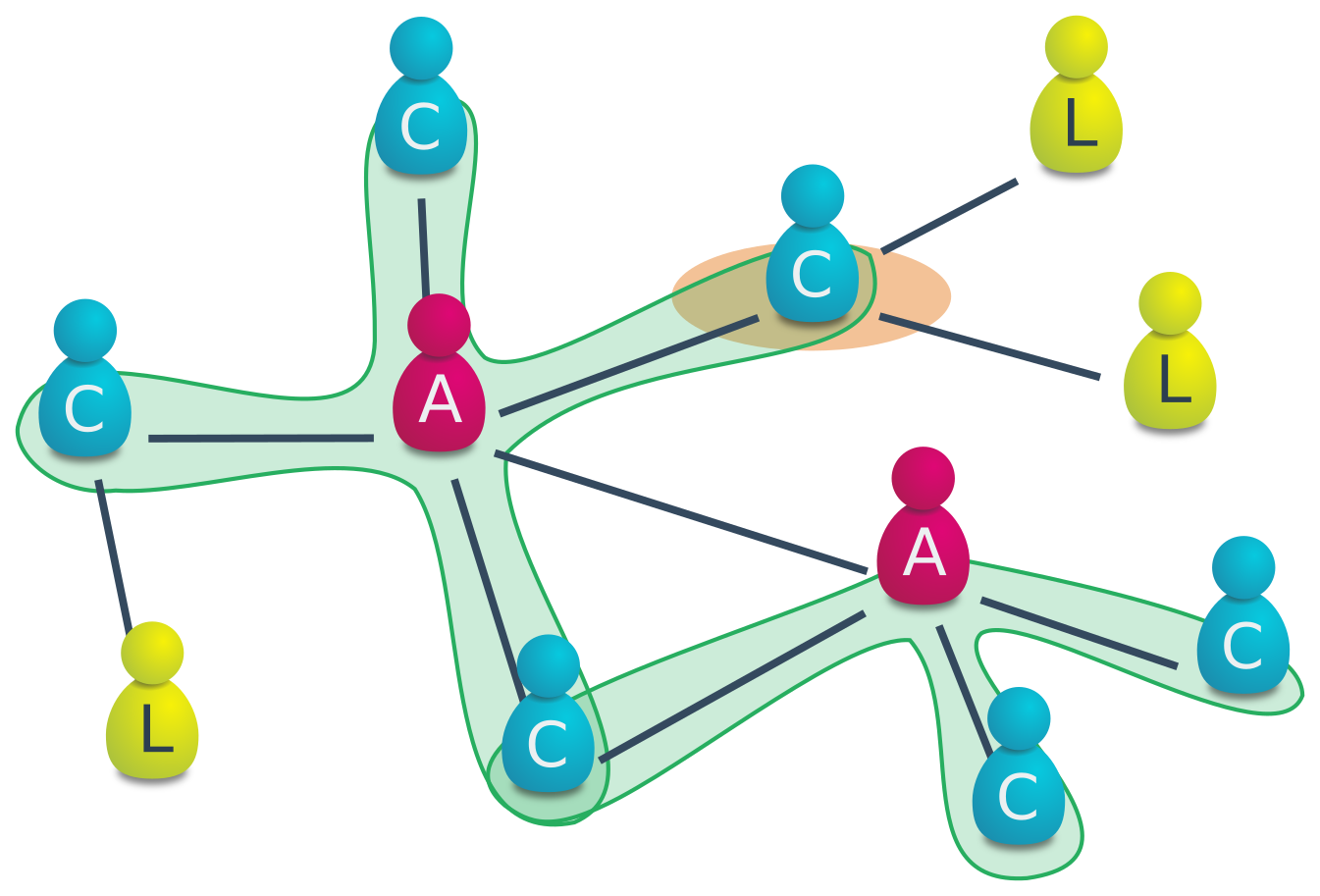
- 模型使用兩類代理:勞工(能量生產者)與行政人員(複雜性代理),透過可變連結密度的網絡連接。
- 社會複雜性以行政人員佔比衡量,透過非線性函數影響勞工生產力。
- 外部壓力源觸發複雜性(行政人員)的持續增加,模擬問題解決的回應。
- 生產力建模為網絡結構與行政人員-勞工互動的函數,能量輸入 E0 表示為包含參數 a, b, c, 和 ϱ 的兩項組合。
- 推導能量輸入函數的分析近似,並與數值模擬結果進行驗證。
- 針對連結密度、社會流動性與生產力參數進行敏感度分析,評估其對崩潰可能性的影響。
实验结果
研究问题
- RQ1面對外部壓力,社會複雜性增加如何導致報酬遞減並最終引發崩潰?
- RQ2網絡結構與連結密度在複雜性與韌性關係之間發揮何種調節作用?
- RQ3社會流動性與生產力參數如何影響系統的穩定性與崩潰臨界點?
- RQ4分析近似是否能準確捕捉複雜代理模型的主導動態?
- RQ5在何種條件下,複雜性不會導致崩潰風險增加?何種設計原則可支持更具韌性的系統?
主要发现
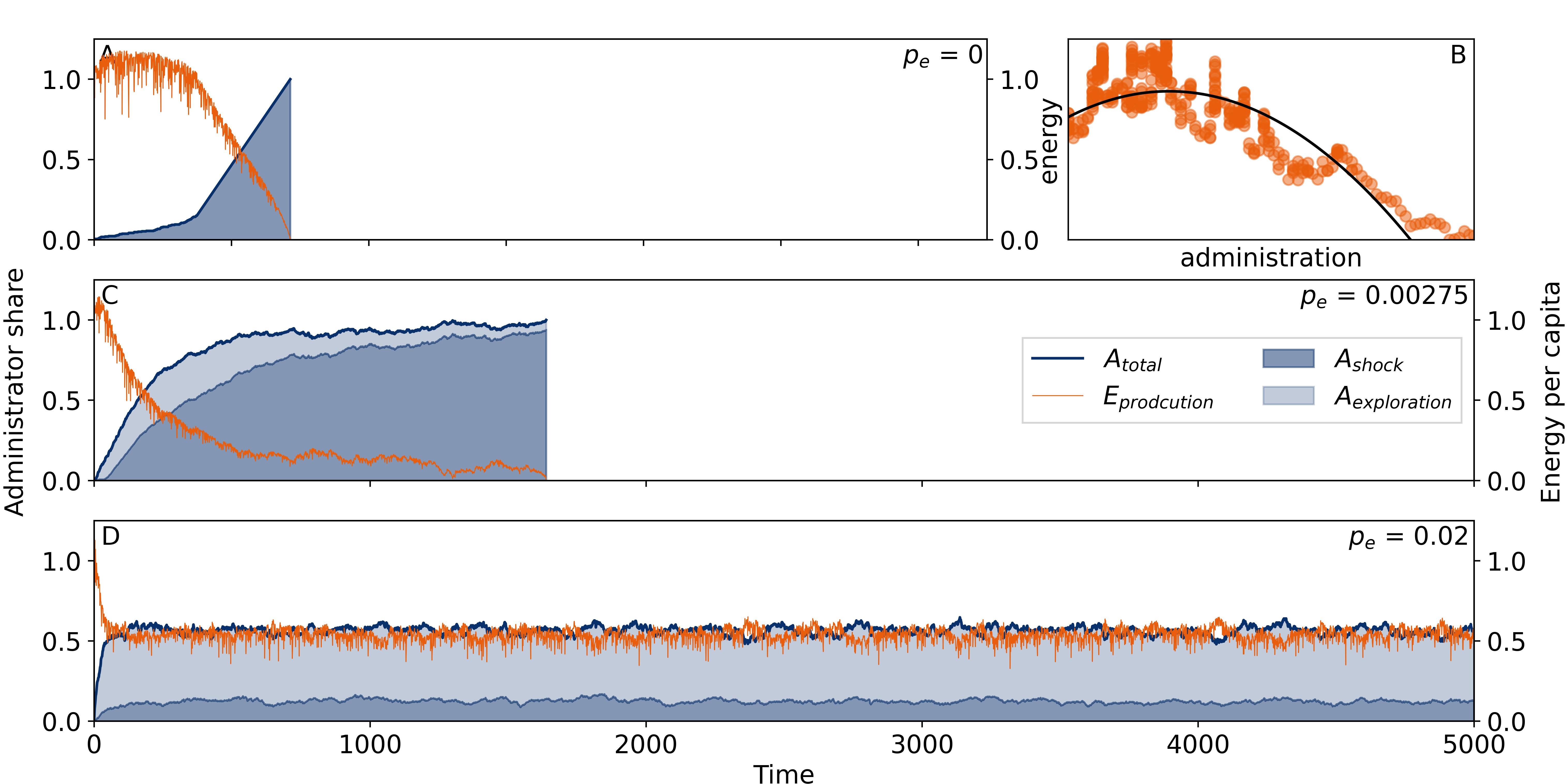
- 模型顯示,當複雜性因壓力而增加時,生產力起初上升,但隨報酬遞減而最終下降,導致崩潰。
- 當 N=400, ϱ=0.02, a=b=0.75, c=1.05 時,行政人員的最佳數量約為 22 人(佔人口 6%),使能量輸出最大化至 E≈461。
- 能量輸入函數的分析近似與數值模擬結果高度吻合,驗證了模型核心動態的正確性。
- 較高的網絡連結密度與增加的社會流動性被證明會影響系統韌性,但具體臨界點取決於參數配置。
- 研究結果支持塔恩特的假設:當複雜性成本超過收益時,會自毀性地導致社會瓦解。
- 本研究強調,並非所有複雜性都同等危險——某些配置可能避免崩潰,顯示出設計更具韌性系統的潛在途徑。
更好的研究,从现在开始
从阅读论文到最终审阅,大幅缩短您的研究时间。
无需绑定信用卡
本解读由 AI 生成,并经人工编辑审核。