
[论文解读] A Machine Learning-oriented Survey on Tiny Machine Learning
本综述从2018年至2023年对微型机器学习(TinyML)进行了全面的、以机器学习(ML)为重点的分析,系统性地回顾了三种实现工作流——以ML为导向、以硬件(HW)为导向和协同设计——同时提出了模型优化技术与学习算法的分类体系。研究指出,协同设计是未来最具前景的发展路径,强调了基准测试、内存限制、数据质量,以及缺乏标准化模型和公开数据集等关键未解挑战。
The emergence of Tiny Machine Learning (TinyML) has positively revolutionized the field of Artificial Intelligence by promoting the joint design of resource-constrained IoT hardware devices and their learning-based software architectures. TinyML carries an essential role within the fourth and fifth industrial revolutions in helping societies, economies, and individuals employ effective AI-infused computing technologies (e.g., smart cities, automotive, and medical robotics). Given its multidisciplinary nature, the field of TinyML has been approached from many different angles: this comprehensive survey wishes to provide an up-to-date overview focused on all the learning algorithms within TinyML-based solutions. The survey is based on the Preferred Reporting Items for Systematic Reviews and Meta-Analyses (PRISMA) methodological flow, allowing for a systematic and complete literature survey. In particular, firstly we will examine the three different workflows for implementing a TinyML-based system, i.e., ML-oriented, HW-oriented, and co-design. Secondly, we propose a taxonomy that covers the learning panorama under the TinyML lens, examining in detail the different families of model optimization and design, as well as the state-of-the-art learning techniques. Thirdly, this survey will present the distinct features of hardware devices and software tools that represent the current state-of-the-art for TinyML intelligent edge applications. Finally, we discuss the challenges and future directions.
研究动机与目标
- 为2018年至2023年间的TinyML研究提供系统性、以机器学习(ML)为重点的全面概述,以应对该领域的多学科复杂性。
- 形式化并比较三种主要实现工作流:以ML为导向、以HW为导向和协同设计。
- 提出一个全面的、针对TinyML的模型优化与学习技术分类体系。
- 评估当前用于TinyML部署的硬件平台与软件工具。
- 识别尚未解决的挑战,如基准测试、内存限制、数据质量,以及缺乏标准模型和公开数据集。
提出的方法
- 本综述采用PRISMA方法论进行系统性文献综述,确保全面性与可复现性。
- 基于三种不同的设计工作流对TinyML系统进行分类:以ML为重点、以硬件为重点和协同设计,特别强调协同设计。
- 提出详细分类体系,按优化族(如量化、知识蒸馏、神经架构搜索)和模型设计对学习技术进行分类。
- 评估最先进的TinyML框架与工具,包括其在嵌入式MCU和低功耗约束下的兼容性。
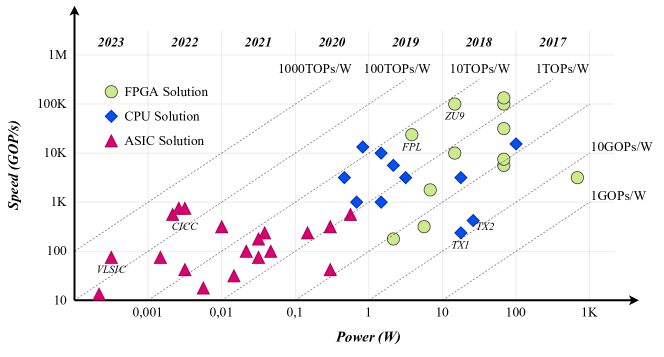
- 基于性能、内存和能效对硬件平台进行分析,并在表IV中进行对比分析。
- 通过当前文献的批判性综合识别未解决的问题,重点关注基准测试、内存、数据质量与模型标准化。
实验结果
研究问题
- RQ1实现TinyML系统的三种主要设计工作流是什么?它们在实际应用和性能表现上如何不同?
- RQ2在资源受限的边缘设备上,哪些模型优化与学习技术对TinyML最为有效?
- RQ3当前硬件平台(MCUs、FPGAs、TPUs)在能效、内存使用和推理速度方面如何比较,适用于TinyML应用?
- RQ4哪些主要未解挑战阻碍了TinyML系统在真实场景中的推进与部署?
- RQ5为何TinyML生态系统中缺乏标准化基准、公开数据集和广泛接受的模型?
主要发现
- 从一开始就让机器学习与硬件工程师协同设计的协同工作流,是未来TinyML发展的最有前景路径。
- 尽管关注度持续上升,但在微控制器单元(MCUs)上仍无广泛接受的基线模型,与移动边缘AI中的MobileNet形成对比。
- 缺乏用于训练、推理和系统级性能的标准化基准,仍是公平比较与技术进步的主要障碍。
- 内存限制——尤其是SRAM和闪存容量有限——仍是关键挑战,尤其对深度学习模型而言。
- 数据质量是关键但常被忽视的因素;真实世界中数据稀缺与质量低下可能误导模型评估与部署。
- 尽管深度学习主导了TinyML应用,但非深度学习方法(如TEDA)仅零星使用,表明其在特定领域外的采用仍有限。

更好的研究,从现在开始
从阅读论文到最终审阅,大幅缩短您的研究时间。
无需绑定信用卡
本解读由 AI 生成,并经人工编辑审核。