
[论文解读] A Pathway Towards Responsible AI Generated Content
本文综述了AI生成内容(AIGC)的8个关键风险,并在解决隐私、偏见、知识产权、鲁棒性、开源、滥用、同意/署名/赔偿以及环境问题等方面勾勒出负责任的AIGC发展方向。
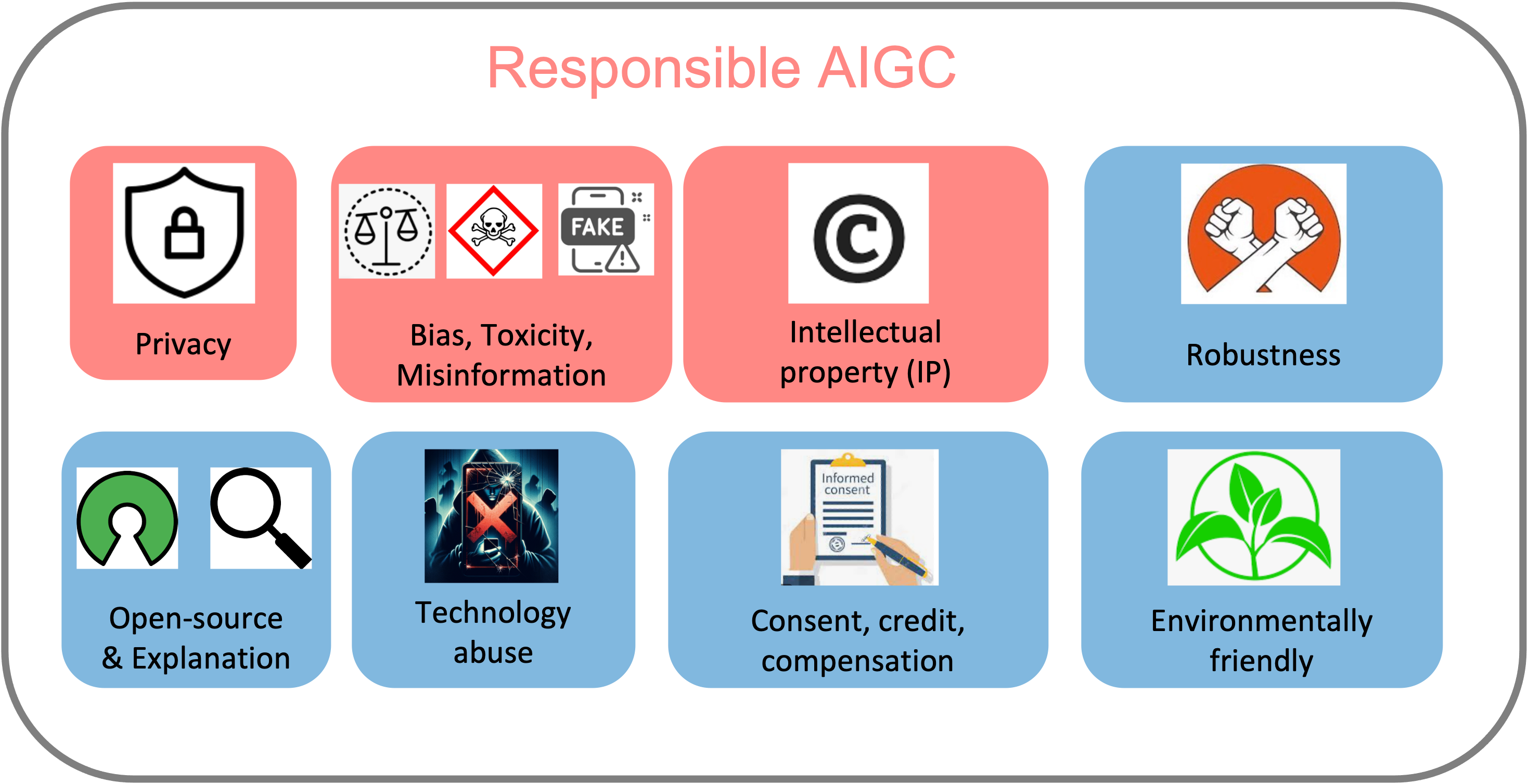
AI Generated Content (AIGC) has received tremendous attention within the past few years, with content generated in the format of image, text, audio, video, etc. Meanwhile, AIGC has become a double-edged sword and recently received much criticism regarding its responsible usage. In this article, we focus on 8 main concerns that may hinder the healthy development and deployment of AIGC in practice, including risks from (1) privacy; (2) bias, toxicity, misinformation; (3) intellectual property (IP); (4) robustness; (5) open source and explanation; (6) technology abuse; (7) consent, credit, and compensation; (8) environment. Additionally, we provide insights into the promising directions for tackling these risks while constructing generative models, enabling AIGC to be used more responsibly to truly benefit society.
研究动机与目标
- 识别阻碍负责任AIGC部署的八大关注点(隐私、偏见/毒性/错误信息、知识产权、鲁棒性、开源与可解释性、技术滥用、同意/署名/赔偿、环境)
- 为在生成模型的构建与部署中缓解这些风险提供见解和方向。
- 讨论基础模型如何使AIGC成为可能,以及风险如何跨模态(文本、图像、视频、音频)传播。
提出的方法
- 评估并综合现有文献和行业实践中的AIGC风险。
- 将风险类别映射到具体的缓解策略(数据整理、过滤、水印、访问控制、治理)。
- 提出在生命周期各阶段就负责任的AIGC进行政策、技术和社会层面的探讨。
- 突出具有代表性的模型与数据集以说明风险区域(隐私泄露、数据集偏见、记忆化、知识产权问题。)
实验结果
研究问题
- RQ1AI生成内容在隐私、偏见/毒性/错误信息、IP、鲁棒性、开源、滥用、同意/署名、环境方面的主要风险是什么?
- RQ2在实现AIGC有益用途的同时,可以采取哪些方向和策略来缓解这些风险?
- RQ3基础模型如何带来风险,以及如何将缓解措施整合到模型设计与部署中?
主要发现
- AIGC面临跨隐私、偏见、错误信息、知识产权、鲁棒性、开放性、滥用和环境影响等相互关联的风险。
- 缓解方法包括数据过滤、去重、水印、输出过滤、模型重新校准和治理机制。
- 内容所有权和IP归属在法律上仍未解决,促使采用如DMCA下架政策、水印和署名等做法。
- 幻觉/错误信息源于训练数据质量、过拟合和提示设计;定期更新数据和用户反馈有助于降低它们。
- 开源透明性存在争议;尽管开放性有助于解释,但也提高了误用和竞争性担忧的风险。
- 需要治理、同意和补偿模型,使数据贡献者能够从AIGC训练数据中受益。
- 大型模型的环境成本促使探索更瘦小的模型和以效率为导向的研究。

更好的研究,从现在开始
从阅读论文到最终审阅,大幅缩短您的研究时间。
无需绑定信用卡
本解读由 AI 生成,并经人工编辑审核。