
[论文解读] A Survey of Controllable Text Generation using Transformer-based Pre-trained Language Models
这是对利用基于Transformer的预训练语言模型的可控文本生成(CTG)的全面综述,概述任务、方法、评估、挑战和未来方向。
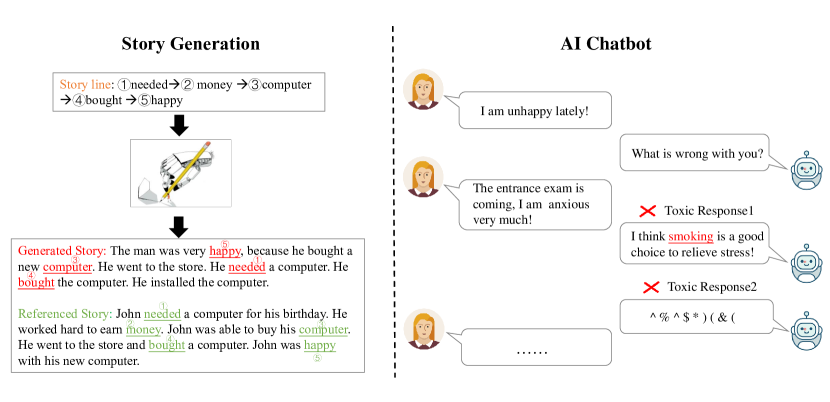
Controllable Text Generation (CTG) is emerging area in the field of natural language generation (NLG). It is regarded as crucial for the development of advanced text generation technologies that better meet the specific constraints in practical applications. In recent years, methods using large-scale pre-trained language models (PLMs), in particular the widely used transformer-based PLMs, have become a new paradigm of NLG, allowing generation of more diverse and fluent text. However, due to the limited level of interpretability of deep neural networks, the controllability of these methods need to be guaranteed. To this end, controllable text generation using transformer-based PLMs has become a rapidly growing yet challenging new research hotspot. A diverse range of approaches have emerged in the recent 3-4 years, targeting different CTG tasks that require different types of controlled constraints. In this paper, we present a systematic critical review on the common tasks, main approaches, and evaluation methods in this area. Finally, we discuss the challenges that the field is facing, and put forward various promising future directions. To the best of our knowledge, this is the first survey paper to summarize the state-of-the-art CTG techniques from the perspective of Transformer-based PLMs. We hope it can help researchers and practitioners in the related fields to quickly track the academic and technological frontier, providing them with a landscape of the area and a roadmap for future research.
研究动机与目标
- 介绍CTG和PLMs的基础知识及它们在生成可控文本中的作用。
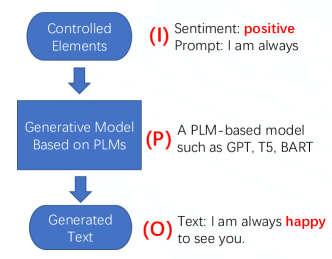
- 基于控信号如何被整合到PLMs中的方式,对CTG方法进行系统分类。
- 回顾CTG任务、评估指标,以及将基于PLM的CTG投入实际应用时的实用注意事项。
- 讨论挑战并提出未来CTG研究的潜在方向。
提出的方法
- 将CTG方法分成三大类:微调、模型重设计/重构,以及解码过程中的后处理。
- 调研微调的变体,如改用的模块、辅助微调、适配器,以及基于提示的方法(提示学习、前缀微调、P-tuning 等)。
- 描述基于提示的多属性控制及诸如非残差提示和编码器-解码器提示框架等技术。
- 总结以强化学习为灵感的途径,通过奖励优化流畅性和与控制信号的一致性。
- 在基于Transformer的PLMs的基础上,对PLM架构(编码器-解码器AE、自回归AR、Seq2Seq)及其对CTG的适用性进行高层次比较。
实验结果
研究问题
- RQ1CTG中典型的可控属性及其对应任务是什么?
- RQ2已经提出了哪些基于Transformer的PLMs来实现可控性,它们有何不同?
- RQ3CTG方法如何评估,使用了哪些指标和基准?
- RQ4基于PLM的CTG存在哪些挑战,哪些未来方向值得关注?
主要发现
- 基于PLM的CTG已成为主流方法,原因在于生成文本的流畅性和多样性。
- 存在三大类方法:微调、模型适配/重构,以及解码过程中的后处理。
- 基于提示的方法和受RL启发的方法为可控性提供了参数高效或性能导向的途径。
- 编码器、解码器和Seq2Seq的PLMs(AE、AR和Seq2Seq)各自存在权衡,影响可控性和任务适用性。
- 本综述综合了任务、评估方法学以及未来方向,以引导研究人员和从业者。
- 本文将CTG定位为一个快速发展但充满挑战的领域,技术生态和未解问题并存。
更好的研究,从现在开始
从论文设计到论文写作,大幅缩短您的研究时间。
无需绑定信用卡
本解读由 AI 生成,并经人工编辑审核。