
[论文解读] A survey of debris trails from short-period comets
本研究利用斯皮策空间望远镜的24 µm相机对34颗短周期彗星进行巡天,检测到27条轨道上的碎片尾迹——由毫米级或更大颗粒组成,证实此类彗星普遍存在碎片尾迹。尾迹颗粒的平均质量损失速率为2 kg/s,短周期彗星对星际尘埃复合体的总输入量估计约为300 kg/s,显著贡献于星际尘埃复合体。
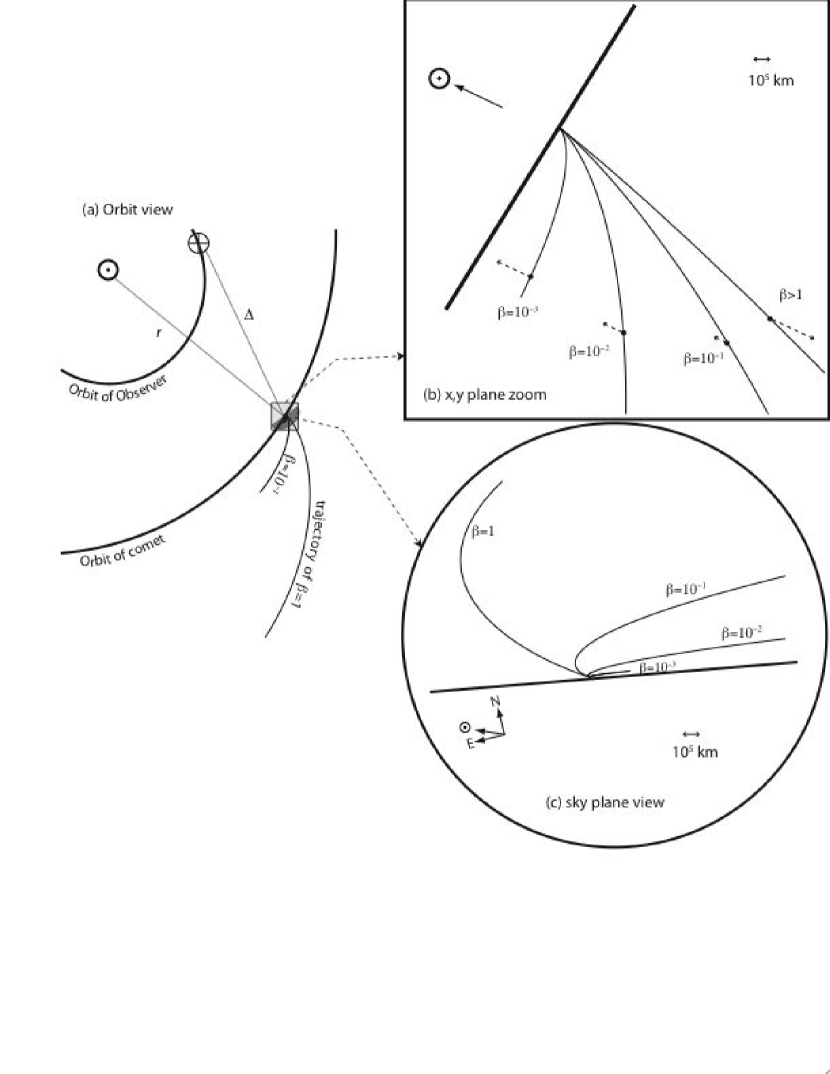
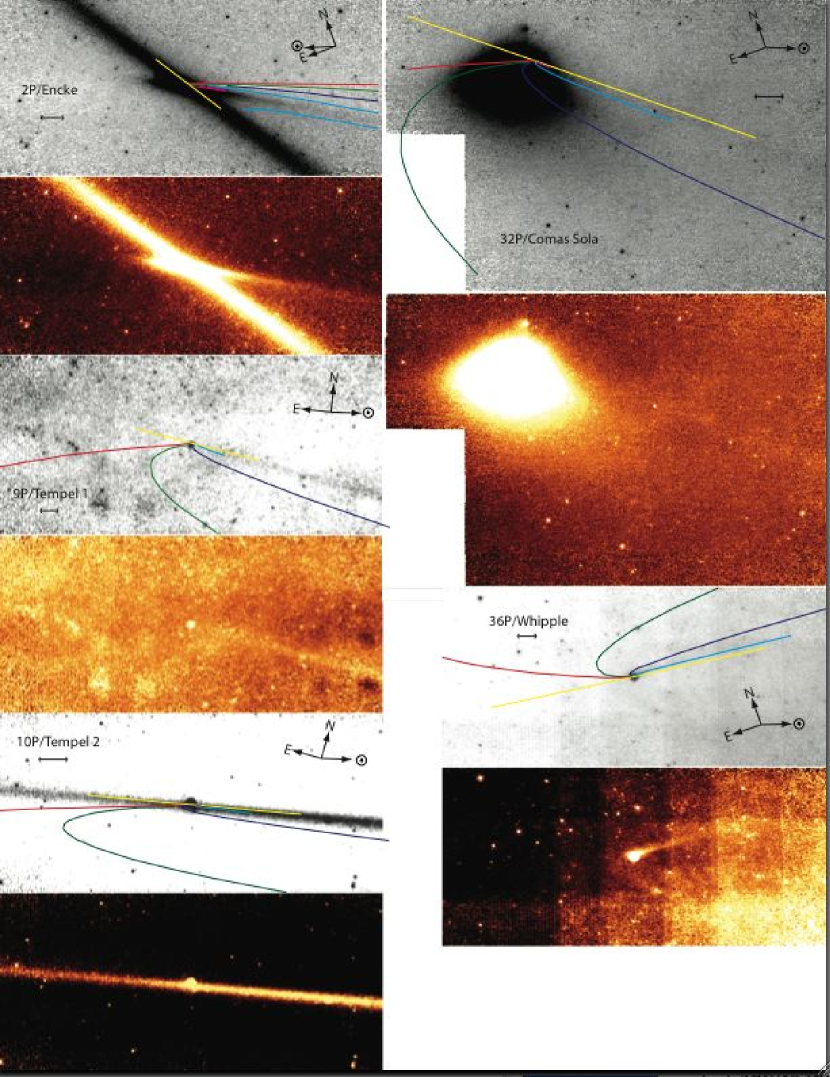
We observed 34 comets using the 24 micron camera on the Spitzer Space Telescope. Each image contains the nucleus and covers at least 10^6 km of each comet's orbit. Debris trails due to mm-sized or larger particles were found along the orbits of 27 comets; 4 comets had small-particle dust tails and a viewing geometry that made debris trails impossible to distinguish; and only 3 had no debris trail despite favorable observing conditions. There are now 30 Jupiter-family comets with known debris trails, of which 22 are reported in this paper for the first time. The detection rate is >80%, indicating that debris trails are a generic feature of short-period comets. By comparison to orbital calculations for particles of a range of sizes ejected over 2 yr prior to observation, we find that particles comprising 4 debris trails are typically mm-sized while the remainder of the debris trails require particles larger than this. The lower-limit masses of the debris trails are typically 10^11 g, and the median mass loss rate is 2 kg/s. The mass-loss rate in trail particles is comparable to that inferred from OH production rates and larger than that inferred from visible-light scattering in comae.
研究动机与目标
- 利用红外观测确定短周期彗星中碎片尾迹的普遍性及其特征。
- 量化碎片尾迹中颗粒的质量损失速率,并与其他彗星质量损失指标进行比较。
- 评估短周期彗星对星际尘埃复合体及黄道光的贡献。
- 利用斯皮策数据和轨道建模研究碎片尾迹颗粒的尺寸分布及轨道演化。
提出的方法
- 利用斯皮策空间望远镜的24 µm相机对34颗短周期彗星进行深度、大范围的红外巡天。
- 分析图像以检测彗星轨道上微弱且延展的碎片尾迹,灵敏度达黄道光亮度的1%以下。
- 从观测前2年模拟颗粒轨道,假设颗粒的抛射速度和尺寸范围为1 mm至更大颗粒。
- 利用观测到的表面亮度和空间范围计算碎片尾迹的下限质量。
- 通过将观测到的尾迹亮度与理论颗粒尺寸分布和反照率进行比较,估算质量损失速率。
- 利用轨道动力学分析引力扰动、雅科布斯基效应及非引力力如何随时间分散尾迹颗粒。
实验结果
研究问题
- RQ1在红外波段中,有多少比例的短周期彗星表现出可探测的碎片尾迹?
- RQ2为解释观测到的碎片尾迹形态和亮度,所需颗粒的尺寸和质量是多少?
- RQ3从碎片尾迹推断的质量损失速率与基于OH生成速率和可见光散射推导的速率相比如何?
- RQ4短周期彗星对星际尘埃复合体和黄道光的总贡献是多少?
- RQ5碎片尾迹如何随时间演化为流星体流和偶发流星?
主要发现
- 在观测的34颗短周期彗星中,27条轨道上检测到碎片尾迹,检测率超过80%,证实碎片尾迹是此类彗星的普遍特征。
- 在27条检测到的尾迹中,4条尾迹的颗粒通常为毫米级,其余尾迹则需尺寸大于毫米的颗粒才能解释。
- 碎片尾迹的下限质量通常为10^11 g,平均质量损失速率为每颗彗星2 kg/s。
- 假设样本具有代表性并考虑约20%彗星未被探测到,短周期彗星向星际尘埃复合体的总质量输入估计为~300 kg/s。
- 从尾迹颗粒推断的质量损失速率与OH生成速率推断的速率相当,且显著高于从彗发可见光散射推断的速率。
- 尽管碎片尾迹颗粒初始轨道与母彗星相似,但随时间逐渐因非引力力、雅科布斯基效应及行星扰动而分散,最终成为黄道尘云的一部分。
更好的研究,从现在开始
从阅读论文到最终审阅,大幅缩短您的研究时间。
无需绑定信用卡
本解读由 AI 生成,并经人工编辑审核。