
[论文解读] A Survey of Distance-Based Vessel Trajectory Clustering: Data Pre-processing, Methodologies, Applications, and Experimental Evaluation
本综述对基于距离的船舶轨迹聚类进行了全面分析,重点关注数据预处理、轨迹相似性度量和聚类算法。结果表明,轨迹压缩显著提升了聚类的效率与准确性,而插值则仅带来微小收益,凸显压缩在智能交通系统中可扩展的海上交通分析中的关键作用。
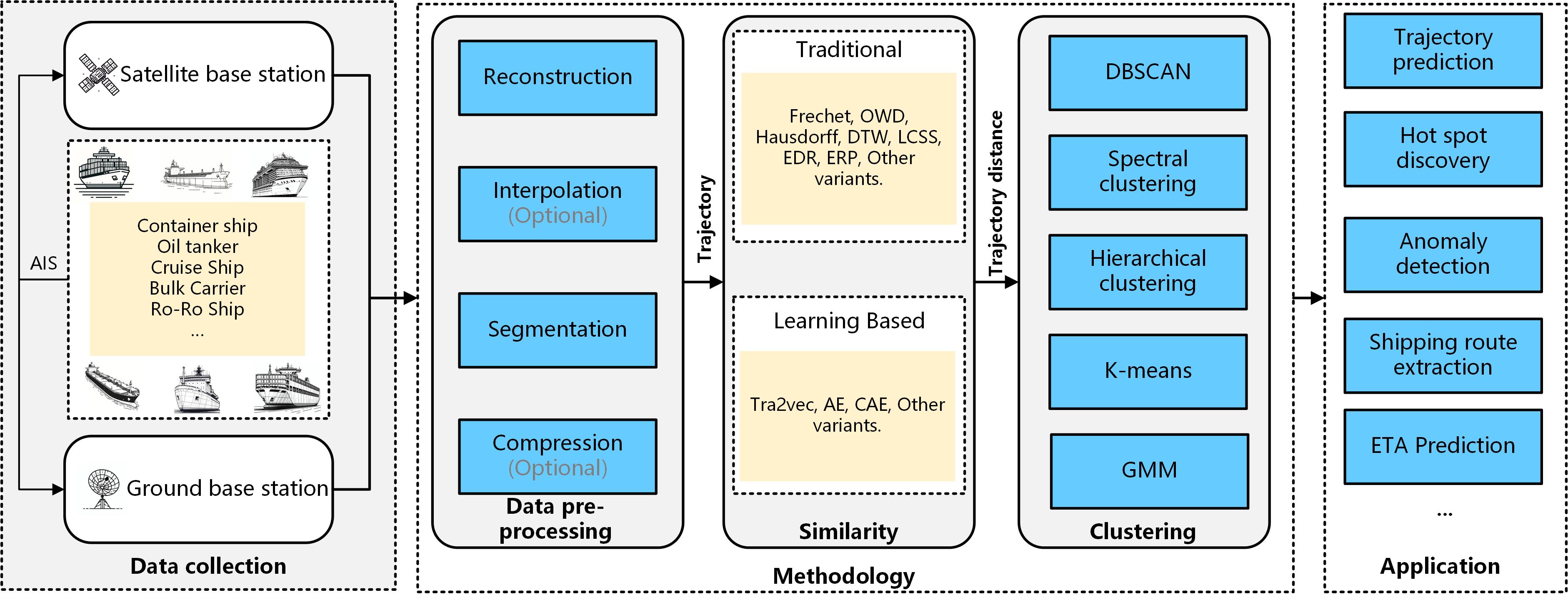
Vessel trajectory clustering, a crucial component of the maritime intelligent transportation systems, provides valuable insights for applications such as anomaly detection and trajectory prediction. This paper presents a comprehensive survey of the most prevalent distance-based vessel trajectory clustering methods, which encompass two main steps: trajectory similarity measurement and clustering. Initially, we conducted a thorough literature review using relevant keywords to gather and summarize pertinent research papers and datasets. Then, this paper discussed the principal methods of data pre-processing that prepare data for further analysis. The survey progresses to detail the leading algorithms for measuring vessel trajectory similarity and the main clustering techniques used in the field today. Furthermore, the various applications of trajectory clustering within the maritime context are explored. Finally, the paper evaluates the effectiveness of different algorithm combinations and pre-processing methods through experimental analysis, focusing on their impact on the performance of distance-based trajectory clustering algorithms. The experimental results demonstrate the effectiveness of various trajectory clustering algorithms and notably highlight the significant improvements that trajectory compression techniques contribute to the efficiency and accuracy of trajectory clustering. This comprehensive approach ensures a deep understanding of current capabilities and future directions in vessel trajectory clustering.
研究动机与目标
- 为解决基于距离的船舶轨迹聚类缺乏系统性综述的问题,特别是聚焦于预处理、相似性度量和聚类方法论。
- 评估不同预处理技术(尤其是压缩和插值)对聚类性能的影响。
- 基于真实世界AIS数据,对最先进的基于距离的聚类算法进行基准化实验评估。
- 识别出能提升聚类准确性和计算效率的最优算法组合与预处理策略。
- 强调在船舶轨迹聚类研究中,标准化数据集与基准测试的迫切需求。
提出的方法
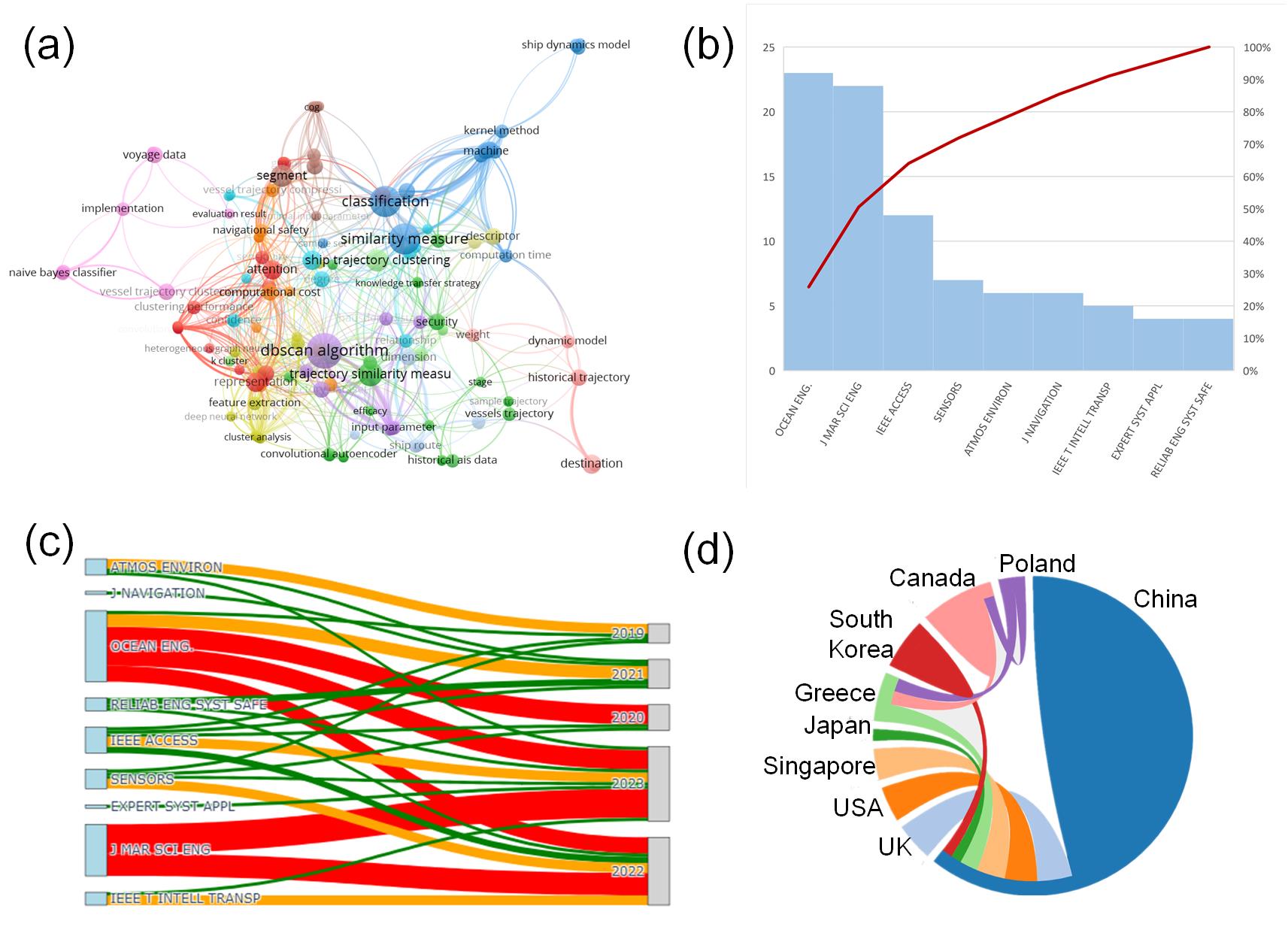
- 使用与船舶轨迹聚类、相似性度量和聚类算法相关的关键词,开展系统性文献回顾。
- 对100余项相关研究进行分类与分析,总结预处理技术、相似性度量和聚类方法。
- 采用不同参数设置的最优加权距离(OWD)、动态时间规整(DTW)和豪斯多夫距离(HD)评估轨迹相似性。
- 应用Douglas–Peucker压缩和CSI插值进行预处理,测试多种压缩比率(20%、50%、80%)和插值间隔。
- 使用真实AIS数据进行实验评估,通过调整兰德指数(ARI)、轮廓系数和计算时间衡量聚类性能。
- 采用平均链接法的HCA(层次聚类分析)作为聚类算法,评估不同预处理与相似性组合下的稳定性与准确性。
实验结果
研究问题
- RQ1不同的预处理技术(特别是轨迹压缩与插值)如何影响基于距离的船舶轨迹聚类性能?
- RQ2在海上场景中,哪种轨迹相似性度量方法(OWD、DTW、HD)能提供最准确且高效的聚类结果?
- RQ3在聚类中,为平衡轨迹保真度与计算效率,最优压缩比率是多少?
- RQ4轨迹插值是否能提升聚类准确性,还是因龙格现象等伪影在弯曲或转弯区域导致性能下降?
- RQ5组合式算法流程(相似性度量 + 预处理 + 聚类)如何影响整体聚类有效性?
主要发现
- 最优加权距离(OWD)方法在所有实验中均持续优于DTW与HD,提供了最高的聚类准确性。
- 使用Douglas–Peucker算法在50%压缩比率下实现了准确性和效率的最佳平衡,显著提升了聚类指标,同时未造成轨迹形状的明显损失。
- 压缩显著降低了计算时间,证明其对算法可扩展性具有显著积极影响。
- 使用CSI的插值未提升聚类性能,反而因龙格现象在弯曲或转弯区域常导致性能下降。
- 当结合OWD与50%压缩时,轮廓系数与调整兰德指数(ARI)达到最高,表明聚类间分离度与内部凝聚性更优。
- 尽管广泛应用,插值并未增强聚类结果,且效率低于压缩,表明其不适合作为基于距离聚类的预处理步骤。
更好的研究,从现在开始
从阅读论文到最终审阅,大幅缩短您的研究时间。
无需绑定信用卡
本解读由 AI 生成,并经人工编辑审核。