
[论文解读] AdS$_3$/RMT$_2$ Duality
该论文通过推导类似于Gutzwiller公式的Virasoro与SL(2,Z)-不变迹公式,在AdS₃量子引力中建立了二维共形场论(2D CFT)与随机矩阵理论(RMT)之间的对偶性。它将Cotler-Jensen虫洞识别为RMT普遍性的最大实现——即MaxRMT,表明BTZ黑洞微观态的微观谱由一个半虫洞路径振幅 $ Z_{\text{RMT}}(\tau) $ 捕获,该路径振幅表现出线性谱形式因子斜坡,并通过Hecke算子投影推导得出。
We introduce a framework for quantifying random matrix behavior of 2d CFTs and AdS$_3$ quantum gravity. We present a 2d CFT trace formula, precisely analogous to the Gutzwiller trace formula for chaotic quantum systems, which originates from the $SL(2,\mathbb{Z})$ spectral decomposition of the Virasoro primary density of states. An analogy to Berry's diagonal approximation allows us to extract spectral statistics of individual 2d CFTs by coarse-graining, and to identify signatures of chaos and random matrix universality. This leads to a necessary and sufficient condition for a 2d CFT to display a linear ramp in its coarse-grained spectral form factor. Turning to gravity, AdS$_3$ torus wormholes are cleanly interpreted as diagonal projections of squared partition functions of microscopic 2d CFTs. The projection makes use of Hecke operators. The Cotler-Jensen wormhole of AdS$_3$ pure gravity is shown to be extremal among wormhole amplitudes: it is the minimal completion of the random matrix theory correlator compatible with Virasoro symmetry and $SL(2,\mathbb{Z})$-invariance. We call this MaxRMT: the maximal realization of random matrix universality consistent with the necessary symmetries. Completeness of the $SL(2,\mathbb{Z})$ spectral decomposition as a trace formula allows us to factorize the Cotler-Jensen wormhole, extracting the microscopic object $Z_{ m RMT}(τ)$ from the coarse-grained product. This captures details of the spectrum of BTZ black hole microstates. $Z_{ m RMT}(τ)$ may be interpreted as an AdS$_3$ half-wormhole. We discuss its implications for the dual CFT and modular bootstrap at large central charge.
研究动机与目标
- 理解随机矩阵理论(RMT)普遍性如何在单个二维CFT中实现,同时尊重Virasoro对称性与模不变性。
- 调和二维CFT离散且稀少的性质与AdS₃量子引力中预期的系综行为之间的张力。
- 确定AdS₃纯引力中谱形式因子斜坡的微观起源,特别是通过环面虫洞的作用。
- 表明Cotler-Jensen虫洞是在对称性约束下RMT关联函数的极值、最小完备化,从而定义MaxRMT。
提出的方法
- 通过Virasoro初级态密度的 $ SL(2,\mathbb{Z}) $ 谱分解,推导出类似于混沌系统中Gutzwiller公式的二维CFT迹公式。
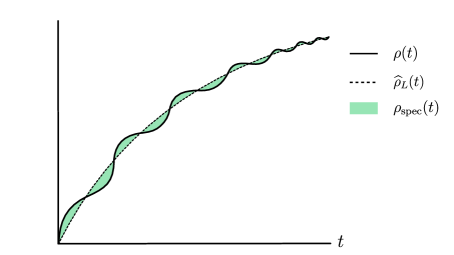
- 应用Berry的对角近似对谱进行粗粒化,提取普遍谱统计,包括谱形式因子中的线性斜坡。
- 利用Hecke算子对平方路径振幅进行对角投影,将虫洞振幅映射为微观的 $ Z_{\text{RMT}}(\tau) $,解释为AdS₃中的半虫洞。
- 将Cotler-Jensen虫洞识别为在Virasoro对称性与 $ SL(2,\mathbb{Z}) $-不变性下RMT关联函数的唯一最小完备化,从而定义MaxRMT。
- 构建具有额外极点的玩具虫洞模型(在Mellin变换中),以模拟含轻物质的引力,表明其偏离MaxRMT并具有非普遍修正。
- 通过 $ SL(2,\mathbb{Z}) $ 谱分解实现虫洞的分解,从粗粒化乘积中恢复出 $ Z_{\text{RMT}}(\tau) $。
实验结果
研究问题
- RQ1如何在不依赖系综平均的前提下,使随机矩阵普遍性在单个二维CFT中实现,同时保持Virasoro对称性与模不变性?
- RQ2AdS₃纯引力中谱形式因子线性斜坡的微观起源是什么?它与虫洞振幅有何关联?
- RQ3为何Cotler-Jensen虫洞是在给定对称性下RMT关联函数的最小且极值完备化?这对对偶CFT的结构有何含义?
- RQ4如何通过迹公式与粗粒化,从其路径振幅中提取二维CFT的谱统计?
- RQ5Hecke算子在将虫洞振幅投影以恢复底层RMT类谱中扮演何种角色?
主要发现
- Cotler-Jensen虫洞被证明是在Virasoro对称性与 $ SL(2,\mathbb{Z}) $-不变性下RMT关联函数的唯一最小完备化,从而定义了MaxRMT框架。
- BTZ黑洞微观态的微观谱由一个半虫洞路径振幅 $ Z_{\text{RMT}}(\tau) $ 捕获,该路径振幅在谱形式因子中表现出线性斜坡。
- 二维CFT的谱形式因子仅当粗粒化谱密度满足由迹公式与Berry对角近似导出的特定条件时,才表现出线性斜坡。
- $ SL(2,\mathbb{Z}) $ 对平方路径振幅的谱分解允许虫洞的完全分解,从而从粗粒化乘积中恢复出 $ Z_{\text{RMT}}(\tau) $ 作为底层RMT类谱。
- 具有Mellin变换中额外极点的玩具虫洞模型(例如来自 $ \zeta(s+p) $)表现出非MaxRMT行为,其修正为 $ \mathcal{O}(c^0) $ 量级,表明偏离了普遍RMT行为。
- 玩具模型中的谱重叠 $ f_{\text{WH}}(s) $ 满足线性斜坡条件(4.23),其渐近行为为 $ \mathcal{R}_{\text{WH}}(z \to -1) \sim \frac{\mathsf{C}_{\text{RMT}}}{2\pi(1+z)} $,证实了普遍斜坡结构。

更好的研究,从现在开始
从阅读论文到最终审阅,大幅缩短您的研究时间。
无需绑定信用卡
本解读由 AI 生成,并经人工编辑审核。