
[论文解读] AI Chatbots as Multi-Role Pedagogical Agents: Transforming Engagement in CS Education
本研究在计算机科学教育中引入了一种多角色AI聊天机器人系统,通过GPT-3为学生分配不同的教学角色——导师、同伴、职业顾问和情感支持者,以提升参与度与学习效果。结果表明,大语言模型生成的回复在准确性、流畅性、同理心和相关性方面表现优异,尤其在高阶认知问题上更为突出,展现出个性化、可扩展学习支持的强大潜力。
This study investigates the use of Artificial Intelligence (AI)-powered, multi-role chatbots as a means to enhance learning experiences and foster engagement in computer science education. Leveraging a design-based research approach, we develop, implement, and evaluate a novel learning environment enriched with four distinct chatbot roles: Instructor Bot, Peer Bot, Career Advising Bot, and Emotional Supporter Bot. These roles, designed around the tenets of Self-Determination Theory, cater to the three innate psychological needs of learners - competence, autonomy, and relatedness. Additionally, the system embraces an inquiry-based learning paradigm, encouraging students to ask questions, seek solutions, and explore their curiosities. We test this system in a higher education context over a period of one month with 200 participating students, comparing outcomes with conditions involving a human tutor and a single chatbot. Our research utilizes a mixed-methods approach, encompassing quantitative measures such as chat log sequence analysis, and qualitative methods including surveys and focus group interviews. By integrating cutting-edge Natural Language Processing techniques such as topic modelling and sentiment analysis, we offer an in-depth understanding of the system's impact on learner engagement, motivation, and inquiry-based learning. This study, through its rigorous design and innovative approach, provides significant insights into the potential of AI-empowered, multi-role chatbots in reshaping the landscape of computer science education and fostering an engaging, supportive, and motivating learning environment.
研究动机与目标
- 通过AI驱动的干预措施,解决计算机科学教育中参与度低和师生比例高的问题。
- 克服因内容抽象和缺乏个性化反馈而导致的探究式学习障碍。
- 设计并评估一种符合自我决定理论的多角色聊天机器人系统,以满足学生对能力感、自主性和归属感的需求。
- 优化聊天机器人角色分配与互动质量,以增强学生在计算机科学课程中的学习动机、理解力与持续参与度。
- 为教育工作者、AI开发者和政策制定者提供关于高等教育中负责任地整合AI的可操作见解。
提出的方法
- 采用设计型研究(DBR)方法,在真实计算机科学课程环境中进行迭代原型设计、部署、评估与优化。
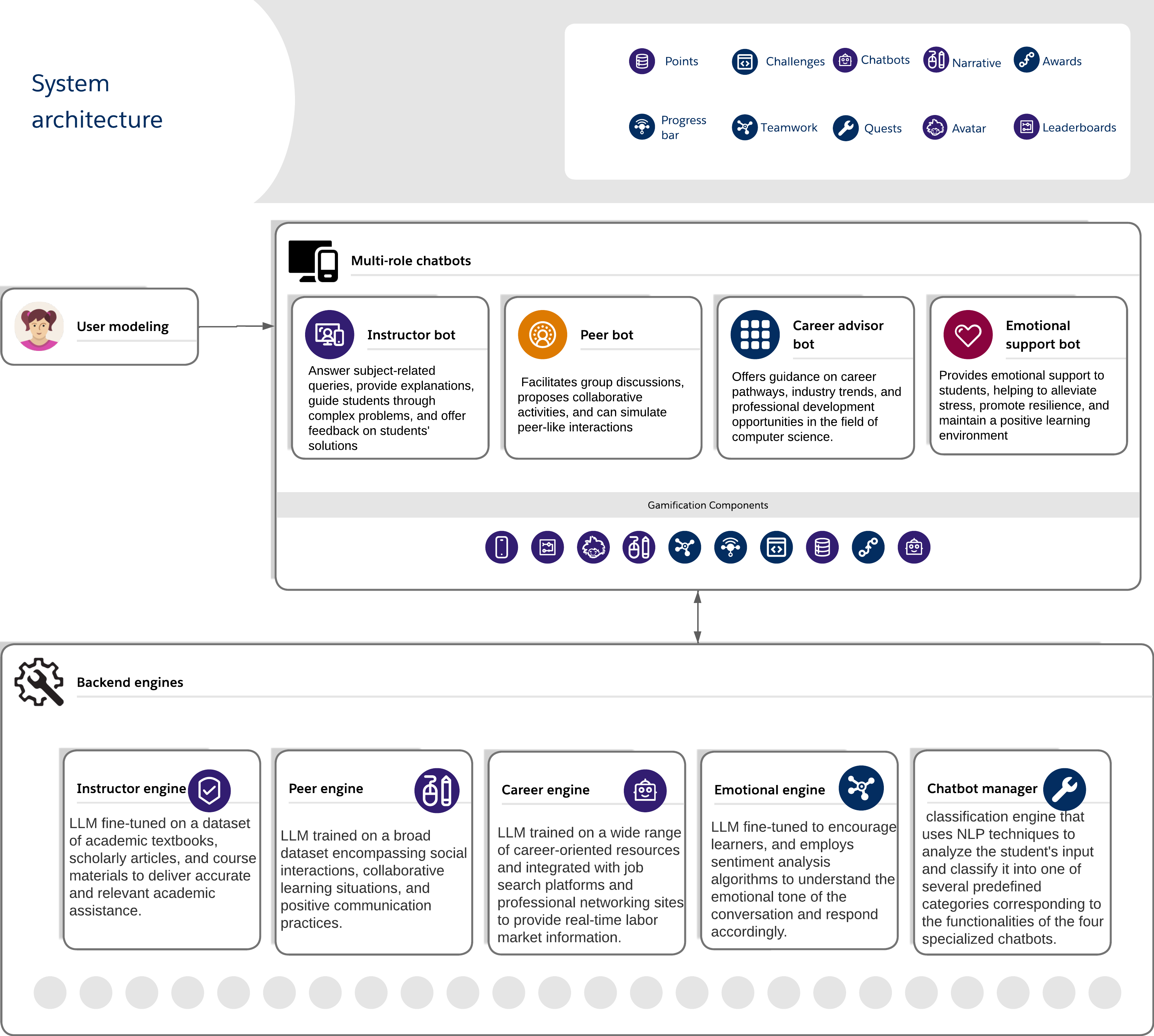
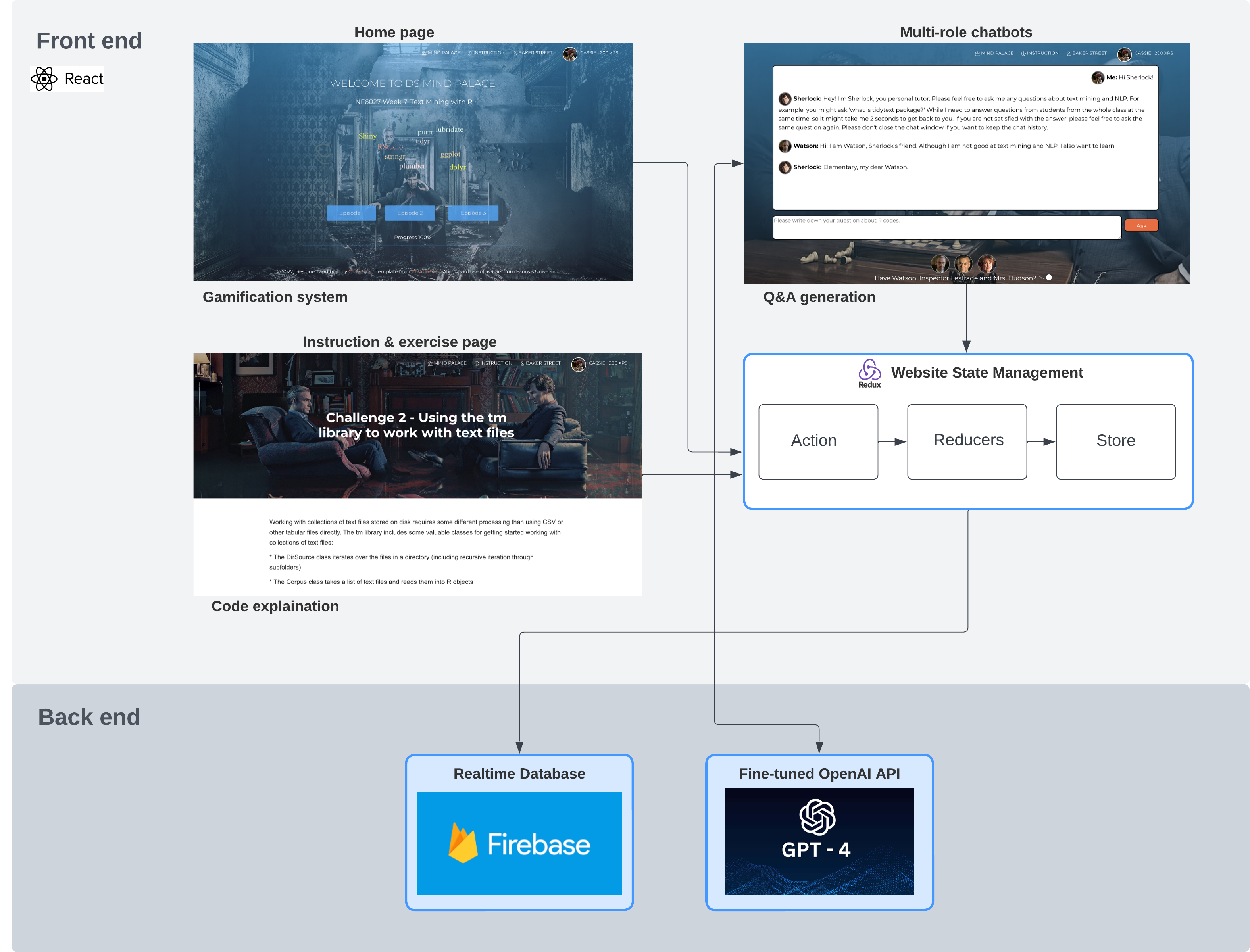
- 构建全栈系统,包含四个专业化的聊天机器人:导师机器人(学术指导)、同伴机器人(协作学习)、职业咨询机器人(职业相关性)、情感支持机器人(情感韧性)。
- 使用聊天机器人管理器根据问题类型与复杂度进行路由,确保最优角色分配。
- 应用自然语言处理技术,包括主题建模、情感分析与序列分析,分析交互日志与调查数据。
- 实施ABC实验设计,涵盖200名研究生,分为三种条件:人类导师、单一聊天机器人、多角色聊天机器人。
- 开发五维评估指标(准确性、流畅性、同理心、参与度、相关性),通过专家筛选、真实答案核对与自动化分析评估大语言模型生成的回复质量。
实验结果
研究问题
- RQ1多角色聊天机器人的使用如何影响学生提问的数量与质量?
- RQ2多角色聊天机器人如何影响学生的学习体验、参与度与学习动机?
- RQ3学生如何感知聊天机器人的个体角色与整体协作角色?
- RQ4聊天机器人角色专业化对不同认知层次问题的回答质量有何影响?
- RQ5情感倾向与互动模式如何与学生参与度及情绪状态相关联?
主要发现
- 大语言模型(LLM)生成的回复表现出高准确度与流畅性,且在学生问题的认知层次越高时,表现越佳。
- 聊天机器人展现出强烈的同理心与参与度,尤其在回应复杂、高阶思维问题时,经研究者编码与情感分析验证。
- 语义相似性与关键词共现分析表明,回复与原始问题保持高度相关且连贯。
- 多角色聊天机器人系统成功满足了多样化的学生需求,聊天机器人管理器有效将问题路由至最合适的代理。
- 学生报告学习动机增强,尤其通过情感支持机器人与职业咨询机器人获得的感知支持,有助于维持持续参与。
- 五维评估指标有效捕捉了回复质量的细微特征,实现了对大语言模型在教育场景中表现的可靠评估。
更好的研究,从现在开始
从阅读论文到最终审阅,大幅缩短您的研究时间。
无需绑定信用卡
本解读由 AI 生成,并经人工编辑审核。