
[论文解读] An Attention-Aided Deep Learning Framework for Massive MIMO Channel Estimation
本文提出了一种基于注意力机制的深度学习框架,用于大规模MIMO信道估计,通过在混合式模拟-数字架构中实施基于学习的注意力图,利用信道的窄角扩展特性,采用‘分而治之’策略。通过将注意力机制集成到全连接和卷积神经网络中,该方法在仅增加极少复杂度开销的情况下,显著提升了估计精度,实现了在多种系统参数下的强鲁棒性和可解释性。
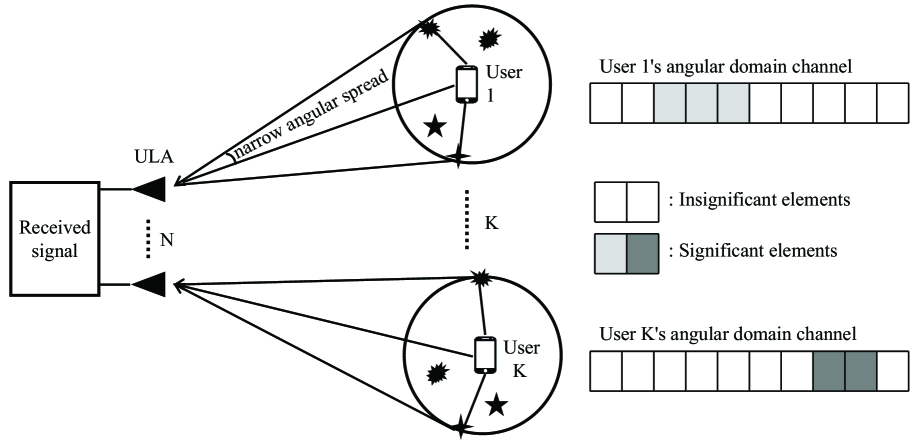
Channel estimation is one of the key issues in practical massive multiple-input multiple-output (MIMO) systems. Compared with conventional estimation algorithms, deep learning (DL) based ones have exhibited great potential in terms of performance and complexity. In this paper, an attention mechanism, exploiting the channel distribution characteristics, is proposed to improve the estimation accuracy of highly separable channels with narrow angular spread by realizing the "divide-and-conquer" policy. Specifically, we introduce a novel attention-aided DL channel estimation framework for conventional massive MIMO systems and devise an embedding method to effectively integrate the attention mechanism into the fully connected neural network for the hybrid analog-digital (HAD) architecture. Simulation results show that in both scenarios, the channel estimation performance is significantly improved with the aid of attention at the cost of small complexity overhead. Furthermore, strong robustness under different system and channel parameters can be achieved by the proposed approach, which further strengthens its practical value. We also investigate the distributions of learned attention maps to reveal the role of attention, which endows the proposed approach with a certain degree of interpretability.
研究动机与目标
- 为解决大规模MIMO系统中,尤其是在射频链数受限的混合式模拟-数字(HAD)架构下,高精度且高效的信道估计挑战。
- 利用大规模MIMO信道的窄角扩展特性,超越传统方法,提升估计性能。
- 将注意力机制集成到深度神经网络中,实现动态特征加权,支持根据信道分布模式自适应调整的‘分而治之’策略。
- 在不同系统与信道条件下,实现高性能与低复杂度之间的良好权衡,并具备强鲁棒性。
提出的方法
- 提出一种新颖的基于注意力机制的深度学习框架,能够根据信道分布动态调整特征重要性,尤其针对窄角扩展特性进行优化。
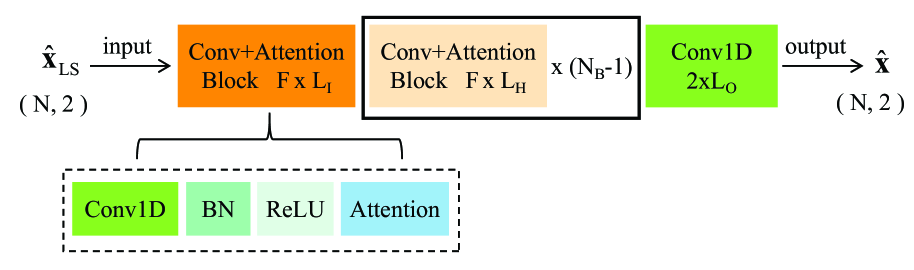
- 在全连接和卷积神经网络中嵌入可学习的注意力机制,以选择性地增强相关信道特征。
- 采用两阶段注意力设计:首先根据角扩展将信道估计任务划分为子问题,然后通过注意力加权的特征融合进行细化。
- 使用Sigmoid激活函数预测注意力图,使用ReLU控制稀疏性,实现样本相关的注意力机制,从而增强模型的可解释性。
- 针对不同系统约束定制独立网络架构——CNN用于完整射电信号场景,FNN用于HAD系统,以提升效率。
- 在推理阶段移除冗余注意力层(例如输出为零的最后层),以降低计算开销而不损失性能。
实验结果
研究问题
- RQ1如何有效将注意力机制集成到大规模MIMO信道估计的深度学习模型中,以利用信道稀疏性和角度特性?
- RQ2基于注意力的特征加权对估计精度和在不同信道与系统参数下的鲁棒性有何影响?
- RQ3与传统的MMSE和基于压缩感知的方法相比,所提出的基于注意力机制的框架在复杂度和性能方面表现如何?
- RQ4注意力机制是否能通过揭示学习到的信道结构(如角扩展模式)提供可解释性?
- RQ5在仅能获取部分信道观测的HAD架构中,注意力模块的最优设计是什么?
主要发现
- 基于注意力机制的框架在完整射电信号和混合式模拟-数字大规模MIMO系统中均显著提升了信道估计精度,优于传统的LS和MMSE方法。
- 在CNN基础上添加该框架后,参数量仅增加19.86%,FLOPs开销可忽略不计,表明性能提升的复杂度成本极低。
- 在HAD场景中,基于注意力机制的全连接网络(FNN)相比S-VBI将FLOPs降低98%,在CPU上快数百倍,且性能优于基于注意力机制的CNN。
- 注意力图显示,模型能够学习将估计任务按角扩展划分为子问题,且在平均AOA的正弦值范围内呈现更高的二值化程度和明显不同的模式。
- 由于其自适应注意力机制,该模型在不同系统设置下表现出强鲁棒性,包括不同数量的天线、用户数和导频开销。
- 注意力图分析表明,其行为具有样本特异性——即使平均AOA相似,注意力模式也存在差异,表明模型捕捉到了超越粗粒度角度信息的精细信道特征。
更好的研究,从现在开始
从阅读论文到最终审阅,大幅缩短您的研究时间。
无需绑定信用卡
本解读由 AI 生成,并经人工编辑审核。