
[论文解读] Atrial Septal Defect Detection in Children Based on Ultrasound Video Using Multiple Instances Learning
本论文提出了一种基于多实例学习的深度学习框架,用于在儿童超声心动图视频中检测房间隔缺损(ASD),采用两种标准超声心动图视图——剑突下切面和低位胸骨旁四腔心切面。该方法结合使用ResNet18与3D-CNN(R3D)进行时空特征提取,并引入块随机采样策略与最大一致决策机制,在包含300名儿童的私有数据集上,五折交叉验证的准确率达到84.95%,AUC为89.33%。
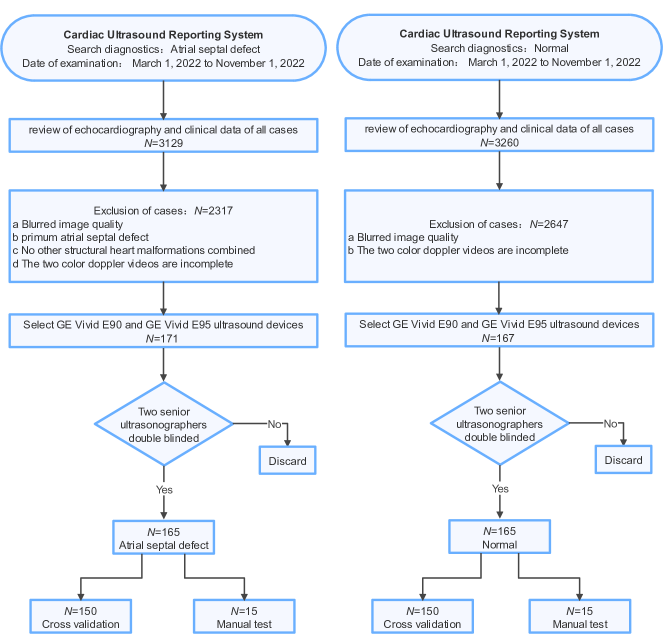
Purpose: Congenital heart defect (CHD) is the most common birth defect. Thoracic echocardiography (TTE) can provide sufficient cardiac structure information, evaluate hemodynamics and cardiac function, and is an effective method for atrial septal defect (ASD) examination. This paper aims to study a deep learning method based on cardiac ultrasound video to assist in ASD diagnosis. Materials and methods: We select two standard views of the atrial septum (subAS) and low parasternal four-compartment view (LPS4C) as the two views to identify ASD. We enlist data from 300 children patients as part of a double-blind experiment for five-fold cross-validation to verify the performance of our model. In addition, data from 30 children patients (15 positives and 15 negatives) are collected for clinician testing and compared to our model test results (these 30 samples do not participate in model training). We propose an echocardiography video-based atrial septal defect diagnosis system. In our model, we present a block random selection, maximal agreement decision and frame sampling strategy for training and testing respectively, resNet18 and r3D networks are used to extract the frame features and aggregate them to build a rich video-level representation. Results: We validate our model using our private dataset by five-cross validation. For ASD detection, we achieve 89.33 AUC, 84.95 accuracy, 85.70 sensitivity, 81.51 specificity and 81.99 F1 score. Conclusion: The proposed model is multiple instances learning-based deep learning model for video atrial septal defect detection which effectively improves ASD detection accuracy when compared to the performances of previous networks and clinical doctors.
研究动机与目标
- 开发一种自动化、基于深度学习的系统,用于通过超声心动图视频实现对儿童房间隔缺损(ASD)的早期且准确检测。
- 通过设计稳健的视频级表征学习策略,解决超声视频中分流信号时间存在短暂的问题。
- 提升ASD检测的诊断准确率,减少主观性,尤其在缺乏经验丰富的超声心动图医师的医疗环境中。
- 将模型性能与临床专家进行对比评估,验证其在儿科心脏病学中作为决策支持工具的潜力。
提出的方法
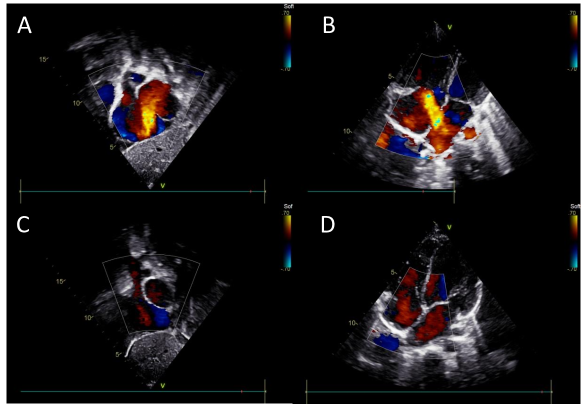
- 模型以两种标准超声心动图视图——剑突下切面(subAS)和低位胸骨旁四腔心切面(LPS4C)作为ASD检测的输入。
- 在训练过程中采用块随机选择策略,通过采样非重叠视频片段来增强模型泛化能力。
- 使用预训练的ResNet18主干网络提取帧级特征,随后通过3D卷积网络(R3D)实现时间维度上的特征聚合。
- 引入基于注意力的聚合模块(AAM),以突出视频序列中显著区域,特别是彩色多普勒分流信号。
- 在推理阶段采用最大一致决策机制,通过聚合多个采样视频块的预测结果,提升预测鲁棒性。
- 在包含300名儿科患者的私有数据集上,采用五折交叉验证进行模型训练与验证。
实验结果
研究问题
- RQ1尽管分流信号在超声视频中出现时间短暂,深度学习模型是否仍能有效检测儿童超声视频中的ASD?
- RQ2与标准视频分类网络相比,所提出的多实例学习策略在检测性能上有哪些提升?
- RQ3在对30名儿童病例进行盲法测试时,该模型在ASD检测准确率上与临床专家相比表现如何?
- RQ4关键组件(如注意力聚合、块随机采样和最大一致决策)对整体模型性能的贡献程度如何?
主要发现
- 在包含300名儿童的私有数据集上,五折交叉验证中,模型准确率达到84.95%,AUC为89.33%,敏感度为85.70%,特异度为81.51%,F1得分为81.99%。
- 在盲法临床医生对比测试中,模型准确率达到83.33%,超过初级医生(63.66%)和高级医生(71.70%)。
- 模型的阳性预测值(PPV)达到85.71%,高于医生,表明其在减少假阳性方面表现更优。
- 热力图可视化结果证实,模型聚焦于彩色多普勒分流信号,验证了其临床相关性及对诊断标志物的关注。
- 消融实验表明,结合3D特征融合、注意力聚合、块随机采样与最大一致决策机制后,模型准确率相比基线提升了7.7%。
- 模型优于2D与3D基线网络,其中2D+3D混合架构在ASD检测中表现优于纯3D模型。
更好的研究,从现在开始
从阅读论文到最终审阅,大幅缩短您的研究时间。
无需绑定信用卡
本解读由 AI 生成,并经人工编辑审核。