
[论文解读] BraTS-PEDs: Results of the Multi-Consortium International Pediatric Brain Tumor Segmentation Challenge 2023
本文介绍 BraTS-PEDs 2023,首个聚焦儿童的 BraTS 挑战,详细说明数据集、评估协议、参赛方法,以及在儿童高等级胶质母细胞瘤上的基准分割性能。
Pediatric central nervous system tumors are the leading cause of cancer-related deaths in children. The five-year survival rate for high-grade glioma in children is less than 20%. The development of new treatments is dependent upon multi-institutional collaborative clinical trials requiring reproducible and accurate centralized response assessment. We present the results of the BraTS-PEDs 2023 challenge, the first Brain Tumor Segmentation (BraTS) challenge focused on pediatric brain tumors. This challenge utilized data acquired from multiple international consortia dedicated to pediatric neuro-oncology and clinical trials. BraTS-PEDs 2023 aimed to evaluate volumetric segmentation algorithms for pediatric brain gliomas from magnetic resonance imaging using standardized quantitative performance evaluation metrics employed across the BraTS 2023 challenges. The top-performing AI approaches for pediatric tumor analysis included ensembles of nnU-Net and Swin UNETR, Auto3DSeg, or nnU-Net with a self-supervised framework. The BraTSPEDs 2023 challenge fostered collaboration between clinicians (neuro-oncologists, neuroradiologists) and AI/imaging scientists, promoting faster data sharing and the development of automated volumetric analysis techniques. These advancements could significantly benefit clinical trials and improve the care of children with brain tumors.
研究动机与目标
- 基准化并标准化来自多机构 mpMRI 数据的儿童脑肿瘤自动体积分割。
- 提供儿童肿瘤亚区域的地真标签以及一个公正、可多中心评估的框架。
- 比较多种 AI 方法(主要基于 U-Net 的)在 BraTS-PEDs 数据上对 WT、TC、ET 的分割性能。
提出的方法
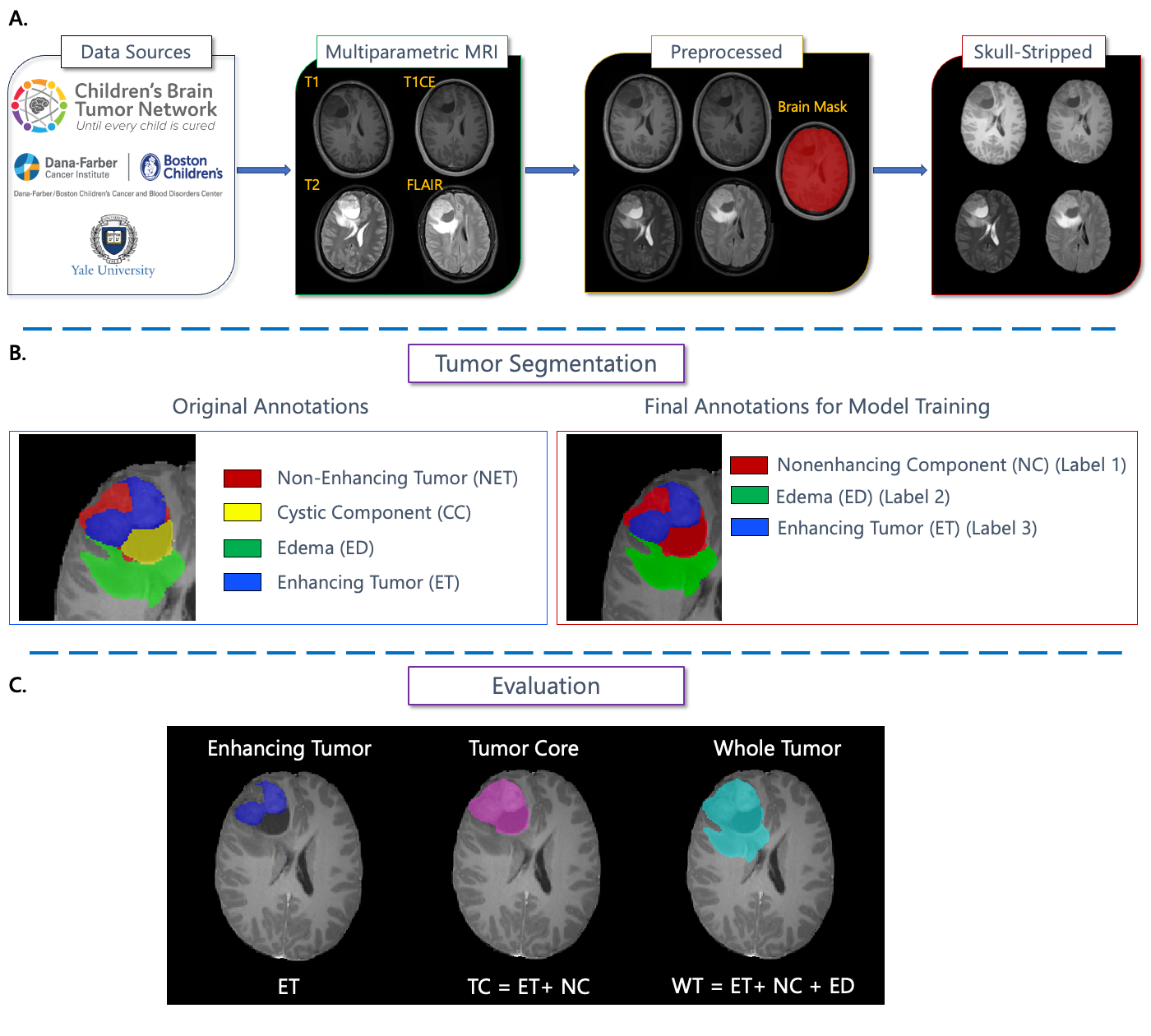
- 整理包含四个序列(T1、T1CE、T2、FLAIR)及 ET、NC、CC、ED 的地真标签的多机构儿科 MRI 数据集(映射为挑战的三个标签)。
- 预处理至 1 mm3 分辨率、与模板共注册,并使用儿童头颅剥离进行去标识化。
- 参与者在提供的数据上进行训练;评估在 ET、TC、WT 的 24 个测试样本上使用病灶级 Dice 和 HD95。
- 地真分割由神经放射科医生和 ASNR 审稿人按照标准化标注指南进行精炼。
实验结果
研究问题
- RQ1人工智能分割方法在多机构的 mpMRI 数据上再现儿童脑肿瘤亚区域(ET、NC/TC、WT)的能力有多强?
- RQ2最先进架构的集成方法(如 nnU-Net、Swin UNETR)是否在儿童肿瘤分割中优于单模型方法?
- RQ3儿童特定的地真注释与预处理对跨机构分割性能有何影响?
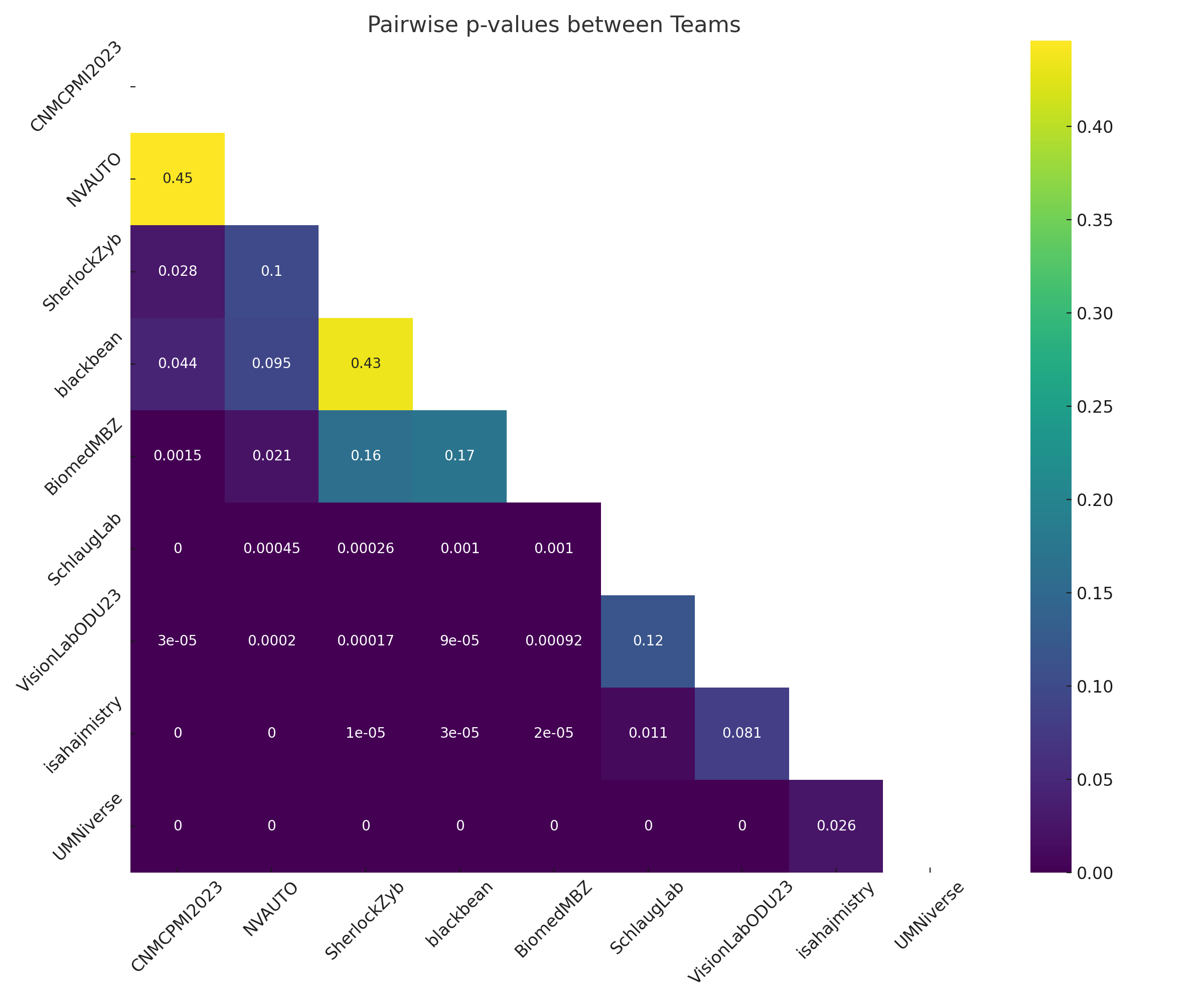
- RQ4BraTS-PEDs 2023 测试集上顶尖团队之间是否存在统计显著的性能差异?
- RQ5集成和自监督预训练能否提升对异构儿童 MRI 数据的鲁棒性?
主要发现
- 顶尖方法是 nnU-Net 与 Swin UNETR 的集成、Auto3DSeg,或带自监督预训练的 nnU-Net。
- 在顶尖团队中,WT 的平均 Dice 约为 0.83–0.84,TC 约为 0.77–0.81。
- ET 分割的波动较大,Dice 约 0.55–0.65,反映 DMG/DIPG 中 ET 区域小或缺失的挑战。
- 通过集成结合优点、缓解弱点,可能提升总体性能。
- 由于测试队列较小(n=24),顶级团队之间的统计显著性有限。
- WT 分割在各队中最具可靠性;ET 仍然是最具挑战性的亚区域。
更好的研究,从现在开始
从阅读论文到最终审阅,大幅缩短您的研究时间。
无需绑定信用卡
本解读由 AI 生成,并经人工编辑审核。